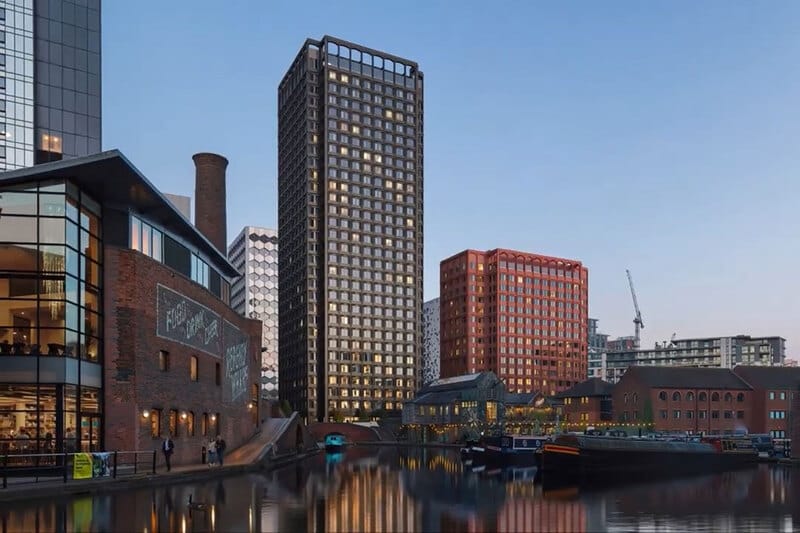

It's a cloudy Wednesday afternoon and I’m being seduced at a housing development in the Jewellery Quarter. “And this is where our tenants work from,” says the managing agent, a smartly dressed, bubbly brunette. She’s gesturing to a heap of colourful beanbags placed on beige floor tiles. They’re part of the ‘sky garden’ at Landrow Place, an outside area topping a 15-storey tower block. The views it offers of the city are pretty stunning.
“Ooo,” I coo, not even stopping to think about the state my back would be in should I start spending my working days curled up like a prawn. The fantasy I’m being sold is too powerful. Making friends at the development’s regular ‘Matcha Mornings’, and working out in the slick 24-hour gym. Rainy days snuggled up the cinema suite. Every amenity I could want, literally on my doorstep. Or, as the estate agent dubs it: "convenience living.”
I am on a tour of the residential complex in search of my dream apartment. Not to buy, you understand. I’m 29 years-old, don’t have a joint income and the bank of mum and dad is yet to come through. Purchasing a house is currently out of the question. I’m stuck in private rental purgatory for now.
I’m not alone: 46% of residents rent their homes in Birmingham, while the average age for first time buyers ranges from 31 to 35, depending on the neighbourhood. Instead of y’know, economic structural changes that might make it easier to get on the property ladder, increasingly developers have alighted on a new product aimed at people like me: young professionals who don’t have the deposit for a house yet, but are prepared to blow slightly more on rent to offset the lack of ownership via a more luxury experience. Enter: Build to Rent.
This sector emerged in the UK following a 2012 housing report, known as the Montague Review, commissioned by the then-Conservative government. The review recommended planning flexibility, the release of public sector land and a dedicated task force composed of a range of officials and private sector specialists as some of the ways to attract institutional investment into large scale rental developments. It's a model that's long been established in the US and Germany. Grappling with the UK’s acute housing shortages, the government wanted in.
Fast forward 15 years and it's a sector that is absolutely booming in Birmingham. Landrow Place is one of 26 luxury residential developments, built exclusively for renters in the city. An additional 37 developments offering 20,266 homes are currently in the pipeline, which will make the city the largest Build to Rent market in the UK outside of London.
Historically, the rental market in the UK was dominated by private landlords who own a single or small portfolio of buy-to-let properties, and either manage the properties themselves or through high-street estate agents. This has changed in recent years, as — smelling an opportunity — the likes of hedge funds buy up existing houses and fund the building of rental properties.
Build to Rent is backed by this new wave of giant institutional investors, such as pension funds. Research shows that four out of five of the top Build to Rent developers are funded by private equity operations, many of them not based in the UK.
Unlike private rentals, BTRs often come with a premium set of amenities: 24 hour gyms, co-working spaces, plush lounges and social events. Maintenance and resident services are provided by onsite management agencies. Marketing videos of the Birmingham developments sell potential residents — with a particular focus on young professionals and couples — a relaxed, stress-free life. But the housing crisis means that demographics attracted to BTRs are broadening, says Alex Notay, CEO of the Housing Forum, an organisation which represents "the entire housing supply chain". Now divorcees, retired couples, and families are in the mix.
Is this a housing revolution in progress, or another precarious stopgap for those desperately seeking a stable home?

Hi, Olivia here. This story about my housing search and Birmingham's new rental boom is for our paying subscribers. But no fear, it's just £2 a week to join them.
In return, you won't just get access to all our members-only journalism, exclusive news briefings and in-person events — you'll also find yourself reconnected to your city. We're bringing back in-depth journalism that goes beyond doom and decline to properly examine the place you live in. If that sounds up your street, come on board today.
What can Build to Rent offer Birmingham?
The reasons behind the rise of BTRs are clear: there is rampant demand for houses in Birmingham. The city’s population is estimated to grow 7% to 1,230,000 by 2038. Property prices have also soared, meaning less people can afford to buy. Most of these will end up in private rents.
Birmingham deserves great journalism. You can help make it happen.
You're halfway there, the rest of the story is behind this paywall. Join the Dispatch for full access to local news that matters, just £8/month.
SubscribeAlready have an account? Sign In