

How can technology improve education?
The UK is in the midst of a huge discussion about how children interact with digital technology. The proposed ban for under-16’s rightly puts social media in the spotlight. But technology in schools also has the potential to free up teacher time, improve student inclusion and support learning.
Edtech UK works with schools to understand how teachers, parents and students can benefit from the appropriate use of technology. Click below to read how teachers in the Midlands are already implementing these technologies and how Edtech UK is helping guide their next steps.
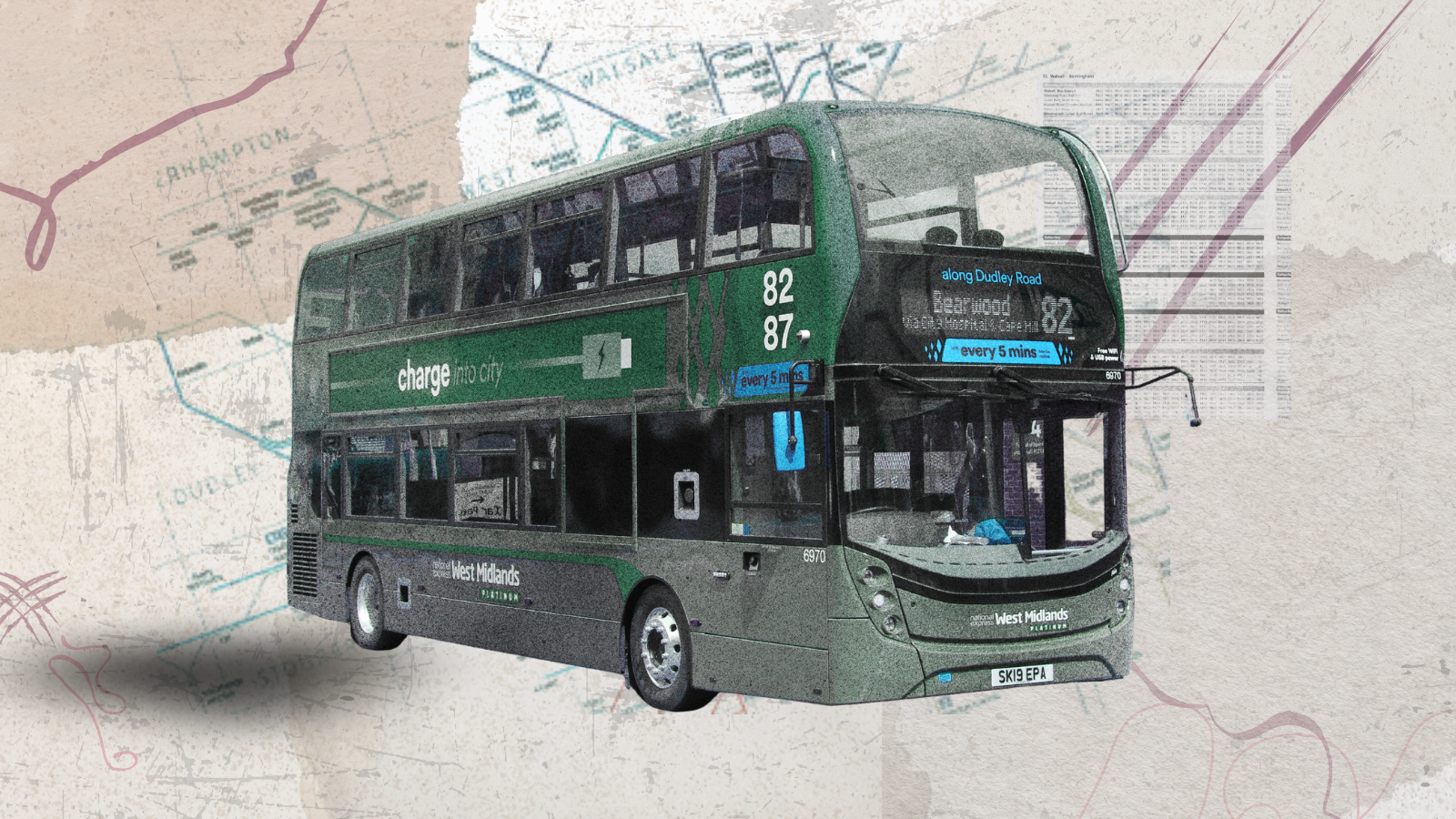
In the West Midlands, everyone has a bus horror story, Kate shared one with the office the other day that just might outdo all others. It concerns the time she fell asleep on the number 11 and woke up in Erdington to witness the man in front of her indulging in some, erm, explicit behaviour. Still, I’m not sure this incident can be blamed on National Express, who can hardly be expected to put up “No masturbating” signs on the windows.
But even if passengers behave themselves, travelling by bus is often a nightmare. Why? The service itself. Delays, abruptly terminated buses, high fares, congestion, or the dreaded ‘ghost bus’: a scheduled service that just doesn’t turn up.
Maybe this would be more bearable in a region with more public transport options. But in the West Midlands, four out of five mass-transit journeys are taken by bus. We are very reliant on buses. This matters enormously for the economy, which we’ll really get into below. What you need to know up here is that our bus reliance has pushed the West Midlands Combined Authority (WMCA) into deciding they’d do a better job of running the show.
In May 2025, mayor Richard Parker officially signed off on plans to bring the region’s buses back under public control, aka ‘franchising’ the bus system like they do in London and Manchester. Private companies run the buses but the system is overseen by the combined authority, who can set the routes and fares. The new services are going to be rolled out late next year — now is the crunch time for getting things in order.
And with bus franchise poster boy Andy Burnham almost certain to become Britain’s next prime minister in a matter of weeks, regional public transport is having a very rare moment in the national spotlight. Every local leader is looking enviously at Burnham’s much-feted Bee Network.
It’s been widely noted that the Bee Network was not Burnham’s idea but rather one that he picked up and made happen. Crucially, it was one that he championed, creating a political narrative about giving Manchester a “London-style transport network” that captured people’s imaginations.
Can Parker make a similar success of our own franchised network, both technically and politically? And — crucially — can better buses get Birmingham moving?
The productivity problem
Firstly, we need to understand a bit of economic context. Here’s a word for you: productivity. Our esteemed colleague, Daniel Timms, has written about Birmingham's productivity previously for this paper. It’s “the value of the things workers produce relative to the amount of time used to produce them”. Daniel says it is the “holy grail” of a city’s economy.
At the heart of West Midlands productivity is its economic centre: Birmingham.
You want people from the region to be able to easily move in and out of Birmingham, where high-value service jobs are usually concentrated. Economists say this accumulation of people and industry results in something called ‘agglomeration benefits’. Basically, when businesses, universities and workers are located near one another, they become more productive by starting businesses together and sparking off each other. That’s how you get specialised zones of industry in cities, like Manchester’s AI sector.
In Greater Manchester, massive transport investment has enabled this — the region now has a “something approaching a comprehensive rapid transit network”, as Daniel noted last year. The impact on productivity has been seismic — and surrounding towns like Bolton and Stockport are seeing the benefits too.
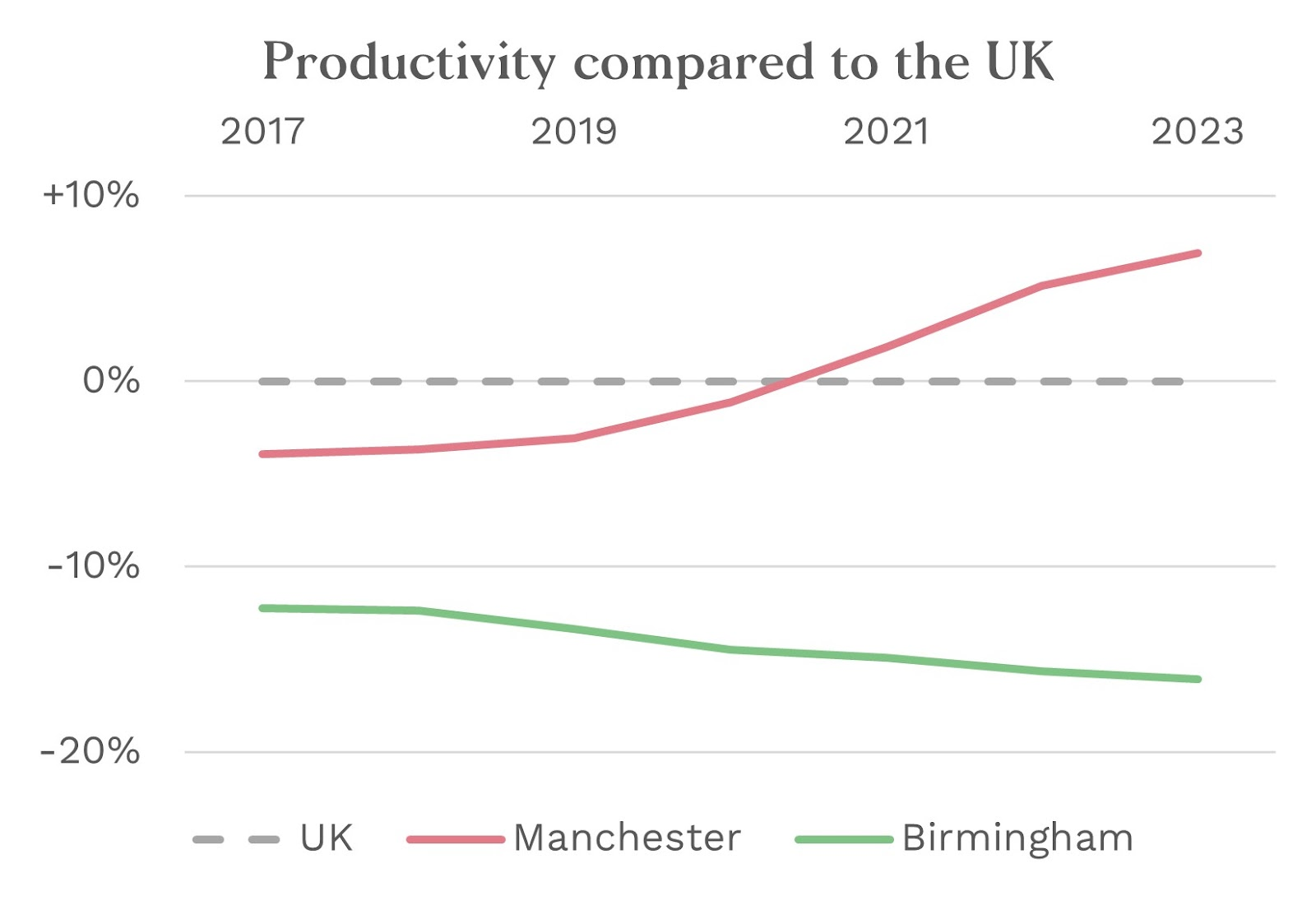
We don't have anything approaching a comprehensive rapid transit system. We have a single-line Metro service and a suburban railway. And… buses. In 2022, Centre for Cities found that only 34% of Birmingham’s population could reach the city centre within 30 minutes, a figure that drops even further across the wider region.
They compared this situation to Munich, which, ok, has fewer residents than Birmingham, and is much smaller. Yet an astonishing 73% of its residents could be in the city centre within 30 minutes. There’s a simple reason for that: rail.
Birmingham deserves great journalism. You can help make it happen.
You're halfway there, the rest of the story is behind this paywall. Join the Dispatch for full access to local news that matters, just £8/month.
SubscribeAlready have an account? Sign In