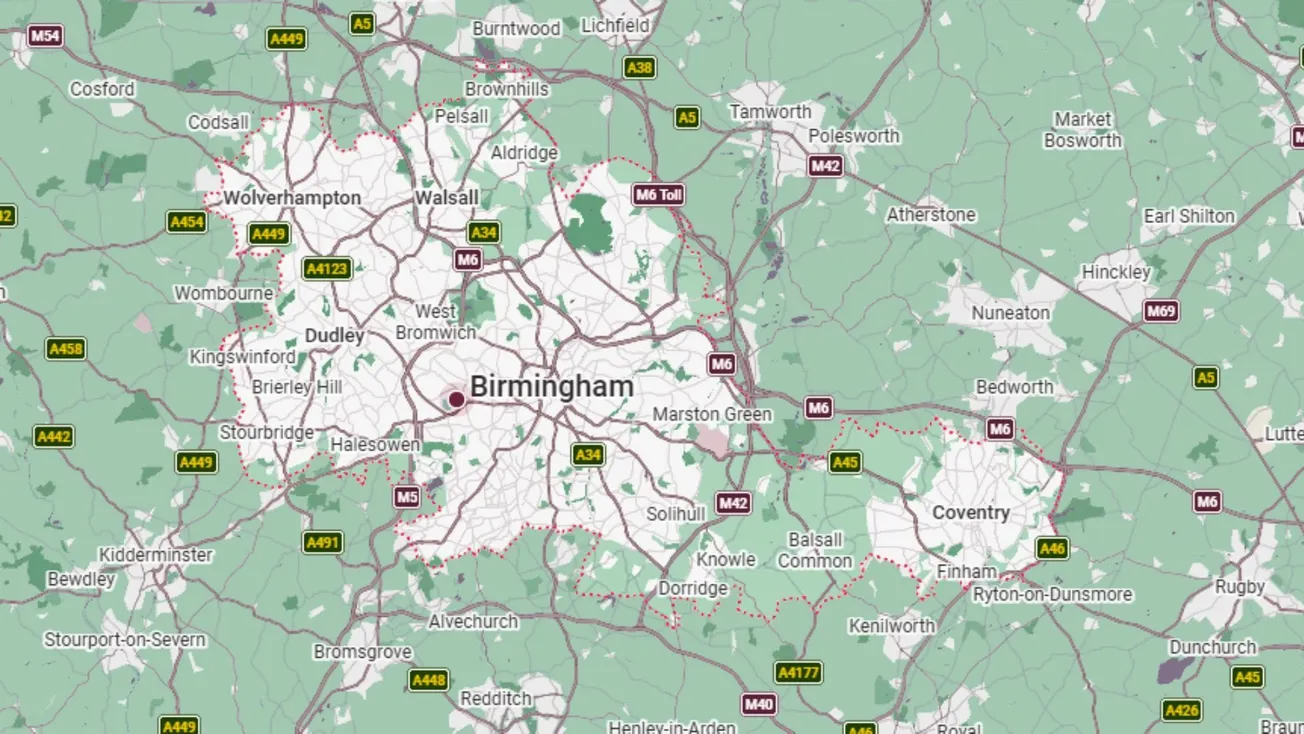


Calthorpe Road looks like a typical street in the Georgian part of Edgbaston, lined with the stucco-fronted villas that once housed the city’s elite.
There is nothing about number 38 which immediately sets it apart. Like most of its neighbours on what has become a traffic gyratory, it’s no longer a home, functioning today as a health centre.
But this innocuous house has a remarkable place in history. Arguably it’s at number 38 that the race to build the nuclear bomb began, via a memo written by two Jewish refugee scientists who’d made Birmingham their home.

Welcome to The Dispatch! We send out all our journalism via email, so please join up now. We promise no junk - just local journalism done properly. No card details required.
The beginnings of the bomb
It’s March 1940. Blackouts are in force across Birmingham and gas masks bump against torsos as citizens bustle around the streets. No bombs have yet dropped on the city though; it’ll be another six months before the terror of Birmingham’s Blitz begins.
At 38 Calthorpe Road, two men are writing a note about their current research project: how to build a workable nuclear bomb, something previously considered practically impossible, due to the vast quantities of Uranium needed. But Rudolf Peierls and Otto Frisch disagree. Their work shows all that’s needed is a refined mass the size of a grapefruit.
In the memo, the pair predict the impact from their envisioned weapon: “The blast from such an explosion would destroy life in a wide area. The size of this area is difficult to estimate, but it will probably cover the centre of a big city.” They also foresaw the strategy of nuclear deterrence, noting that the only defence against it will be a similar device.
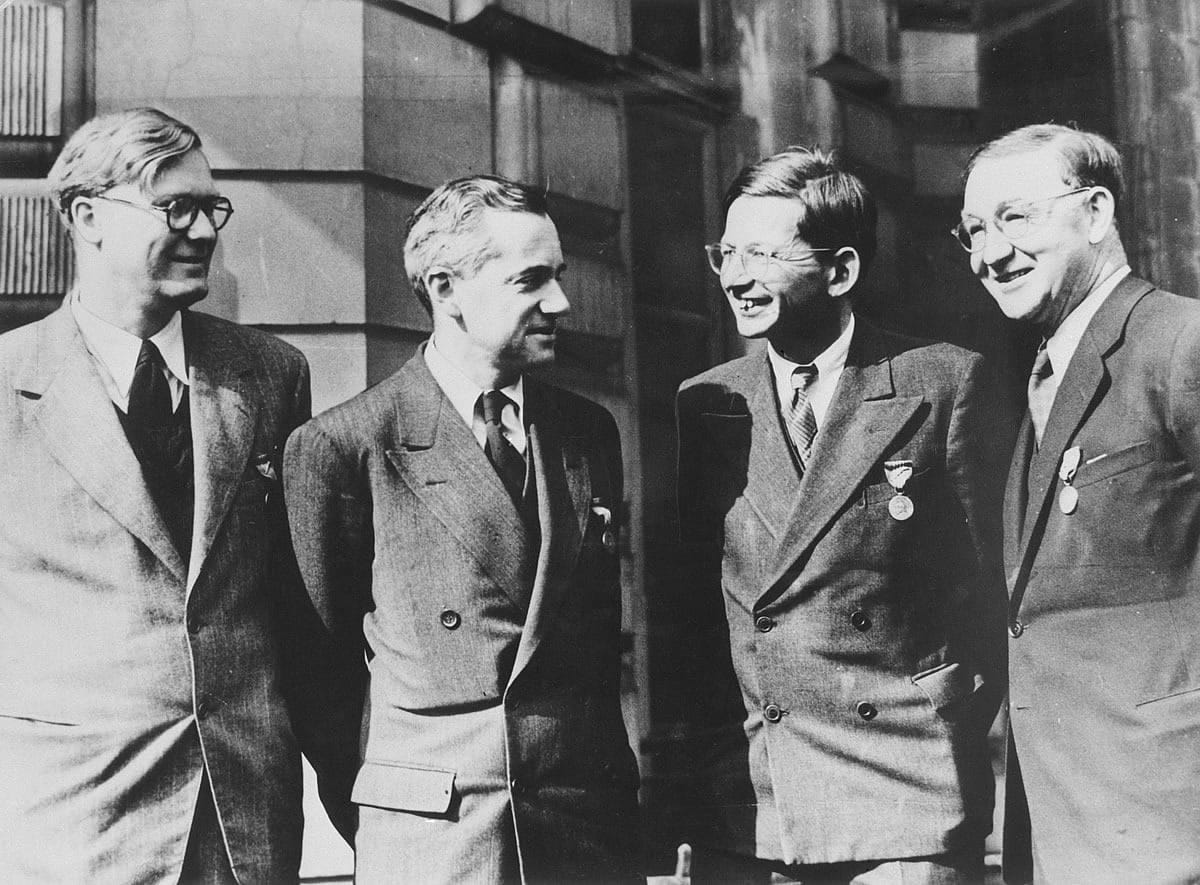
Both men are in Birmingham as a result of the war. It’s Peierls who is renting 38 Calthorpe Road, with his vivacious Russian-born wife, Genia, also a physicist. The couple arrived in the city in 1937, when Peierls was recruited by the brilliant Australian physicist Mark Oliphant, who took up a job as Professor of Physics at the Poynting Laboratory at the University of Birmingham in the same year.
Berlin-born Peierls had originally come to England five years prior, to join Cambridge’s Cavendish Laboratory. By then he’d already made a name for himself assisting some of the greatest scientists of the 20th century. The ascent of the Nazis a year later means the Jewish Peierls will never permanently return to Germany.
But he likes Birmingham, writing it “is much better than its reputation suggests”, highlighting its well-run public services and leafy southern suburbs. Otto Frisch, a fellow German-speaking Jew, is his colleague and lodger — Peierls offered him a room at number 38 when he arrived in his university department a year ago.
Since then, the house has become a centre of hospitality for Birmingham’s blossoming physicist community. It’s all presided over by Genia, renowned for her "loudness, big-heartedness, self-confidence, loving concern and irresistible kindness", as well as her ability to be a more than adequate “intellectual fencing partner” for her husband.
The Peierls allow students to stay, cooking for them and providing them with advice, while Frisch — a highly talented classical musician — plays the piano at any opportunity. The conversation is as likely to be about art, politics and music as theoretical physics.
But right now, it’s about physics. Peierls and Frisch’s memo has just set in motion the British nuclear weapons programme, codenamed ‘Tube Alloys’. This will provide much of the groundwork for the American Manhattan Project — aka the programme that builds the nuclear bomb, leading to the deaths of hundreds of thousands in Japan as well as the Cold War. In short, without it, the history of the 20th century would have been very different.
That’s not 38 Calthorpe Road’s only significance. Just a few months after the Frisch-Peierls memo changes modern warfare — and geopolitics — forever, a new tenant will move into the house. And he’ll happen to be perhaps the most influential spy of all time.
This story is free to read - you just need to join our mailing list. And why wouldn't you? By becoming a Dispatch subscriber, you'll get our scoops, features, and insights, in your inbox, the second we hit publish. No card details required.
Already have an account? Sign In