
December 2013: Royal Mail workers are threatening strike action in the run up to Christmas over pay and pensions. Plus, a series of severe winter storms have put paid to much of the fun you’d associate with the season.
Instead of turkey and Sound of Music re-runs, there are power cuts and severe flooding across the UK. But on the edge of the Jewellery Quarter, in our damp, freezing, windowless lock-up at the top of Hockley Street Studios, just beneath the growing hole in the roof, The Bluebeat Arkestra, the six-piece “genre-defying” band I play guitar in, are celebrating.
It’s been a great year. We’ve played loads of festivals and a couple of decent London gigs (at one, ex-MP and Cheeky Girl husband Lembit Öpik helped himself to crisps from our rider and offered to manage us). We’ve recorded a new EP, filmed videos, done photo-shoots, and had meetings with agencies. We’re playing a New Year’s Eve gig at the Yardbird, the hip soul/jazz/funk club in Paradise Place, taking to the stage at midnight. All the stuff a band on the up does.
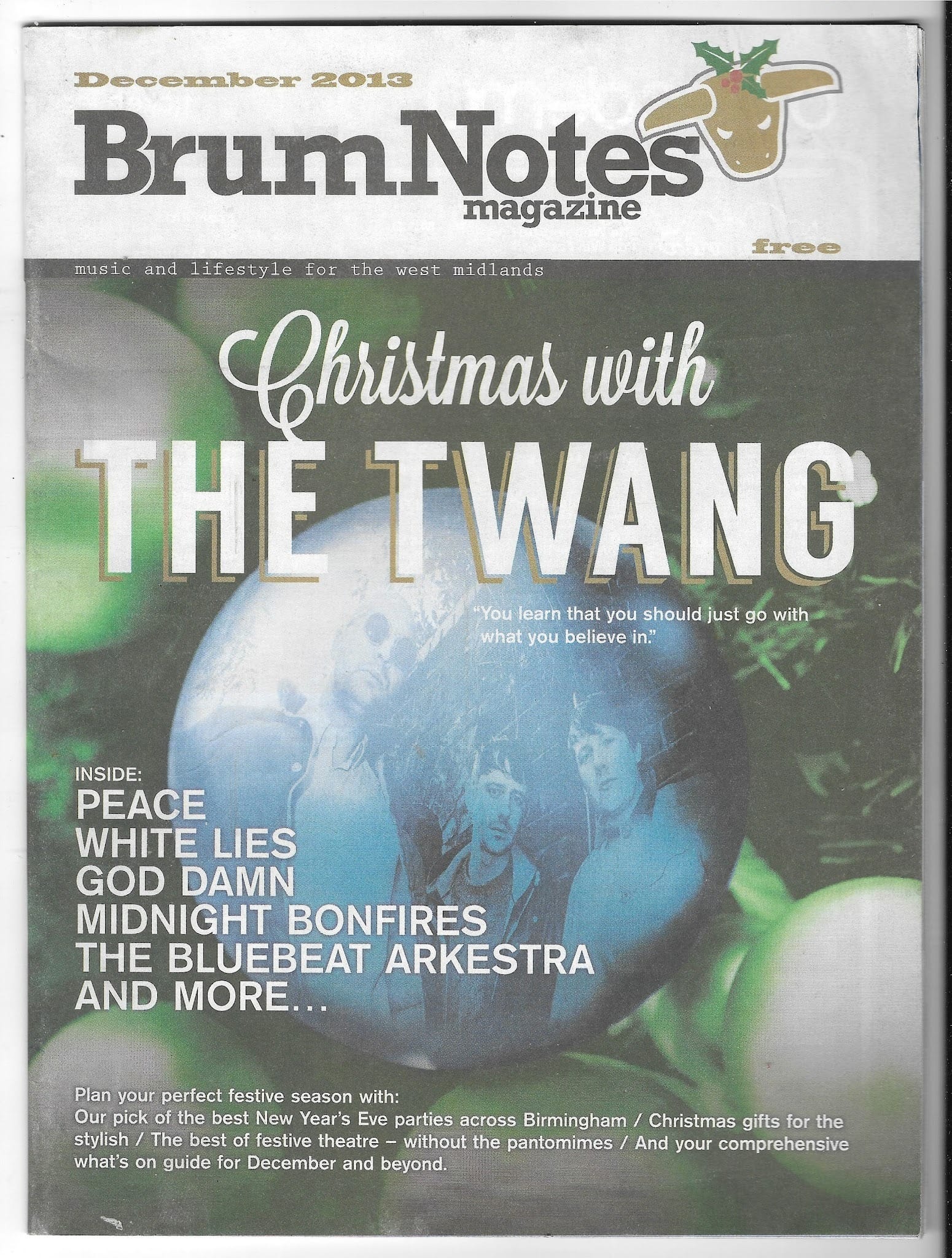
On the studio’s reception desk is a pile of local music mag Brum Notes’ Christmas issue. Listed on its cover are some of the biggest local acts of the time: The Twang, God Damn and Peace. Oh, and The Bluebeat Arkestra.
What do all of us have in common? We’re all making music that Brum Notes rates, yes, but Peace in particular are heralded as leading lights of ‘B-Town’ – a local scene centred around them, Swim Deep, JAWS, Superfood and Troumaca. They’re all indie bands that make very different music from each other, but, crucially, are all based in Brum.
In fact, thanks to B-Town, Digbeth is suddenly, unironically, one of the coolest places in the UK — “the Shoreditch of Birmingham” according to the NME, which still holds a little clout. For the first time since Brumbeat in the 1960s, when the likes of the Moody Blues and The Move emerged, multiple local bands are hitting the big time at once.
It’s helped by the fact that the broadsheets and music press are having one of their periodic realisations that there are music scenes north of Watford. As the Guardian puts it, it’s no big deal if a band is posh, “But when they all are, you start to worry that guitars have become a profession for the privileged.” B-Town, with its coterie of state-school-educated musicians, seems to come as a bit of a relief.
I take a copy of Brum Notes back to my also-damp-and-freezing flat for posterity, but I’m less than enamoured with B-Town. It’s no coincidence that my favourite local song of the time is The Scribers’ two-chord wonder ‘Bitchin’ 50s’ — a group whose Bandcamp proclaims, “We ain’t no B-Town band!” I dig that. I’m an angry young man with a perma-gripe about any local band other than mine having any success.
Still, fast forward to the present day, and there’s something strange about the way B-Town is depicted now. Check Wikipedia nearly 15 years later and you might get the impression that it was all a joke that got out of hand. I was there (or thereabouts), though, and I remember it being taken very seriously, both by those invested in its success and by those of us who sat grumbling about it at rehearsals.
So, as a calmer, less neurotic forty-something, I’m genuinely curious. Where did B-Town come from? Was it a joke, or serious? And did it have any kind of lasting impact?
The afters are at Tantrum Towers
My band was one-degree of separation from B-town. We played the same local venues and shared mutual friends. Some of us probably bought drugs from the same dealer. But we were never B-Town.
Birmingham deserves great journalism. You can help make it happen.
You're halfway there, the rest of the story is behind this paywall. Join the Dispatch for full access to local news that matters, just £8/month.
SubscribeAlready have an account? Sign In