


🎁 Want to give something thoughtful, local and completely sustainable this Christmas? What about a heavily discounted gift subscription to The Dispatch? Every week, your chosen recipient will receive insightful journalism that keeps them connected to Birmingham — a gift that keeps on giving all year round. And it beats another's Cadbury's haul that will be wolfed down in 24 hours.
You can get 38% off a normal annual subscription, or you can buy six month (£39.90) or three month (£19.90) versions too. Just set it up to start on Christmas Day (or whenever you prefer) and we'll do the rest.
Victoria is not a Brummie, nor is she from a musical family, but the 27-year-old violinist takes great pride in Birmingham and the City of Birmingham Symphony Orchestra (CBSO). It was at age six, after attending a CBSO concert with her mum – understandably coaxed with the promise of irresistible ‘bad boy’ Nigel Kennedy performing a violin concerto – that Victoria decided to learn to play. Over 20 years later she joined the CBSO as a permanent Tutti First Violin. Today, sitting in the CBSO offices, where the overhead neon lighting is significantly less grandiose than the aesthetic warmth of nearby Symphony Hall, she says she’s found a “home, family vibe – which you really don’t get in other symphony orchestras.”
As one of its younger members, Victoria is better placed than most to understand the ongoing struggle that orchestras such as the CBSO find themselves in to engage younger audiences. But having toured extensively throughout Europe and worked with orchestras including the Philharmonia, BBC Philharmonic, the Halle and Manchester Camerata, Victoria is quick to tell me that: “Younger people have a different relationship [with classical music] than older generations … with social media and having more of an interest in what’s going on around them in the world, [young people are] going to clubs a bit less, and looking after their mental health a little bit more.”
It’s not a question of young audiences not liking orchestras. According to a study from the Royal Philharmonic Orchestra, people under 35 are increasingly listening to classical music. With musicians such as British organist and conductor Anna Lapwood, and Australian-Taiwanese YouTubers Two Set Violin having hundreds of thousands of followers online, classical music gets the level of visibility that influencers leverage to sell teeth whitener. But despite this, the popularity of classical music has had plenty of rise and fall – and the CBSO is no exception. For one hundred years, the CBSO has been implementing new tactics to fill seats, charm sceptics, and convince younger generations that classical music isn’t just for people who think a wild night involves two encores.
In 1920, Birmingham council approved an annual grant of £1,250 for a 70-strong ensemble, allowing the CBSO to become Britain’s first publicly funded orchestra. But while the money came easily, attracting and retaining audiences has been something of a fortissimo-sized challenge from the beginning.
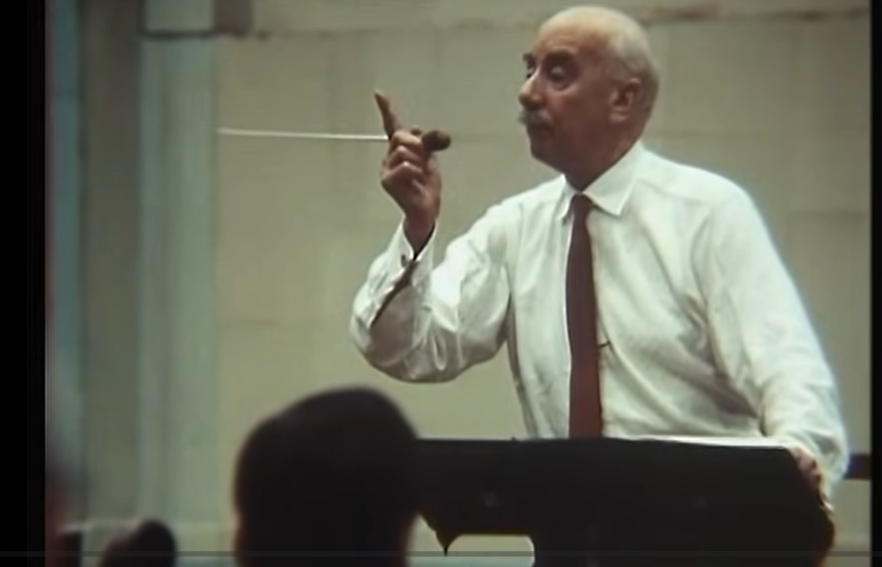
In 1924, Adrian Boult took over as chief conductor. Only four years into the orchestra's existence, he began to innovate. Boult introduced lunchtime concerts at the Town Hall, pre-concert talks, open rehearsals for students and (crucially) free concerts for children. The orchestra maintained healthy success for the next two decades, until the outbreak of the Second World War. During this period the CBSO had only 62 musicians – most of whom were employees of local munitions factories who swapped bombs for Brahms. When Music Director George Weldon took over in 1944 and re-established the professional orchestra – presumably relieving the munitions workers of their musical post – he introduced affordable summer seasons and industrial concerts aimed at the city’s manufacturing workforce.
But the broader appeal was not to last. In 1949 CBSO concerts averaged only 60% capacity, and a new approach was once again required. In 1969, Frenchman Louis Frémaux was announced as chief conductor. He placed a new emphasis on the recruitment of young principals, and founded the now world-leading choir CBSO Chorus. His approach brought in new audiences but in 1978 he controversially quit, citing creative differences. Frémaux’s departure set the stage for a new, precocious talent. The now-legendary Simon Rattle was just 24 when he was appointed to lead the CBSO in 1980, making history as the UK’s youngest principal conductor. During his tenure, Symphony Hall became a world-leading venue. Not only an architectural emblem of the city’s bid for modernisation, but a state of the art concert space with acoustics so precise that a trombonist can hear a cough sweet being opened in the Grand Tier.
Rattle led the CBSO to international acclaim; in a city primarily known for its rock and metal history, the orchestra became a symbol of Birmingham’s youthful and bountiful music culture. Unlike many principal conductors — who treat their residency as merely an address to forward the post to — Rattle lived in Birmingham and ultimately delivered 934 performances before leaving in 1998 to seek new challenges.

After being passed from hand to hand, in 2023, the baton was given to former permanent conductor of the Japan Philharmonic Kazuki Yamada — who lives in Berlin and commutes to Birmingham. Despite Yamada’s charm, the orchestra occupies little space in the minds of Birmingham’s modern younger generation. The Youth Orchestra aside, the main ensemble has only four performers under 30 and there is perhaps a wider feeling that the spray of Simon Rattle’s sweat has long since evaporated.
Arguably, the CBSO’s greatest achievement in engaging a younger audience comes in its groundbreaking partnership with a state school that opened in 2023. Shireland CBSO Academy is run by Shireland Collegiate Academy Trust. The former office block in Sandwell (one of England’s most diverse and deprived areas), now offers state pupils one-to-one tuition in classical instrumentation, funded by the government including the Pupil Premium offered to disadvantaged children. If the collaboration proves successful, the school will nurture a younger generation of Birmingham classical musicians from diverse backgrounds.
A report from Blackstar, Lemontank and BPI studied 500 Gen Z’s relationship with listening, consuming and discovering music and found that while new music was “clearly valued”, Gen Z are drawn toward “older”, “more familiar music” that evokes nostalgia and reassurance. This sentiment might be reflected in the new trend for live orchestra concerts of film soundtracks. These events are heavily promoted on social media, catering to the sentimentality and fandom attached to franchises like Pirates of the Caribbean and blockbusters like Interstellar – £20 for a string quartet playing the greatest hits of Hans Zimmer afloat a sea of candles in a medieval church. Despite the CBSO offering similar successful film nights, perhaps the idea of a symphony orchestra feels intrinsically excluding; an intimidating cultural behemoth. Consequently, young people (perhaps too hastily) turn to more accessible arenas for orchestral music.
Welcome to The Dispatch. We’re Birmingham's new newspaper, delivered entirely by email. Sign up to our mailing list and get two totally free editions of The Dispatch every week: a Monday briefing, full of everything you need to know about that’s going on in the city; and an in-depth weekend piece like the one you're currently reading.
No ads, no gimmicks: just click the button below and get our unique brand of local journalism straight to your inbox.
It’s a dilemma faced by many genres in the arts. As audiences age, how can event organisers attract younger people who overall have far less disposable income at a time when everything is more expensive. Like other symphony orchestras, the CBSO’s audience currently skews older. With 31% of its audience under 30 for the 2024-25 Season (comparatively younger than other symphony orchestra audiences), in three decades most of the current attendees will have bowed out.
One potential solution is the recent strategy of launching a scale of ticket-pricing. These incentives include £5 tickets for students, under-18s, and those receiving Universal Credit, and £10 tickets for those between 18-30. I fit neatly into the middle of the latter category, and am also one of the demographic who enjoys classical music mainly through film scores and my dad’s habit of listening to Classic FM. I learned a version of Beethoven’s ‘Ode to Joy’ on the piano as a child — still my party piece if a keyboard happens to appear — though beyond that, I can’t claim any great familiarity with the pleasures of live classical performance. I hadn’t heard of the £10 ticket offer before, and for a fleeting moment I considered it might be better spent on a midweek cinema ticket and a small tub of popcorn. But I was sold on the prospect of a world class orchestra and the chance to hear a few post-Baroque bangers.
I buy a ticket for Mozart’s Symphony No. 41 (known as the Jupiter Symphony, although Mozart never called it that) conducted at Birmingham’s Town Hall by Romanian Eugene Tzinkdelean – who has previously guest-led esteemed ensembles such as London Philharmonic Orchestra, Danish Royal Opera and Singapore Symphony Orchestra. After getting a standard-sized glass of wine (costing nearly the same as the ticket) in the windowless basement bar, I head to the 1100-capacity auditorium, apologetically shuffle past knees and relax into my seat. I’m the youngest in this audience by some distance. As I sit amidst a beach of grey pebbles, Mozart washes over us. I couldn’t have hummed it on demand, but the tune was familiar (the Jupiter Symphony is considered one of the best in history). I was immediately glad I didn’t spend my tenner on the cinema; the acoustics of the grand venue, the cosmic wonder of the music, the indisputable skill of the orchestra and theatrics of the conductor blow the prospect of a sweet & salted popcorn in a damp screening at ODEON New Street out of the water. But, as I sip my (white) wine, in the company of other (white) people listening to the (predominantly white) orchestra perform a (white) musician’s piece, a minor chord lingers beneath the fanfare. I wonder why – despite Birmingham’s population being over half minority ethnicities – there is such a lack of diversity in the room?
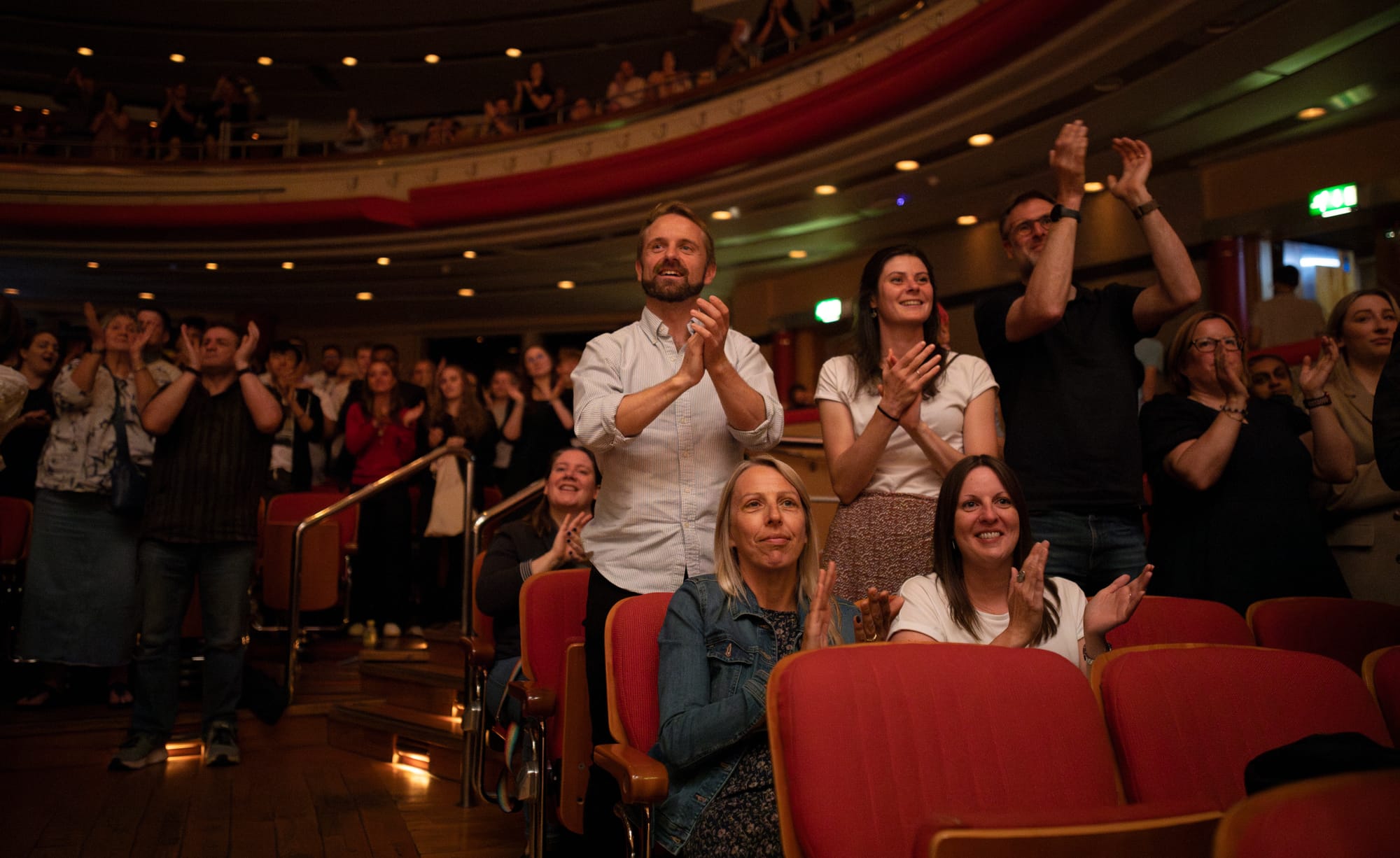
Performers aside (several of the orchestra are born and bred Brummies), out of 37 members of CBSO staff and trustees, less than five are visibly from minority ethnic backgrounds. Music critic Donal Henehan wrote for the New York Times in 1980 that “one of the manifestations of [a city’s] soul is the resident symphony orchestra”, and the CBSO preserves an overwhelming whiteness that is incongruous to the overall diversity of Birmingham.
Emma Stenning, the CEO, acknowledges to me that the CBSO is “very open minded – a hub for music. An interfaith, inter-community mash-up of music to protect and pass onto the next generation”. Since she took over as chief executive in 2023, she has led a campaign to connect with more communities. This outreach crosses over with the bid to attract younger people. Statistically, Birmingham is nearly as young as it is ethnically diverse, with around 40% of the population under 25. Initiatives include collaborations with The Orchestral Qawwali Project, a capella quintet Black Voices and developing a community board. Despite the CBSO expanding its repertoire, audiences largely remain divided by genre rather than united in music. While these separate audiences may reflect (what some may perceive as) the soul of Birmingham’s different communities, surely the professional body of the CBSO should at least reflect the city as a whole?
Emma emphasises the added importance of “getting out of the hall”. This echoes a recent trend of “meeting people where they are”, breaking the invisible barrier between the CBSO and its wider audience potential. The day after Ozzy Osbourne died, Emma organised an ensemble to perform Black Sabbath music in New Street Station, and the CBSO regularly performs on public transport and at venues like Hockley Social Club – mingling orchestral music with beer and burgers. Victoria acknowledges that going to a concert hall can be intense for those unfamiliar with the culture, “not knowing what to wear, when to clap or if you can drink”, and that consequently performing in other venues shows people “that music is just a normal everyday thing – it’s not a big scary event”.

I attend another performance in Symphony Hall, this time led by Osmo Vanska – a Finnish conductor, clarinetist and composer. The orchestra performs Shostakovich and Sibelius, accompanied by operatic soprano Helena Juntenen. The programme tells me that Shostakovich completed his final symphony in 1974, the same year the Beatles split. While some in attendance will recall the historic moment first-hand, the audience appears much younger than the Mozart concert.
The CBSO demonstrates that orchestral music survives not by emphasising prestige, but by becoming more human. Rock-star figures like Simon Rattle and ‘bad boy’ Nigel Kennedy are invaluable for putting a face to institutions – yet it’s the community spirit that is keeping the CBSO alive. Connecting with Birmingham’s diverse communities, surprising commuters on trams, teaching pupils in school, and finding new ways to meet audiences where they are. Unlike my familiarity with Pirates of the Caribbean by candlelight, I was unaware of the diversity of the CBSO’s programming.
That said, while they may meet commuters on the way to work, they’re failing to meet young people in their homes: on social media the CBSO has only 15,000 followers on Instagram and 2,000 on TikTok. Still, although I may never attend enough concerts to enter Symphony Hall bar and ask for ‘the usual’, I have found nothing but delight and mindfulness at every performance. I went into this journey sceptical of whether the promise of reaching younger audiences was genuine or just branding. By the end it was clear.
If someone forwarded you this newsletter, click here to sign up to get quality local journalism in your inbox.
🎁 Facing a last minute Christmas gifting reccie round The Bullring? Let us save you with a thoughtful, local and completely sustainable present: a heavily discounted gift subscription to The Dispatch. Every week, your chosen recipient will receive insightful journalism that keeps them connected to Birmingham — a gift that keeps on giving all year round.
You can get 38% off a normal annual subscription, or you can buy six month (£39.90) or three month (£19.90) versions too. Just set it up to start on Christmas Day (or whenever you prefer) and we'll do the rest.





Comments