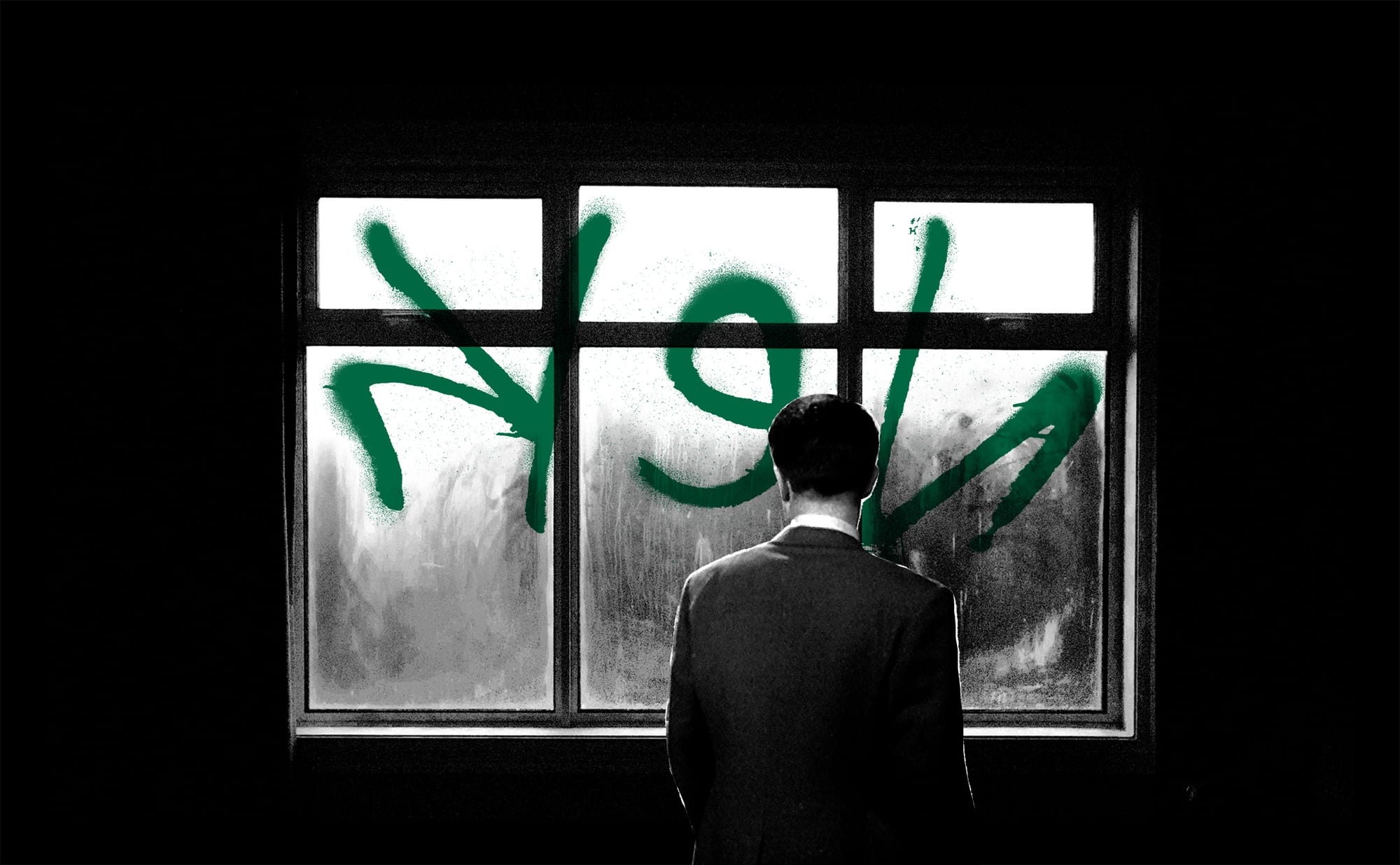

Dear readers — today’s story is about a prolific Birmingham graffiti tagger and The Dispatch's dedicated search to uncover his identity. You can expect encrypted voice messages, graffiti scene beef, and lots of sleuthing.
But first your Brum in Brief — we’ve sent Samuel out to the NEC to cover Reform’s latest rally in the city, as the populist-right party gears up for the May local elections. Plus, there's no end in sight for the bin strikes, and the Guardian digs deep into a billionaire property owner we've previously reported on.
Welcome to The Dispatch. We're Birmingham's quality newspaper, delivered via email. Join our free mailing list to get two full editions a week: a Monday briefing, full of things to do and bitesize news, straight from Brum's streets, and a weekend feature, taking you deep inside your city and the West Midlands.
The Dispatch delivers unique reporting on the city that you won't get anywhere else — journalism that takes the time to understand the hidden dynamics of Birmingham.
To get total access to all four of our weekly editions, you can join up as a paying member. We'd love that. But we understand you might want to try before you buy, so click below to sign up for totally free and start getting our special brand of local journalism straight to your inbox today.
Brum in Brief:
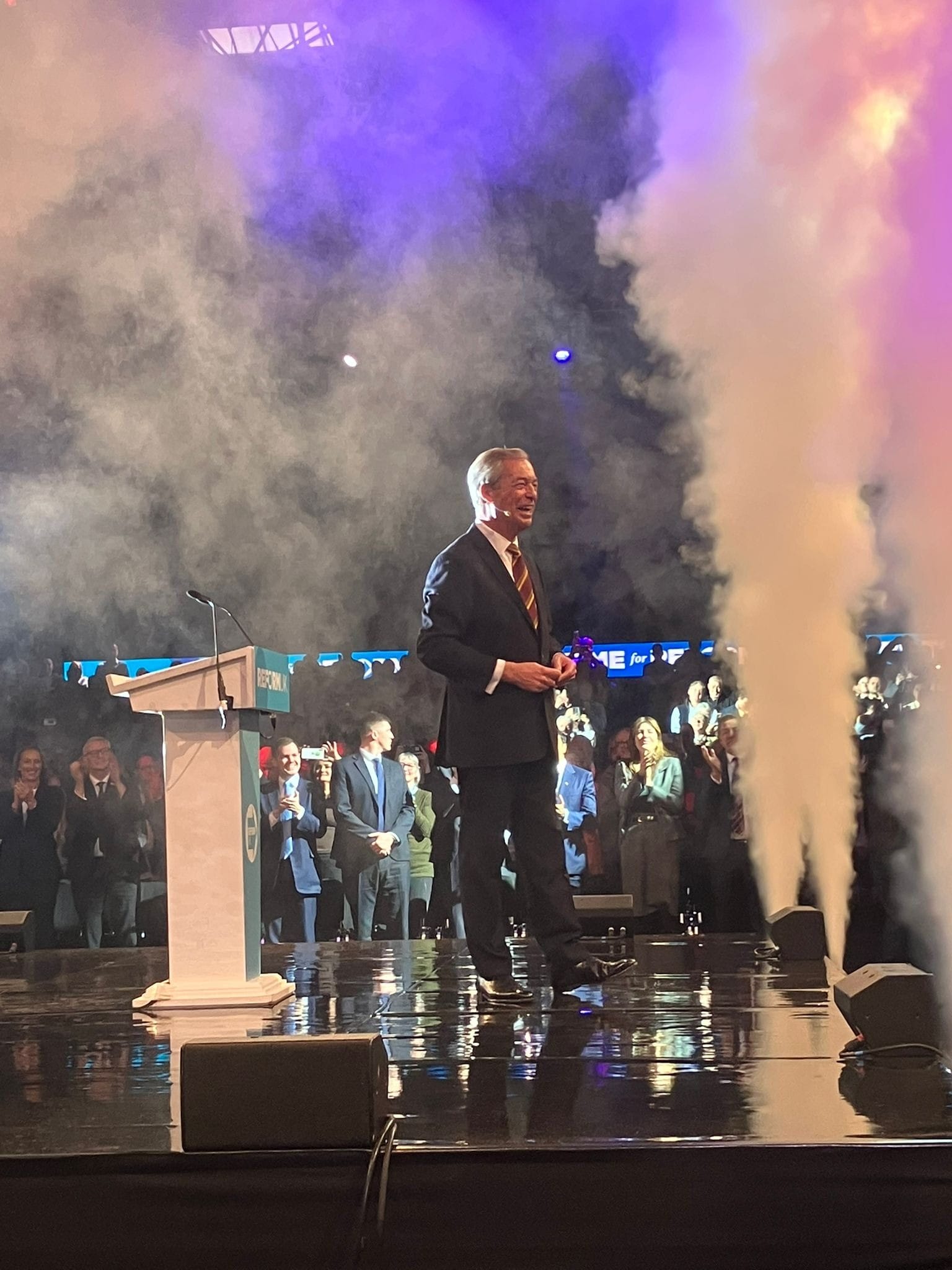
➡️ Reform returned to Birmingham this week with panache and plenty of dry ice, hosting a 2,500-strong rally at the NEC on Monday afternoon, which The Dispatch attended. As previously (you can read about Reform’s last local demo here) Nigel Farage and co made it plain that the party has the second-city, and its Labour council, squarely in its sights ahead of the May elections. This is likely due to — as an incredulous Reform insider let slip to us — new internal data analysis which has convinced deputy leader Richard Tice that they can win total control of Birmingham city council.
Whether or not that’s realistic (Reform faces stiff competition from Gaza Independents and the Labour Party), Monday’s various speakers were full of optimism. Former reality TV presenter-turned-TalkTV-radio-host Jeremy Kyle (who also has a gig media training Reform candidates) set the tone for the afternoon. “We’re in Britain’s second-city, in the heart of this country, a place that has experienced many problems: a place that needs change,” he declared. In a chat with Tice, Kyle asked “can you really turn Birmingham around?” He responded: “Birmingham is an amazing city…run into the ground by Labour, if you want to save Birmingham vote Reform.”
Farage — who came on to a blast of pyrotechnics so fierce they almost claimed Samuel’s eyebrows — was equally as insistent. And yet, when pulled up by a reporter on recent council tax-rises at Reform-led Staffordshire and Warwickshire county councils, he denied letting voters down despite campaigns pledging tax cuts. “Never once did I say we’d cut council tax,” he said, adding “council tax increases in the councils we control are lower than the council tax increases for the other parties in the rest of the country.”
🗑️ Unite-affiliated binworkers in the West Midlands have voted to extend their strike into September 2026 — drawing out the action by at least another seven months. Birmingham city council has said that it will be going ahead with the changes that sparked the strike in the first place, in June 2026, whether the strike is ongoing or not. “Our members are more determined than ever to achieve a fair settlement, and they have Unite's unwavering support,” said Sharon Graham, Unite’s General Secretary. The council’s cabinet member for environment and transport, Majid Mahmood said “it [was] hard to understand why the strike [was] continuing," given the authority’s attempts to settle with affected workers. (BBC)
🎧 Not quite a West Midlands piece, but the Guardian followed up on our Freshwater Property Group expose in Moseley, by visiting the County Durham town of Newton Aycliffe. Newton Aycliffe’s entire town centre is owned by billionaire Benzion Freshwater. Over the last decade, more than half of its shops have closed.
This story is for paying subscribers of The Dispatch. If you want to be more informed about your city, and entertained by good old-fashioned storytelling in the process, sign up for a full membership now. You get four editions a week and right now, it's just £2 a week.
In return, you'll get access to our entire back catalogue of members-only journalism, receive all our editions and exclusive news briefings, and be able to come along to our fantastic members' events.
Not only that but you'll get to read exclusive members' only articles like this one — that explore the underbelly of Birmingham and report on themes not touched by other local newspapers.
Sign up below to support local journalism.
The first time I catch wind of the artist known as ‘Nek’, I’m at a summit for complainers. The official title of the event is the ‘Digbeth Community Forum,’ but almost everyone in attendance, including myself, seems to be here to have a moan (my chosen bugbear is litter). Absorbing all the grievances — ranging from open drug-dealing to motorists parking on pavements — is Benjamin Freckingham, the West Midlands Police neighbourhood officer for Small Heath and Highgate.
There’s a track-clad bloke in his 30s who has a different bone to pick. “Who the fuck is Nek?” he demands. “That’s what I wanna know. His tag is everywhere. If I could get my hands on him, bloody hell.” His anger outstrips that of the pavement-parking vigilantes and litter bandits.
I’ve never heard of ‘Nek’ or noticed the moniker, so I’m surprised when there’s a murmur of assent from the 30 or so people assembled. Freckingham, on the backfoot, replies that there’s not much West Midlands Police can do without material evidence of criminal damage occurring.
Leaving the meeting, I put Nek out of my mind. Most graffiti, and ‘street art’ for that matter, blurs into colourful background noise for me. It doesn’t annoy me, but I don’t really appreciate it either.
Instead, it's just there — an accoutrement to the interesting bits of architecture I spend much of my life looking at across the city. Consequently, I go to sleep that night thinking of other things: very probably The Dispatch’s editorial calendar and some looming deadline.
In the middle of the night, I wake suddenly, only for a few moments. I hear some scuffling and voices, which fade into the distance. This is nothing unusual for a ground-floor flat in Digbeth (I’ve heard much worse, trust me), and I promptly fall back to sleep.
The next day, I open my eyes and try to hide in my duvet from the day ahead. After a few seconds, I poke my head out and embrace the light. Then it strikes me. There’s something written across my bedroom window, right above my head — something that wasn’t there before. I adjust myself and see a large shape in white. I squint, then grab my glasses. As the world comes into focus, I see, in giant letters, the legend: “NEK.”
A pattern emerges
There’s a phenomenon where, when you learn the meaning of a new word, you suddenly start hearing it everywhere. The same thing often happens when you learn about a new band — suddenly their music is on the radio, playing through tinny speaker phones on the bus. Something previously unknown becomes inescapable. This is what happens to me after Nek spray-paints my window. Those three letters started to haunt me: ‘NEK,’ ‘nek,’ ‘N-e-k.’
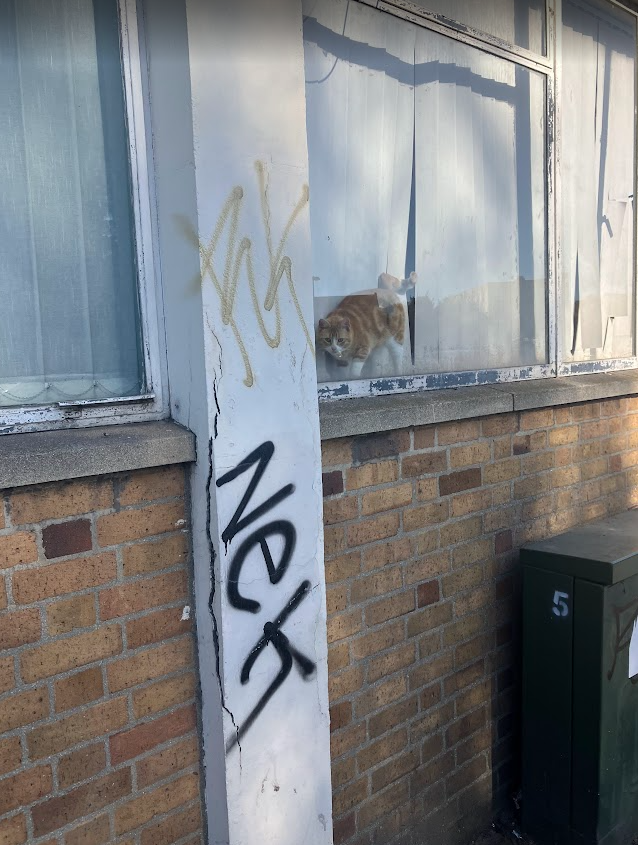
Nek is everywhere in Birmingham: bus stops, hand dryers, public memorials. He — for I discover the tagger is indeed a man — invades private moments; I check a photo of a cute cat I’ve snapped for my girlfriend, and there in the foreground, on a wall, is ‘Nek’, sprayed in black paint.
Like ‘Where’s Wally,’ he’d even snuck his way into the pages of The Dispatch, the three-letter name appearing in bright purple paint behind the head of a parishioner in Kate’s piece on Birmingham’s Welsh language church. Was nothing sacred?
What did it all mean? Was it an acronym? An abbreviation? A sly reference? I started inventing meanings on my commute. Maybe he’s a proud York Road IPA-swilling dad in the throes of a mid-life crisis, so “No-End-to-Kings-Heath.” That would explain the preponderance of the tag across South Birmingham. But then, alternatively, perhaps the whole thing is a guerrilla marketing campaign for the city’s takeout sector: “Never Enough Kebabs.”
The more prosaic and frustrating explanation I eventually alight on is: it probably doesn’t stand for anything. Likely, its sheer stupidity is the point? A meaningless phonetic mantra, repeated across the city: “nek, Nek, Nek, NEK, NEK, NEK, NEK.”
I can’t take the taunting. I decide I have to know who Nek is and what they want. The journey will take me across the city, through its businesses and deep into its secretive graffiti scene.
A double act?
My first pitstop is to Birmingham’s local councillors: repositories of local knowledge, constituent complaints and gossip.
"I know who he is," Izzy Knowles, councillor for Moseley, tells me over a crackly phoneline. My ears perk up. But no luck, she can’t give me a name, for fear of libel. She’s not 100% certain she has the right man yet.
“I've been nagging the police and council to work together to tackle these prolific taggers for over a year,” she says. “Police are going to be serving an order on him soon." But then Knowles quickly corrects herself, it's not a “him” but, in fact, a “them.” She tells me that: “Apparently, there are two Neks…the police [are going to] serve orders on the two people — we'll soon know more about them." So who am I searching for? A father-son duo? Two very bored police partners?
Birmingham deserves great journalism. You can help make it happen.
You're halfway there, the rest of the story is behind this paywall. Join the Dispatch for full access to local news that matters, just £8/month.
SubscribeAlready have an account? Sign In