


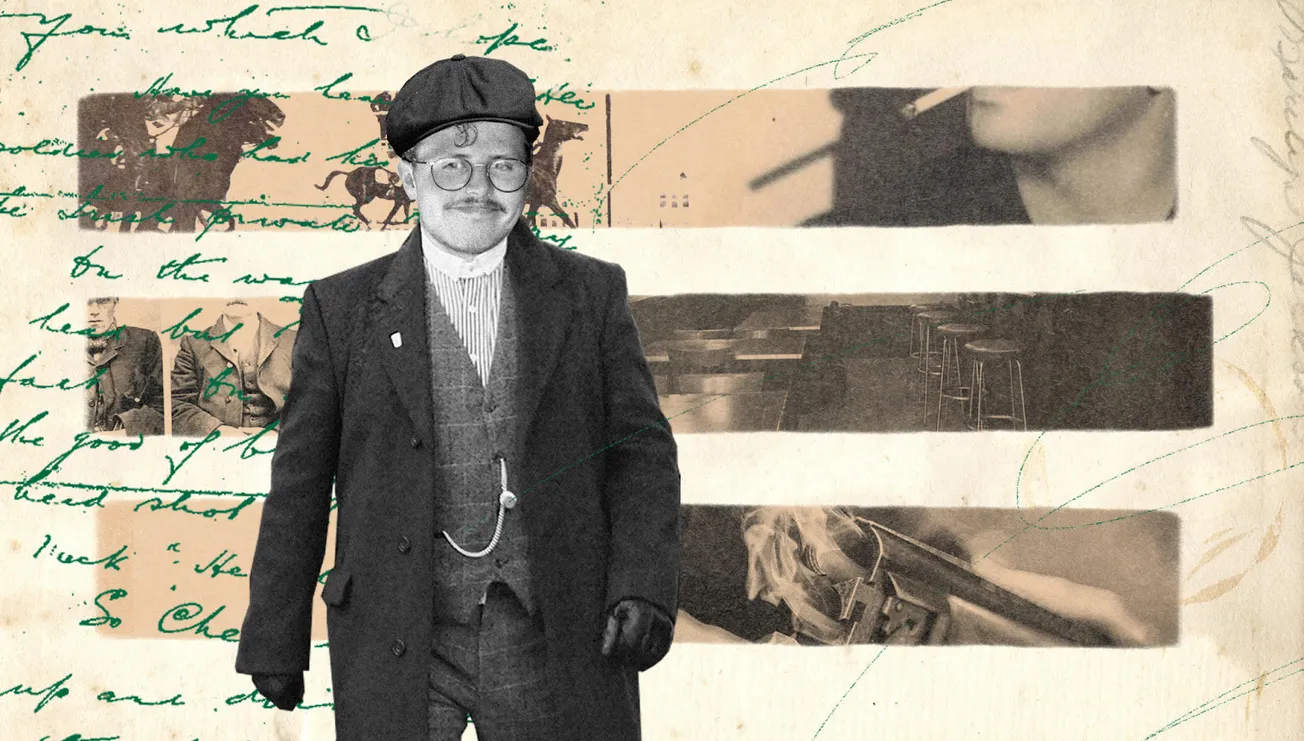
Dixie points his revolver at the man’s head and forces him to his knees. “Do not cross me, again!” he bellows in a thick Irish accent. The entire room falls silent. Then it’s my turn.
I’m at a Peaky Blinders-themed event attended by superfans of the show. The day involves roleplay, cosplay, and karaoke and is attended by dozens of costumed devotees. In the Edwardian saloon bar, pearl-laden ladies in hats and long coats happily converse as tweedy men laugh and chunter illegibly. The scene transports me to a time that seems simultaneously simpler and more complicated. My bubble bursts when the door swings open, smacks me on the back and a female server shouts, “Who ordered the ribs and chips?” “It wasn’t me,” I tell her as she shuffles through the crowded space, knocking someone’s Sprite onto my shoe.
For the uninitiated, Peaky Blinders was a BBC crime drama set in post World War One Birmingham. Famous for the iconic razor-blade-laden peaked caps they wore, the series chronicled the Shelby family’s rise through the British class system, as they confronted rival gangs, police, and politicians. The undisputed leader of the clan is Tommy Shelby, the ruthless sociopath this entire pub full of people would desperately love to be. Indeed, few have done more to make the Brummie accent sexy than Irishman Cillian Murphy, who played Tommy.
Peaky Blinders had a strange effect on its most ardent enthusiasts: it made them want to be part of the show, not mere observers. When Breaking Bad was at the height of its fame, you didn’t see dudes in pork pie hats and goatees roaming around the Midlands, but you would be able to go to America (specifically Las Vegas) and partake in a “Peaky Blinders immersive experience”. The appeal may be global, but Birmingham hasn’t been shy in cashing in. There’s a walking tour, portraits of the Shelby gang outside New Street Station, a (now closed) Peaky Blinders pub, an escape room, a ballet, and even a themed dining experience: Porky Blinders.
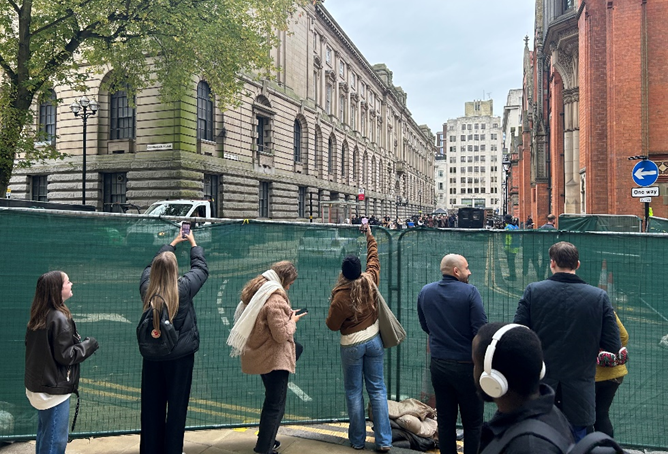
As I write this, the upcoming Netflix Peaky Blinders film is shooting outside the window of Dispatch HQ. Arms hold phones over the perimeter fence attempting to capture coveted pictures. A security guard tells me that he’s seen “people come from France, Russia, America and places I’ve never even heard of” to catch a glimpse of the action, even if it is just watching crewmembers paint a pub on Gas Street.
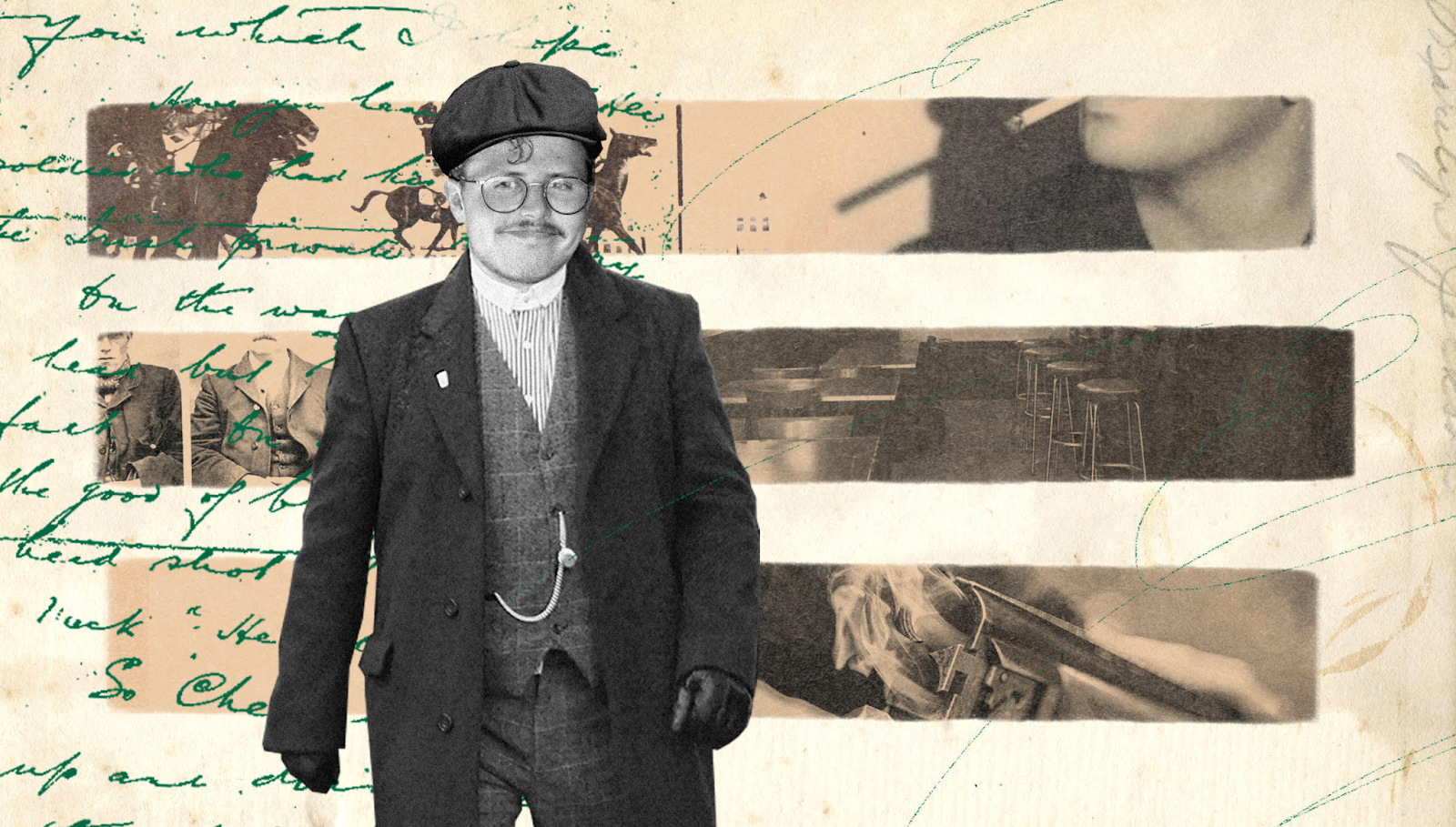
Like every other insecure 15-year-old boy, I really loved the show, but even when I sported my Peaky-est shaved back and sides, did I love it enough to literally watch paint dry? I tell him I’m a journalist. “Shit, I should not have told you that,” he says, before telling me the production company does its best to keep information from leaking to the dedicated fanbase — some of whom camp out for hours to catch a peek of a peaked cap. The question, of course, is why. Why would anybody do that? It’s a question that brings me to the Big Bull’s Head on a Sunday afternoon, to meet the West Midlands Peaky Blinder Facebook Group, which boasts 29,000 members. My flat cap was £9.95 from Amazon. I look more like a held-back schoolboy than a hardcore gangster.
Enjoying this edition? You can get two totally free issues of The Dispatch — including our Monday news briefings and the weekend read you're perusing right now — every week by signing up to our regular mailing list. Just click the button below. No cost. Just old school local journalism.
Three older men are planted outside the pub, all of them in three-piece wool suits, overcoats and peaked caps with fake razor blades. They check their pocket watches as they puff on pipes and roll-up cigarettes. “Is this the right place?” I ask, ludicrously.
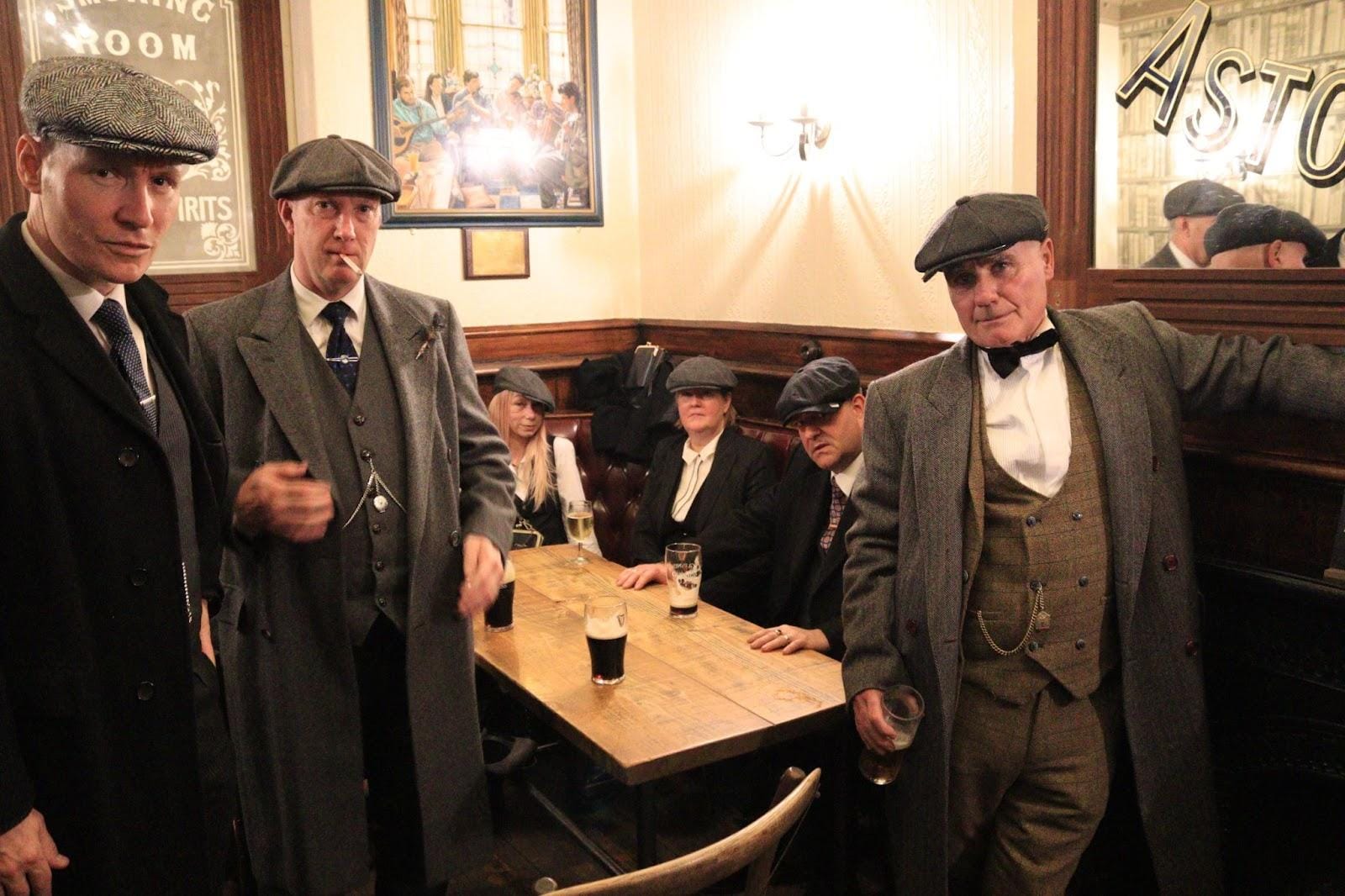
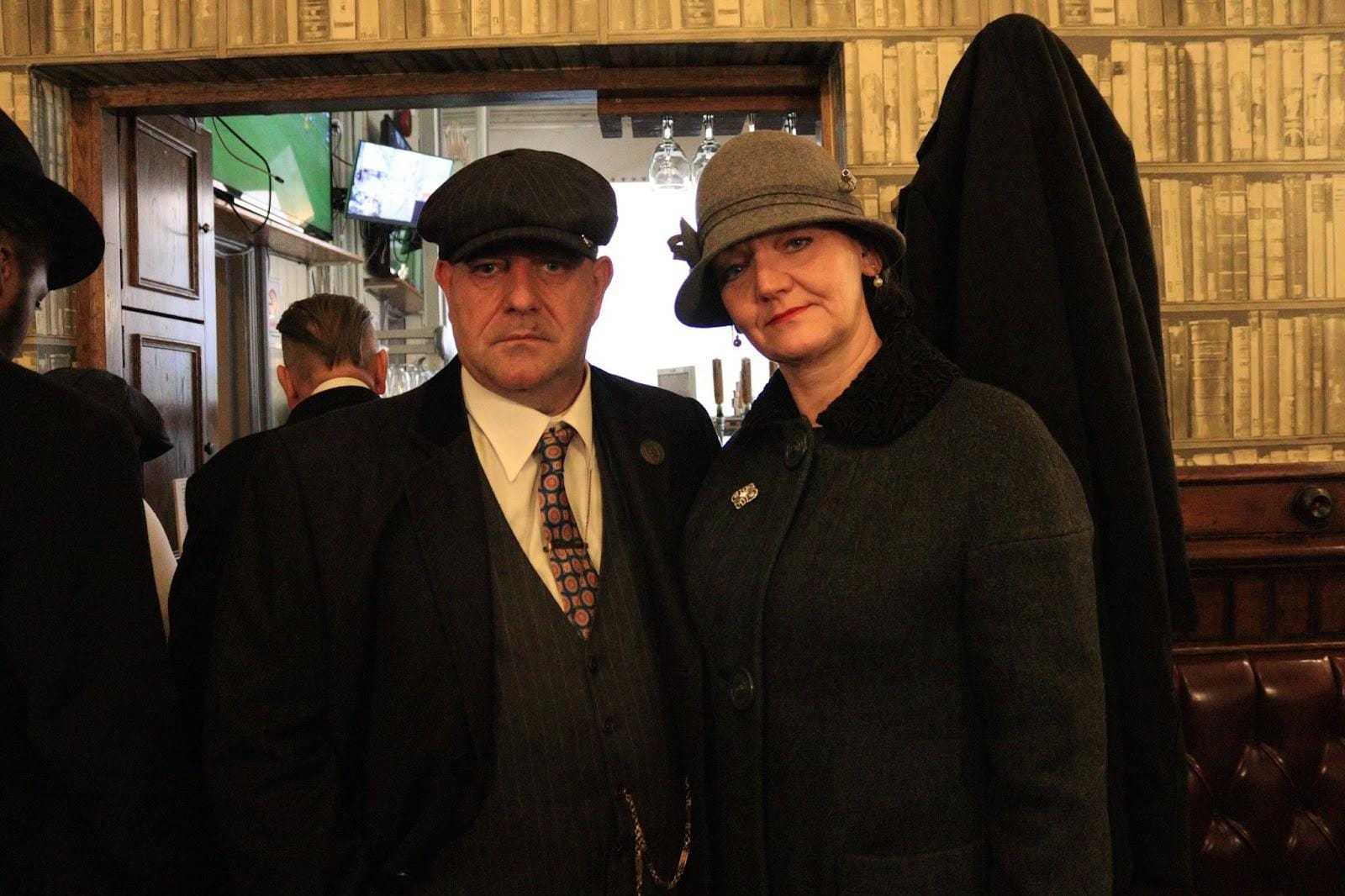
Inside, the room — wood panelling, glazed tiling, fireplace and dark oak furniture — is dimly lit. I shake hands with dozens of people who have been attending the group for as long as six years. I speak with a smartly-dressed Brummie couple called Phil and Julie. They watch the series regularly and have adopted the name Kimber (a character from Series 1) online. The three of us discuss how Brummies are often the butt of ridicule on television, and how it’s refreshing to have a programme that doesn’t mock or deride working-class West Midlanders. “In America, it’s everywhere,” Phil says, “American gangsters were all working-class heroes. When America was down and out, they were fighting, and people loved that. Similarly, no matter how bad things get, Tommy’s always got a plan.”
Julie tells me she enjoys seeing Tommy protect his family, as well as the respect shown to women during the period. “As a woman I can easily wear my jeggings and my sweatshirt and everything, but when we come to a Peaky do, you go feminine. You can go as male, too, if you want, obviously.” Despite the rigorous gender roles of the era, several women at the meetup are dressed in typically male Peaky attire.
Phil and Julie tell me it’s empowering to dress how they do, even though it’s hard to find room in their house for the massive wool coats. When they go out dressed Peaky, they say they’re treated with more respect.
Coming here is evidently an expressive outlet for many working-class Brummies. This is certainly true for Julie and Phil: Phil’s a chimney sweep and gardener, and Julie works as a nurse — the timelessness of their professions isn’t lost on me. Phil describes coming home “dirty and grubby and in a mess, so then it's really nice to sharpen up and look good when you come out.” Julie looks me up and down before telling me, “You’ve got the look as well.” They both try to place me. Which hardened member of the Shelby clan will they compare me to? Tommy? John? Not Arthur, surely? I eagerly await their verdict.
“Downton Abbey,” Julie says with certitude. They both nod in agreement. Apparently, I’m more of a Maggie Smith than a Cillian Murphy.
Still reeling, I speak with some of the group’s younger members, two of whom are involved in the upcoming film. “Who do you think looks more like Cillian [Murphy], me or him?” Finlay asks, referring to another boy who admittedly looks a bit less like the character. Finlay is my age, wears an expensive three-piece suit bought for him by one of the group’s older members, and throws back a double whisky before sputtering it across the pavement. He tells me the group has links with Stephen Knight – the omnipotent creator of Peaky Blinders — who recently cast Finlay as a younger Tommy, and the other boy as his stunt-double.
It’s at this moment that Dixie explodes into the room. He yells in his signature thick Irish accent with his arms raised in the air. Dixie is in his early 60s, wears a three-piece suit, overcoat and — of course — a peaked cap. His clean-shaven face is lightly glazed with sweat, and his different-coloured eyes hold my attention.
Welcome to The Dispatch. We’re Birmingham's new newspaper, delivered entirely by email. Sign up to our mailing list and get two totally free editions of The Dispatch every week: a Monday briefing, full of everything you need to know about that’s going on in the city; and an in-depth weekend piece like the one you're currently reading.
No ads, no gimmicks: just click the button below and get our unique brand of local journalism straight to your inbox.
He announces the beginning of the ‘walkabout’ — a scheduled march through the streets of Digbeth as a sort of cosplay spectacle for photographs and videos. Before they set out, though, he beckons me over, puts a realistic prop gun in my hand and instructs me to point it at a man who is now kneeled on the floor in front of us. I don’t know why this is, but another man takes a photo, and I’m too embarrassed to question it. Instinctively, I make a cheesy grin. “Don’t smile,” Dixie says. I adopt a sterner countenance. The man on the floor groans and asks if we’re done yet. The photo is taken, I hand back the gun, and Dixie and I retreat to have a conversation.
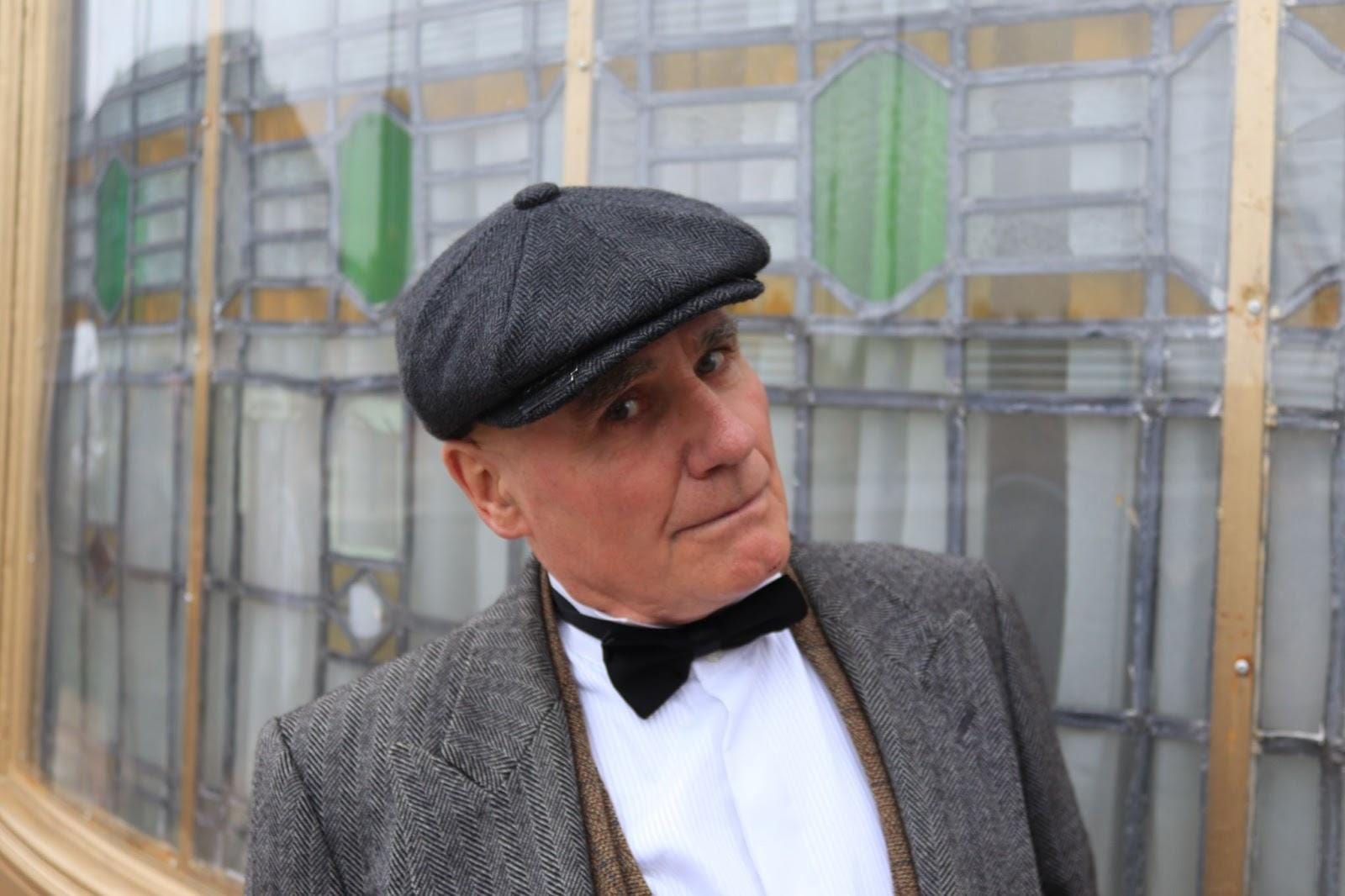
“We’ve got a new guy coming into the movie called Barry Keoghan,” Dixie tells me. When Dixie refers to the Saltburn actor’s casting, his use of the word we is similar to the way my nan might speak about the royal family. “Barry is a Dublin man like myself, and I understand where he comes from. His mum died of a heroin overdose, he was put in homes, his nan took him in,” he says. Dixie tells me his brother died of a drug overdose, that numerous members of his family are in prison for murder, and that he left Ireland at 16 to escape the gang culture he had risen through, notably in a smartly-dressed organisation referred to as ‘The Firm.’
Despite being an older man, he takes a step back and demonstrates sweeping fighting moves as I stand next to him on the road outside the pub. I tell him he’s a real Peaky Blinder and ask if it’s strange to find himself among people who might glamorise gang culture. He tells me he knows “they haven’t got that in them, they don’t know how it works.” Evidently, Dixie is the real deal, I almost can’t believe the gleeful man in front of me is such a prolific ex-criminal. The only remotely intimidating thing about him now is probably his dry-cleaning bill. He stops swinging around and tells me he considers the group his adopted family. Observing this familial community, I believe him.
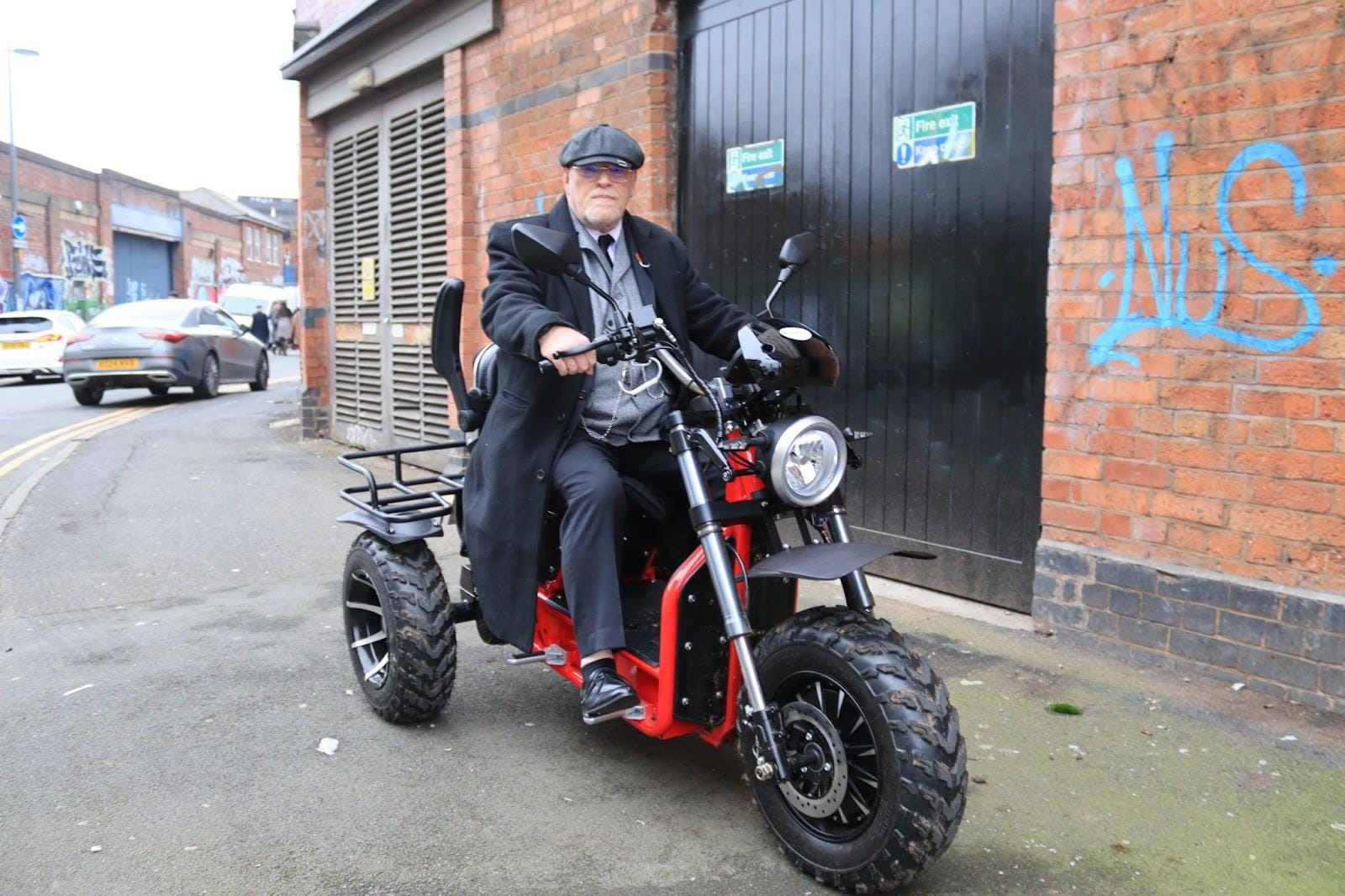
A steady stream of cheery flat-capped chaps pours onto the street with Dixie in the lead. It would look like a Lowry painting if it weren’t for an older man clambering onto a massive, bright-red motorised trike. Passersby have already begun to take photographs. The march’s pace and attire would facilitate a mournful atmosphere if it weren’t for the moan of the trike trailing in the rear.
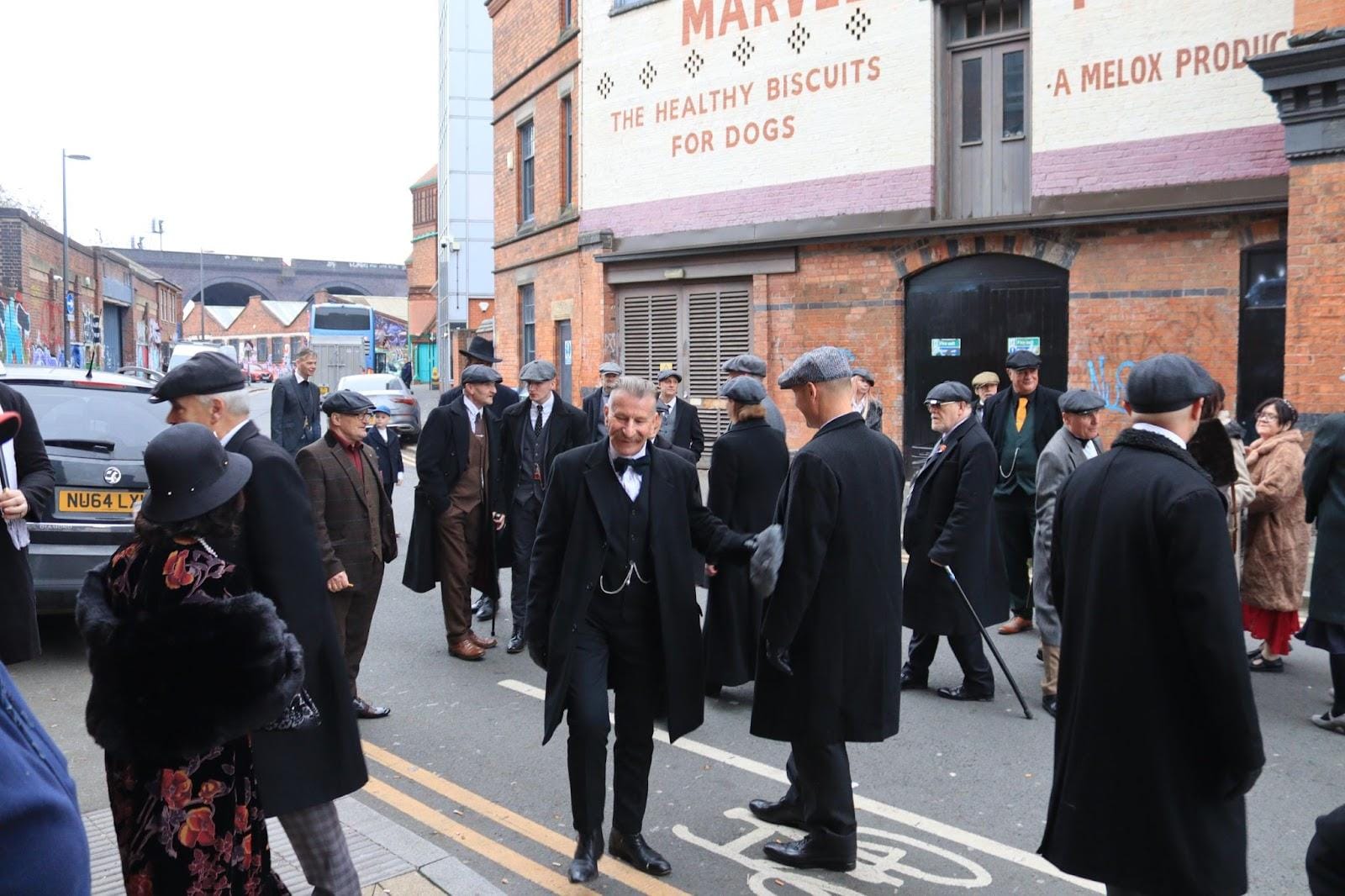
As the muted mass of greys and browns (and a splash of red) ebb into Digbeth, I spot Kelsey leaning against the exterior of the pub. The brightness of her dress, her red hair and cheery disposition offset any post-great-war gloom. For all the roleplay of the day, our interaction feels refreshingly authentic. She tells me conflicts crop up in the group when members try to make money from their fandom, taking private bookings as lookalikes, for example, or beefing over who gets to be Tommy, but mostly “it's really lovely.” Kelsey is a full-time carer for her mom and grandparents. She tells me, “It’s nice to escape to be someone else for the day”.
Back in the bar, I speak with two men about their brother, who recently passed away. They’re arranging a Peaky Blinders-themed funeral for him. This brief exchange stays with me long after I shake a dozen hands and march alone into Digbeth. I walk under the graffiti-wrapped viaduct, take note of the Edwardian buildings, and count the number of flat-cap-wearing passersby. I think about how the series, and the group it spawned, lets working-class Brummies see a semblance of their own complex lives reflected on screen. It’s easy to mock people for their devotion to anything, especially when the caricature of pseudo-masculine lads in Peaky Blinders Halloween costumes is such a pervasive image in the national consciousness.
You know what, though? Dressing like a Peaky Blinder empowers people who feel dirty from work and unacknowledged by society to walkabout, be photographed, be seen, and be validated. It might be fiction, but the Shelbys have developed a mythic quality, especially inspiring to people whose real lives are in need of more hope and recognition. After attending this meetup, I understand why it matters that no matter how bad things can get, Tommy’s always got a plan.
Welcome to The Dispatch. We’re Birmingham's new newspaper, delivered entirely by email. Sign up to our mailing list and get two totally free editions of The Dispatch every week: a Monday briefing, full of everything you need to know about that’s going on in the city; and an in-depth weekend piece like the one you're currently reading.
No ads, no gimmicks: just click the button below and get our unique brand of local journalism straight to your inbox.
If someone forwarded you this newsletter, click here to sign up to get quality local journalism in your inbox.


Comments