


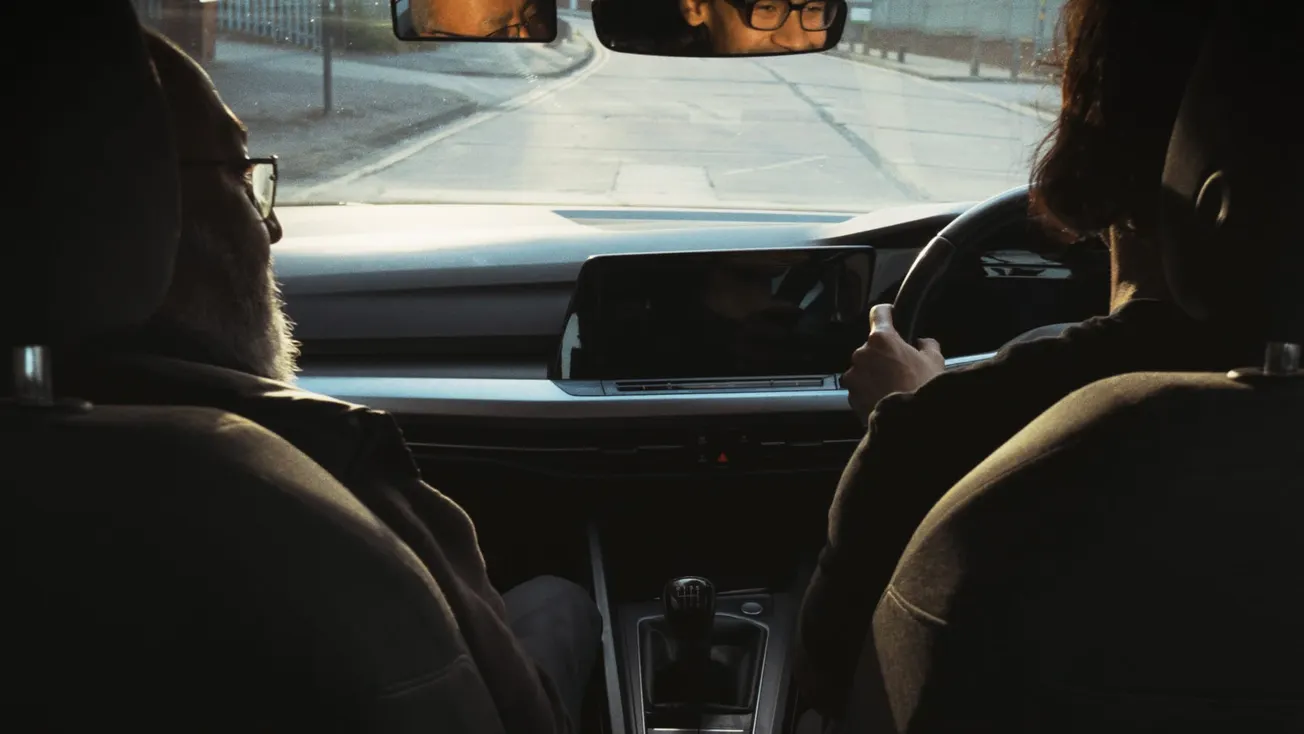
“I found this book, 50 Years of Bangla Brummies. Brummies, that’s what people from Birmingham call themselves.”
“They call themselves Burmese?”
“No, Brummies. B-R-U-M-M-I-E-S.”
“Oh, Brummies…”
It’s a spring evening earlier this year and Bangladeshi artist Laisul Hoque is chatting with his friend Mehrul on a call from back home. Hoque, who normally lives in London, is staying in an AirBnB he’s rented in the city centre while working on a commission to create a new artwork connected to Birmingham’s Bangladeshi community.
Much like his friend, Hoque was unfamiliar with this city prior to making his film Learning to Drive in Birmingham, currently on show at Grand Union. The 30-minute film doesn’t waste a moment. It interweaves scenes from Bangladeshi-Brummie history (protests and political visits), gorgeously-shot public transport frustration, a thank you note from Margaret Thatcher and observations on this place, both from those based here and those who have never been but can imagine Birmingham anyway from everything they’ve heard (“It’s kind of dreary, it’s kind of rainy, everyone’s kind of depressed”).
On a July afternoon I meet the 28-year-old artist at the opening of his show. Outside, it’s so warm the air seems to warp. In the distance, irate motorists are hammering their horns. But here in the gallery’s small office, Hoque, wearing thick-rimmed glasses and a warm smile, emanates calm. When I ask if he’d ever thought about Birmingham prior to starting the project, he admits the city had never come to mind before. Even after half a decade in the UK, he hadn’t spent much time outside the M25 besides a few trips to the south coast.
Still, when Hoque was approached by Grand Union in partnership with London’s Bow Arts to make work in Birmingham, he was intrigued. “If somebody comes to me being like, there’s a lot of cultural material here you might find interesting, that’s a strong draw.” Besides which, he was getting restless in London. "I [thought], okay, this can't be my life,” he says. “I want to explore the rest of the island!”
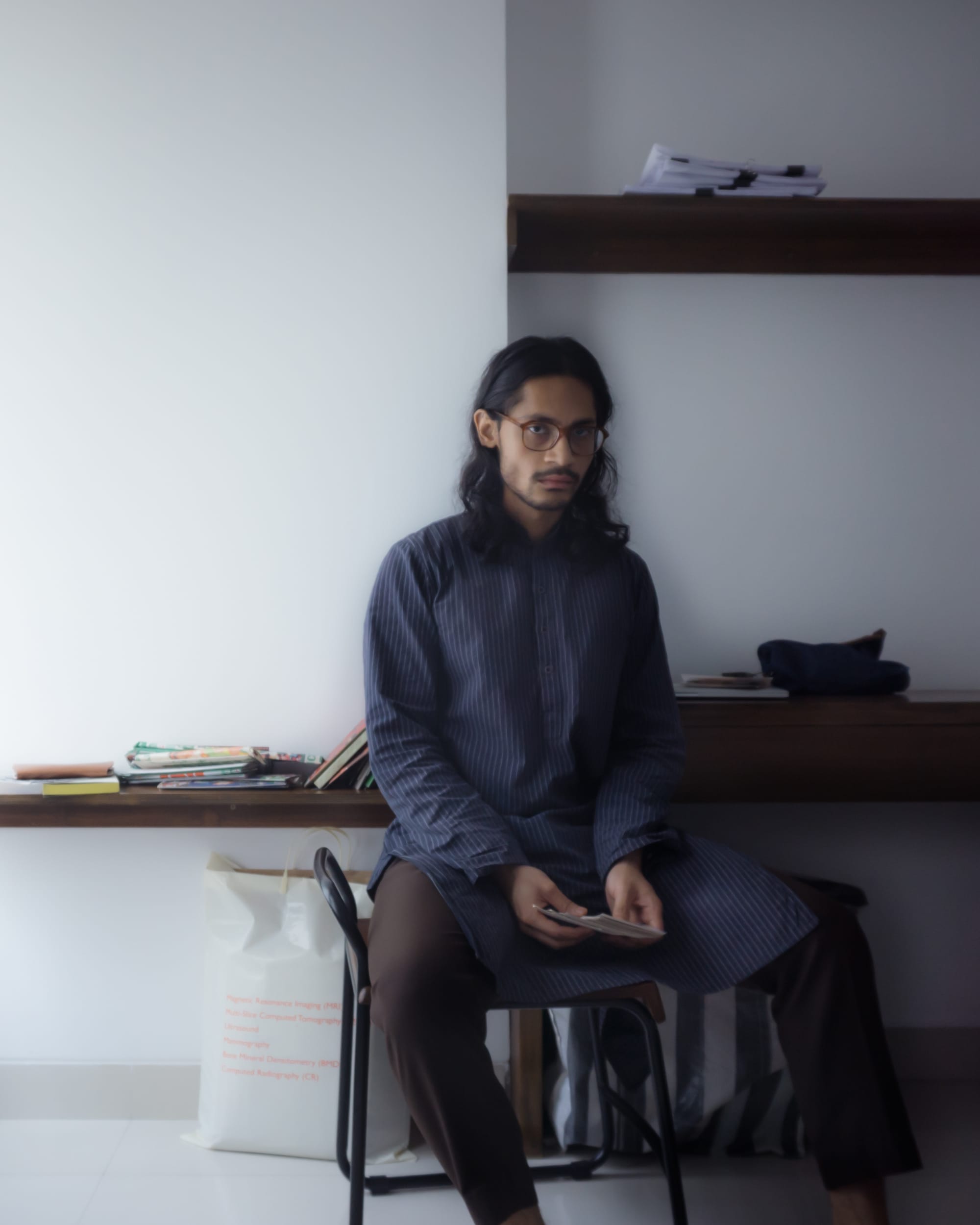
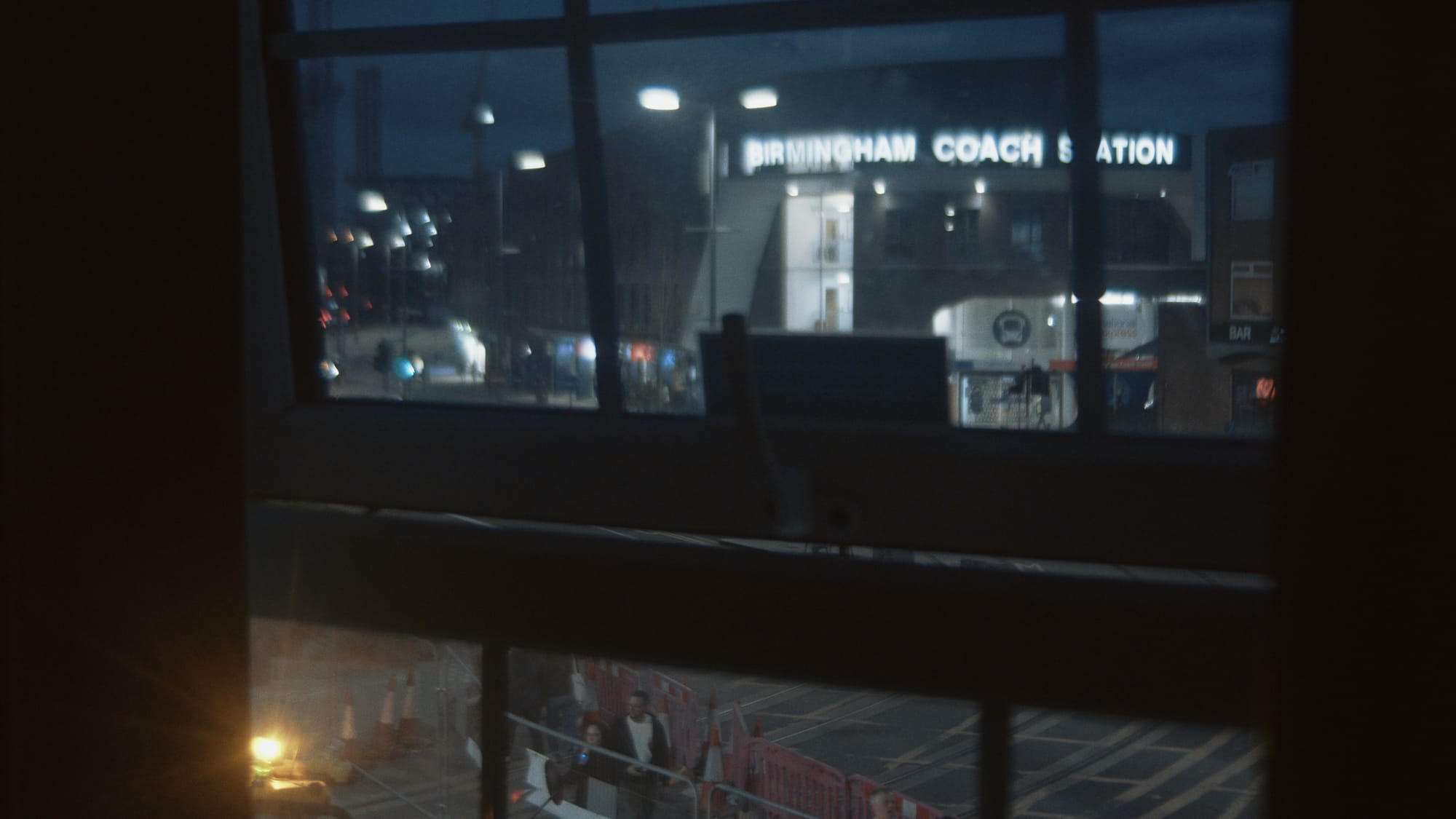
On his first visit, the Christmas lights were in full twinkle and he thought the city was beautiful. Subsequent trips were less magical. Pulling in towards New Street in the harsh light of day, seeing the HS2 construction site stretching “like a gaping wound” on the surface of the city, he wound up arriving a good hour late for a meeting thanks to Digbeth’s labyrinthine diversions. The city centre felt “kind of empty” and unwelcoming.
Friends who knew Birmingham told him to check out Small Heath, Lozells, Coventry Road which he did, travelling there on multiple-leg bus journeys that were frequently delayed or cancelled. “They’re streets with shops with uncles hanging out.” He remembers wondering, “How do I engage? How do I get a sense of people’s lives and stories?”
Over the last few years, there had been moments where Hoque would have found a driving licence useful, like taking his father to hospital. Now here he was looking for a way to embed himself into the everyday fabric of a metropolis which seemed uniquely inhospitable without a car. By learning to drive in Birmingham, he hoped to kill two birds with one stone: solving his transport issue and getting to know the city better.
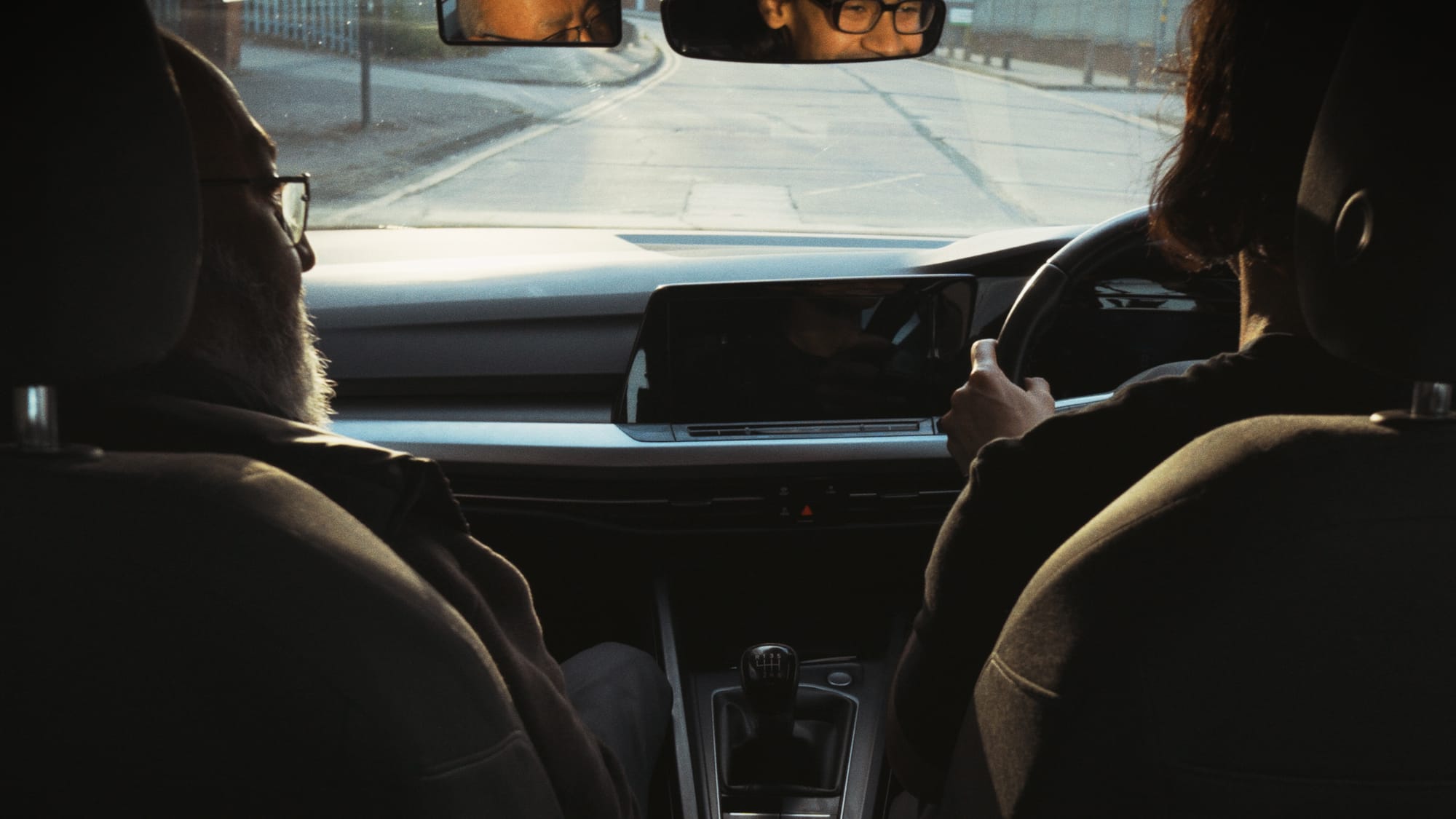
Turns out, Birmingham is not short on Bangladeshi driving instructors. Eventually the cousin of a friend put him in touch with his instructor, Harun Al Faruque. Over the next three months, Hoque would come to Birmingham every couple of weeks. In the mornings he’d take lessons with Al Faruque around Alum Rock and Saltley. In the afternoons, he’d head to the Library of Birmingham, while evenings were spent meeting up with a younger generation of Bangladeshi Brummies.
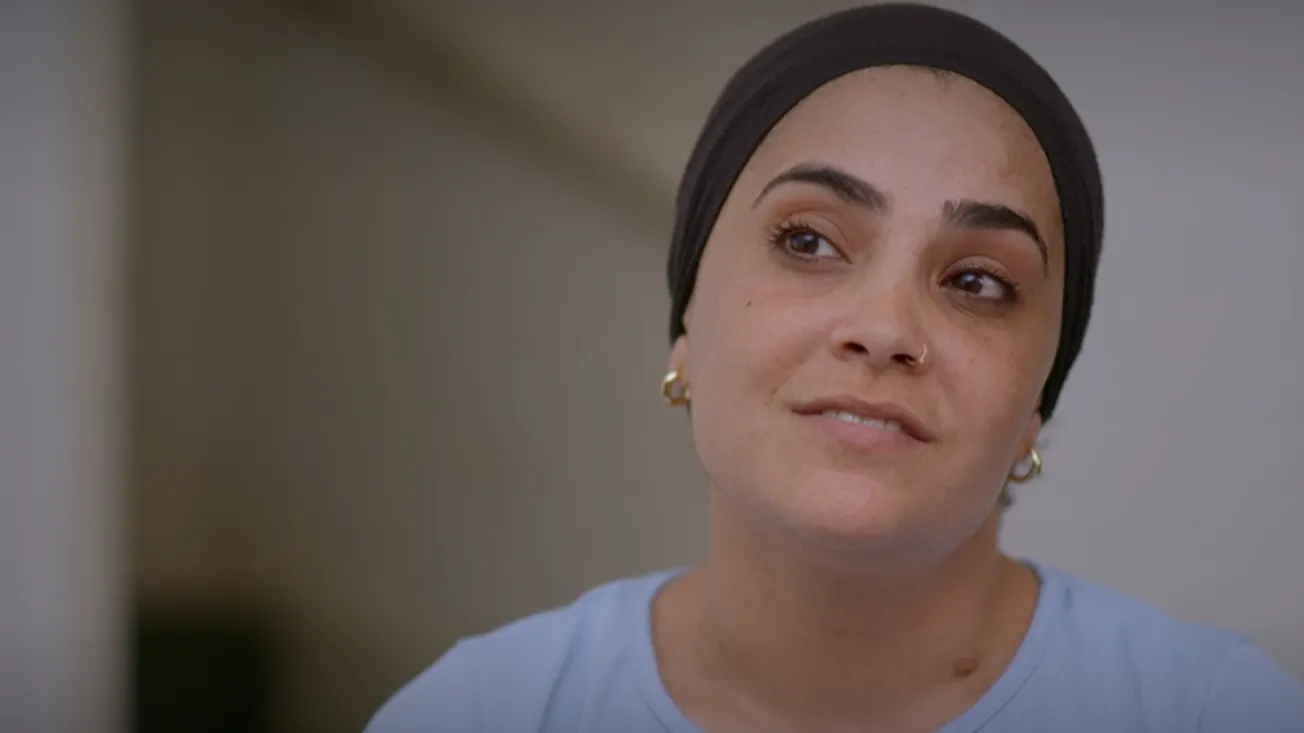
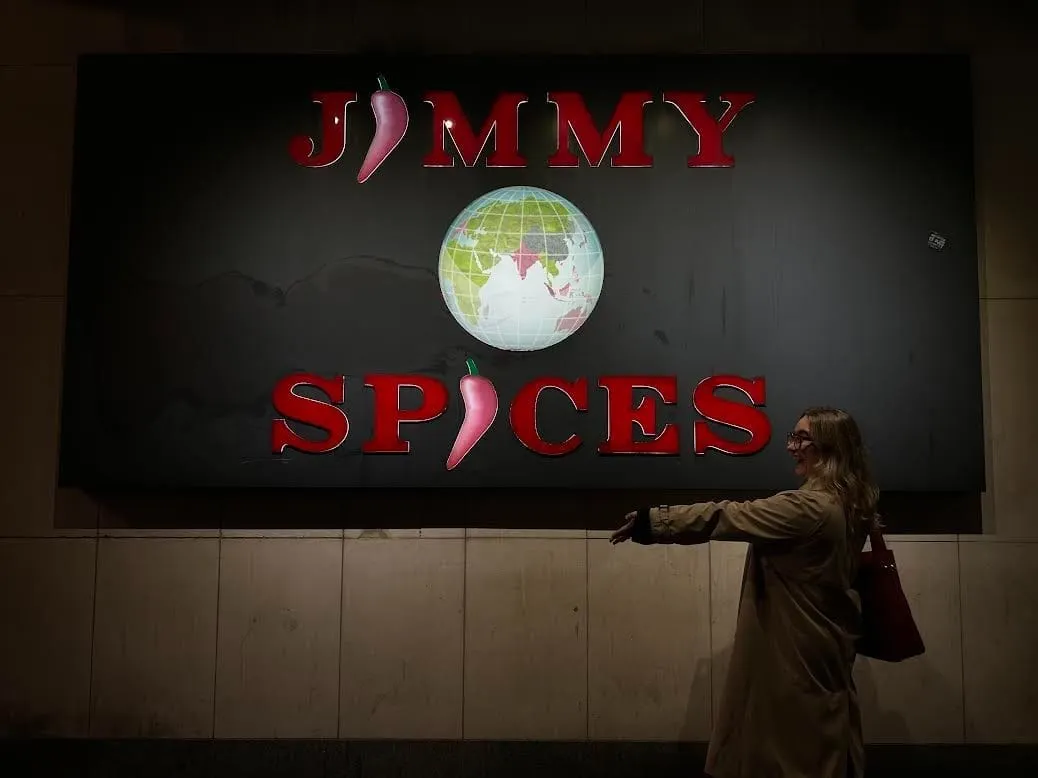
One was Sparkbrook-born artist Nilupa Yasmin, whose work is inspired by her Bengali heritage. She appears in the film driving with Hoque around the city. Another was Mohammed Ali, a street artist who features in the film talking about Knights of Raj, a 2018 exhibition he curated which corrected the history of curry in Britain by emphasising the significant role of Bangladeshi Brummies.
Ultimately, Hoque’s research into the Bangladeshi-Brummie identity also made him think about his own. “In Bangladesh, the history is: you were farming and from farming, industrialisation happened, you moved into the city,” he says, whereas here he came across more complicated narratives. There were thousands of Bangladeshi men who joined the Merchant Navy in the Second World War and built a life in the UK, for example, later setting up restaurants – or becoming driving instructors.
‘These people have a proximity to revolutionary leaders’
In the film, Hoque describes growing up surrounded by political propaganda. We get some sense of this when, part way through Learning How to Drive, Hoque recounts something that happened to him during the Road Safety Movement in 2018.
Demonstrations began after a speeding bus killed two teenagers and student protesters pressured the government to regulate Bangladesh’s roads more rigorously. Hoque was working for an online news platform at the time and remembers how, on walking home, a car pulled up with the platform’s owner inside. He was offered a lift home and accepted, but on the drive back, the news platform owner – who was also a politician – asked him why he wasn’t making a video claiming the opposition party and enemies of the state were behind the protest. Because he didn’t have any evidence to support this, Hoque replied.
The man grew increasingly upset and at a certain point, Hoque realised they were no longer en route to his house. As Hoque explains in the film, “Instead, he would stop the car in the middle of nowhere and say I needed to figure things out and leave me there. And by the time I made it home it was late and my father wouldn’t let me in the house for being late and disobeying him.”
Everywhere he looked in the archives, Hoque found echoes of the overlap between personal and political stories that he’d experienced in his own life. “These people have a proximity to political figures, revolutionaries, world leaders, sometimes turned oppressive rulers,” he says, of the people he met in Birmingham or uncovered in the archives.
This is something we can see for ourselves in the film. In one scene Yasmin talks about seeing people play cricket in Cannon Hill Park, in the next scene there is news footage of a 1971 protest at nearby Edgbaston when the Pakistani team came for a test match. This took place in the same year as the Liberation War, which would eventually lead to Bangladesh’s independence from Pakistan.
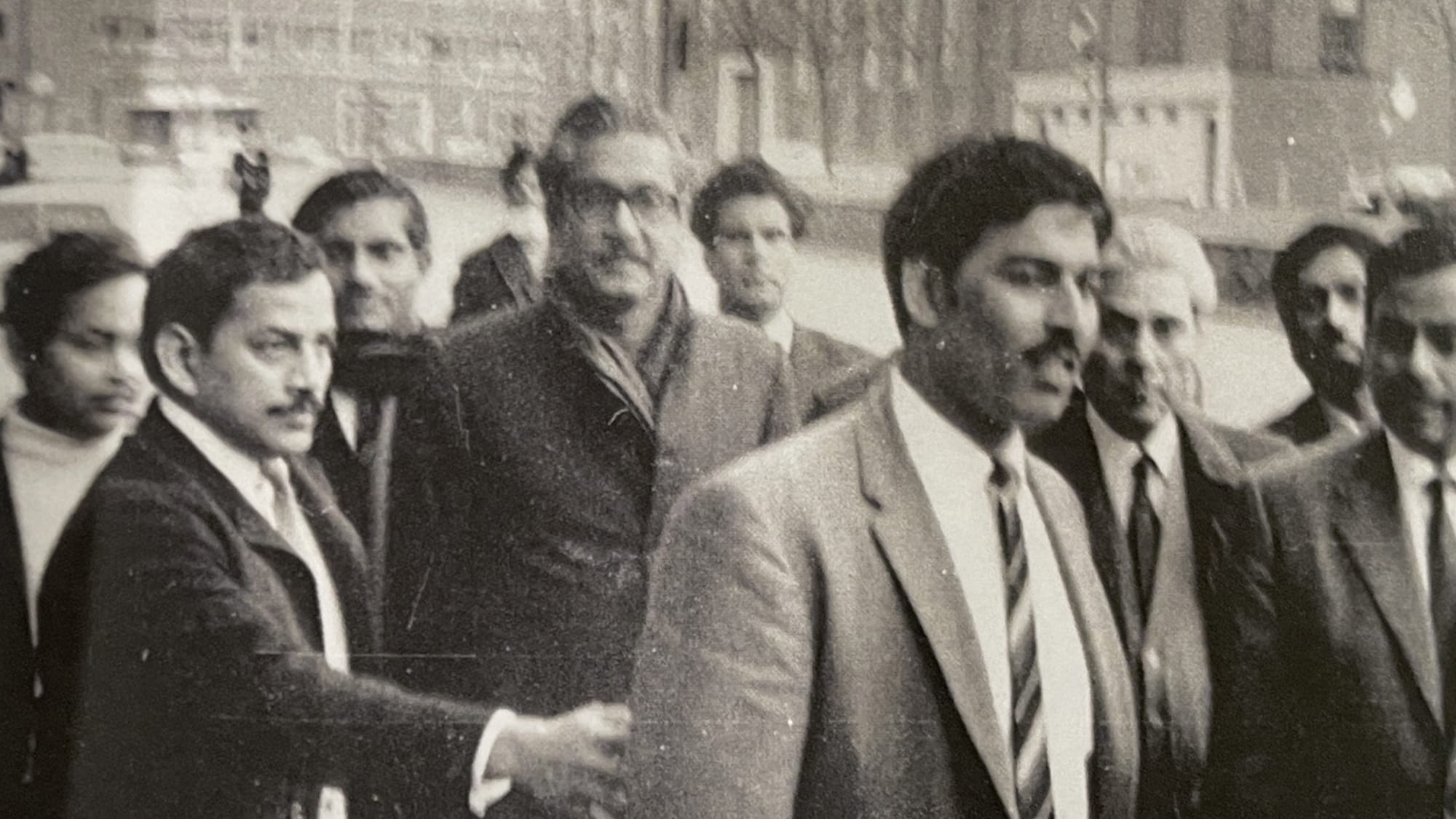
A plummy-voiced news anchor asks Tony Huq, the Bangladeshi school teacher and activist, why they are burning the Pakistani national flag. As a token of protest against the Pakistan government, he explains. The news anchor has spoken to the other side, who argue that sport and cricket should not enter into politics, and he relays this message. Huq remains impassive: “That is absolute rubbish because the extent of genocide and inhuman butchery going on being inflicted by the West Pakistan Army on the unarmed people of Bangladesh is worse than any crime –.”
The car as confession booth
Hoque has the passion for politics that I associate with activists but he tells me he always wanted to be an artist and as a child, was constantly drawing and painting. Initially, his parents were happy he was keeping himself busy but as he got further along in school, he sensed their growing wariness about his pursuing a creative career. They insisted he take STEM subjects then go onto university to study engineering. He complied, but halfway through university, secretly switched to a literature course. It was only at his graduation ceremony that they learned the truth. “They were really upset,” he says.
By this point though, Hoque had secured a funded Postgraduate scholarship to study at Central Saint Martins, University of the Arts London. He had wanted to move to the UK since discovering the British art scene as a teenager through the work of Turner Prize nominee Naeem Mohaiemen, born in London to Bangladeshi parents. He would have a wider scope for artistic experimentation in London than Dhaka, Hoque thought.
In every film and installation that he’s produced since graduating, two subjects dominate: his life and his identity as a Bangladeshi person. In 2023 he made The Purpose was to Document the Other Side, a short film documenting his mother’s trip to London shot on the camcorder his father once used to record a visit to England. The family would watch it on repeat at home. Similarly, An Ode to All the Flavours (2024), a recreation of an antique Bangladeshi sweet shop, is inspired by his father’s favourite snack — a combination of two Bengali sweets. Hoque tells me it’s important to let his own story shape his work. If he’s asking other people to be vulnerable, it’s only right that he should be too.
There’s something about the side-by-side arrangement of driver and passenger that invites sharing, I venture. Like a confessional, it’s an intimate space without the glare of eye contact.
The car became “a portal” to storytelling, Hoque agrees. But he was also struck by the disparity in getting around Birmingham compared to London. “The Bengali people who have made Birmingham their home rely heavily on private transport and to engage with them, I had to get access to a car,” he says. “That speaks poetically to the history of Birmingham but it’s also a problem. Public transport is a privilege.”
With three months of navigating Birmingham’s roads under his (seat)belt, Hoque has booked a test for November. He’s not driven much in London but he’s planning to take some refresher lessons beforehand. His new friend the artist Nilupa Yasmin thinks he's got nothing to worry about. “If you can drive in Birmingham, you can drive anywhere.”
If you’d like to catch ‘Learning to Drive in Birmingham’, you can watch it at Grand Union in Digbeth (on until 3 October 2026).
If someone forwarded you this newsletter, click here to sign up to get quality local journalism in your inbox.


Comments