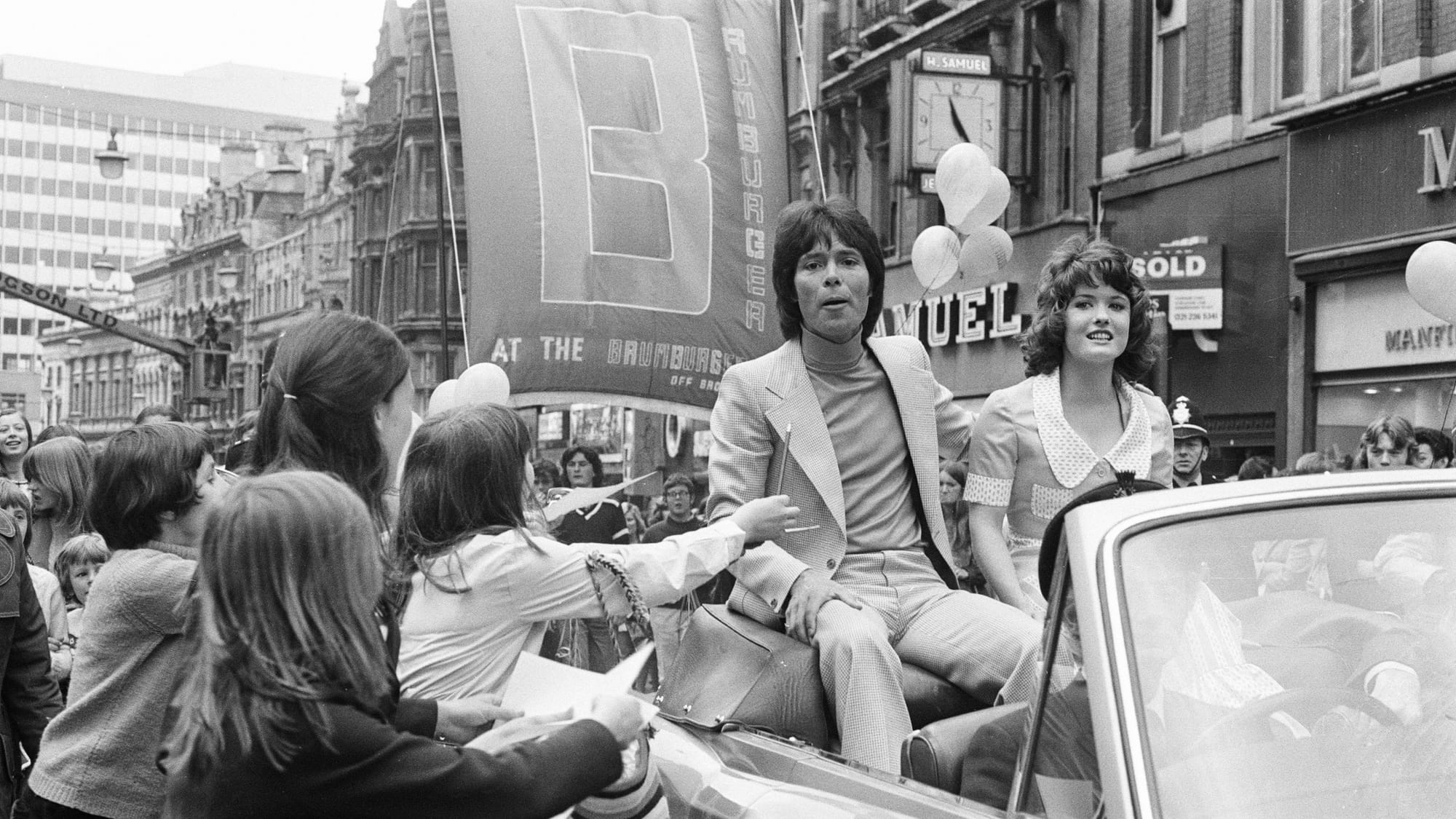

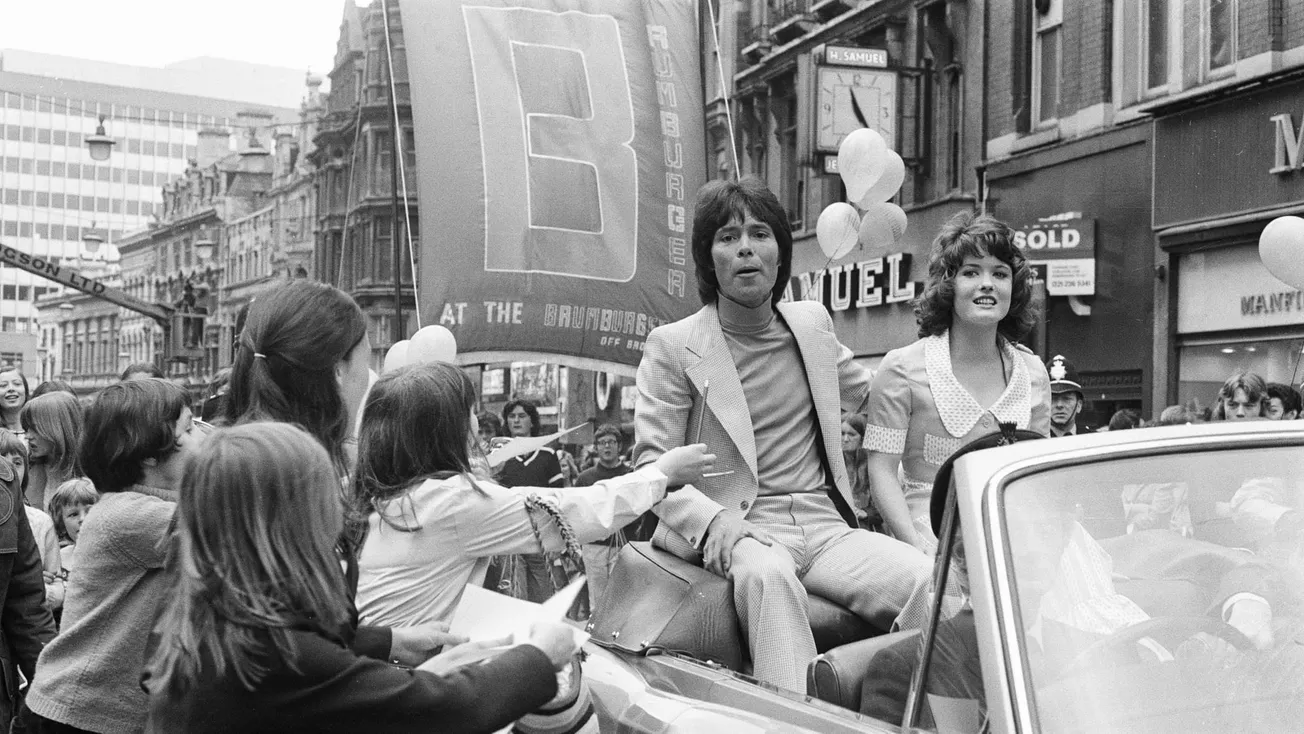
At a sodden Spaghetti Junction, a Mini Clubman descends from the M6 to the Aston Expressway. These roads have been open barely a year, but already look much older. Visible in the background are the grime-blackened cooling towers of Nechells Power Station, standing roughly where Star City does today, and, next to the Expressway, rows of factory rooftops. The 20-year-old tower-blocks of the Holte & Priory Estate also interrupt the skyline. Austin Maxis and Triumph Dolomites trundle past. A van has broken down in the far lane.
We cut to inside the car. A familiar man wearing a brown three-piece suit and matching tie is at the wheel, his expression grim. His inner monologue begins to play out as the car putters into town: “Just as bad as I expected… Even worse. But I’ve got to face it — face Birmingham!”
This is 15 minutes into Take Me High, a 1973 musical comedy, starring Cliff Richard as Tim Matthews, an ambitious banker reluctantly sent to Birmingham. It’s a truly bizarre use of celluloid, but also a fascinating document of the city’s unforgiving post-war redevelopment, as directed by infamous architect Herbert Manzoni.
I only learned of Take Me High’s existence two years ago, during my ongoing research into local musical history. Picking up a copy from eBay, I stuck it on and was mesmerised. Not by the threadbare story or forgettable songs (I’ve played the title track three times today and still couldn’t hum it to you), but with the Manzoni-fied Birmingham it captures in glorious technicolour.
But Take Me High gets just four sentences in Cliff’s 2020 autobiography The Dreamer, his opinion of it simply: “It was an interesting film”. This concise assessment could potentially be because the project ended his run on the silver screen for good.
Birmingham deserves great journalism. You can help make it happen.
You're halfway there, the rest of the story is behind this paywall. Join the Dispatch for full access to local news that matters, just £8/month.
SubscribeAlready have an account? Sign In