

The Dispatch is hiring! And there is one day left to apply. Are you - or do you know - a fantastic writer with top-notch reporting skills? We want to hear from you.
Inside the family sausage factory, Darren Lashford points out an archive on the wall. First up are letters from Buckingham Palace and Clarence House, thanking the Lashfords for sausages they dedicated — and donated — to Charles and Diana’s wedding in 1981. “The ‘Royal Sausage’ line lasted longer than the marriage so it’s definitely a good product”, says Darren. He points to another framed heirloom, “And that is a hand written letter from John Major — we used to supply Downing Street with faggots.”
In his mid-thirties, Darren is the latest link in a long chain; the fifth generation heir to a Birmingham sausage dynasty that began as a Victorian-era butcher’s shop in Kings Heath. Lashford's now ships its products worldwide, but handmakes every banger at a factory in Kings Norton.
In the locker room, I’m directed to sanitise myself: my boots are cased in plastic, my locks stuffed into a hairnet, and my limbs piped into overalls. “Ready?”, asks Darren, who wears a Lashford's-branded gilet (sadly these are unavailable for purchase).
Enjoying this edition? You can get two totally free issues of The Dispatch — including our Monday news briefings and the weekend read you're perusing right now — every week by signing up to our regular mailing list. Just click the button below. No cost. Just old school local journalism.
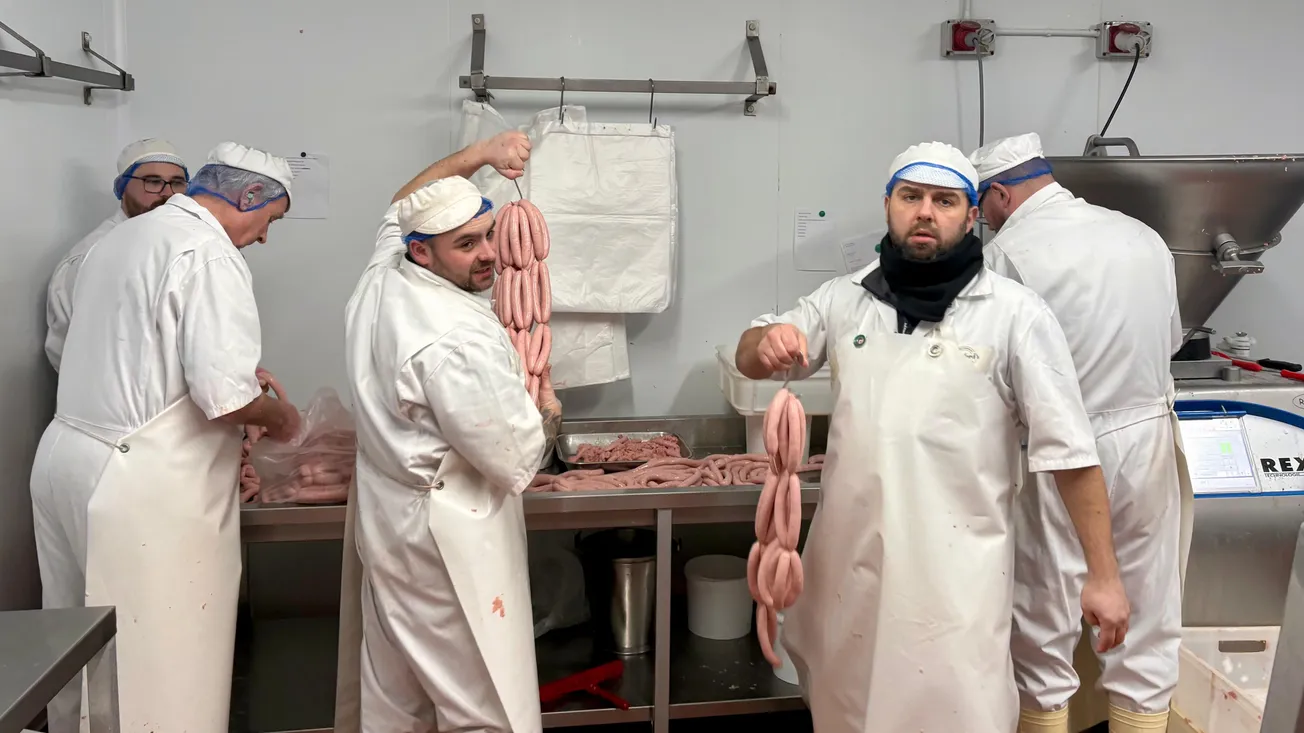
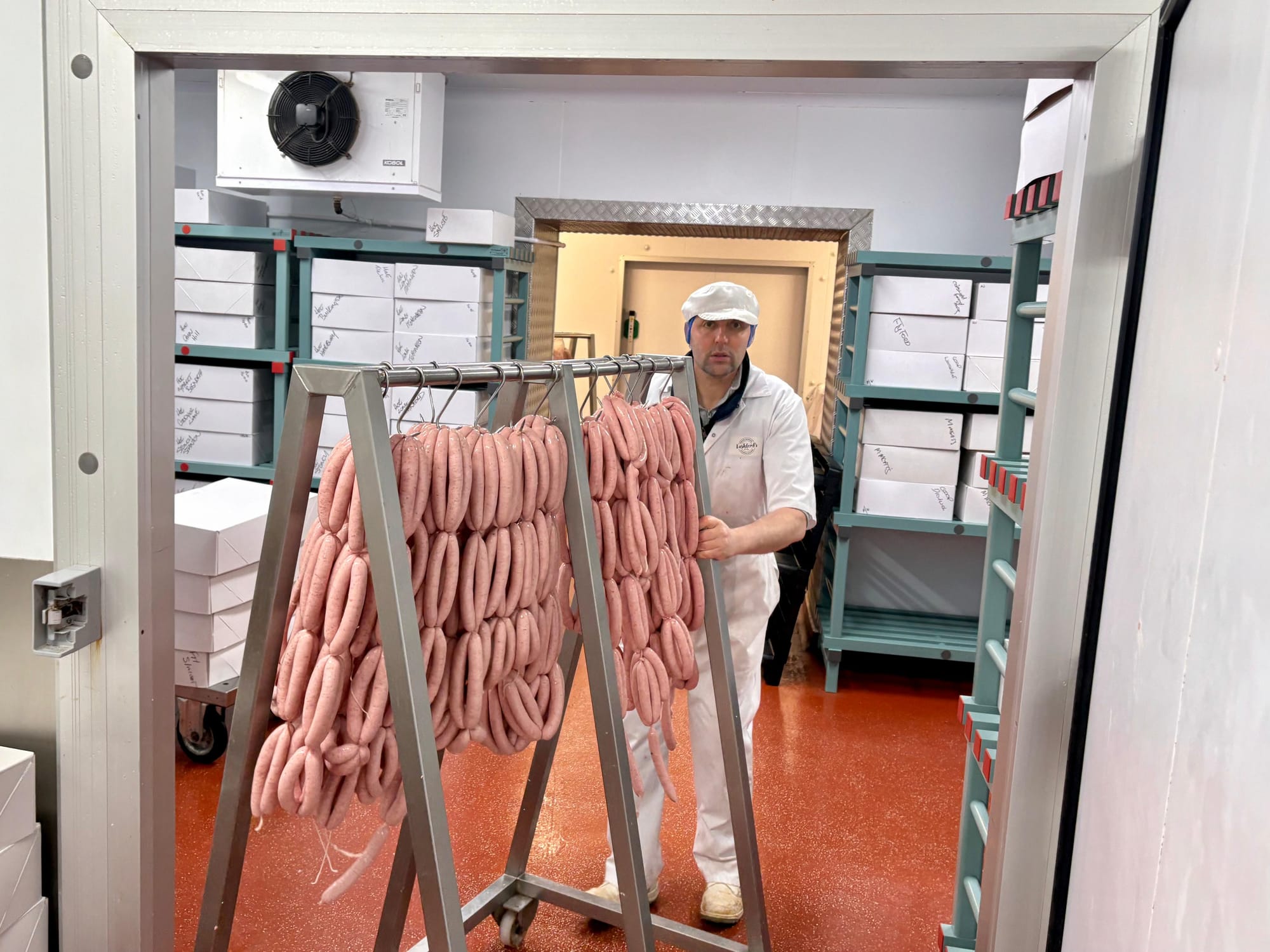
We cross the red factory floor, puckered with drains and illuminated by white neon strip lighting. A jamboree of pork handlers busy themselves at their trade, their chat echoing over the grunt of machinery and the whine of trolleys from which chandeliers of sausages swing. As a lifelong lover of sausages, I’m delighted to embark on a behind-the-scenes tour.
Sausages feel like a bastion of Britishness, but the classic banger of my youth now competes with international variants from almost every nation. Chorizo sits in supermarkets alongside salami and frankfurters, and shares a history as long as cooking itself. While sausages existed in some form or another in pre-Roman Britain, the occupying forces in 43AD brought their own in the form of ‘lucanica’: smoked or air-dried sausages named after the southern Italian region of Lucania. They are an early example of a regional naming convention that continues today, from short, smoked Viennas to coiled peppery Cumberlands.
The Midlands has several regional specialties including the Worcester Jubilee which are flavoured with Worcestershire sauce, and the garlicky Rutland. Here, forests once fattened an abundance of pigs, so pork naturally became a staple food. Britain's less obliging climate historically meant slaughtered meat had to be used quickly; the curing process popularised on the continent wasn’t conceivable in the damp climes of Ancient Britain. Leave pork strung up in Seville and you might get chorizo, leave it lingering in medieval Moseley and you risk something far less appetising. This urgency shaped the sausage itself: fresh, and intended to be promptly cooked.
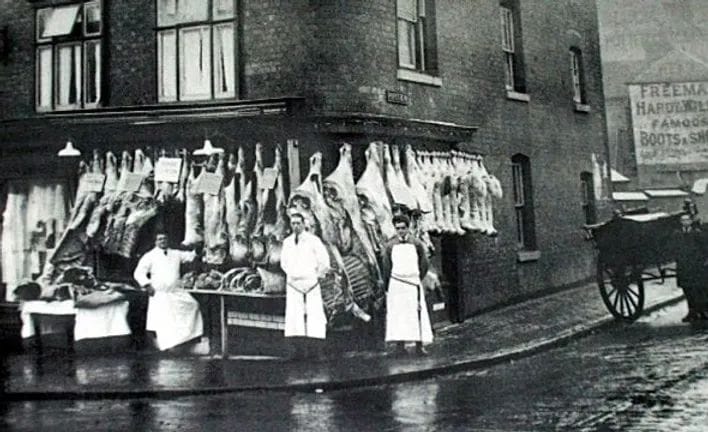
By the mid 19th century, Birmingham had a quarter of a million working people in need of substantial and affordable meals. But the rapid urbanisation that fuelled sausage popularity also bred overcrowding and disease. In 1881, the Birmingham Post reported that “disorder of the digestive organs and diarrhoea” (as a result of eating rotten meat) was the leading cause of fatalities the year before. An informant speaking to the Tamworth Herald said rotten animals “all go to the Birmingham sausage-makers”. Despite the bad press, the power of what was fast-becoming a British staple could not be suppressed. Amid the sausage boom, English brothers Albert and William Lashford set up shop in Kings Heath in 1889: AW Lashford was born.
“Having been local farmers themselves,” Darren says, “it went hand in hand with butchery skills”. The shop thrived, but Darren says the sausage landscape “changed drastically” during the world wars. Rationing and meat scarcity forced manufacturers to bulk out their recipes with water and rusk. When they hit the pan, these sausages would pop, earning them the nickname ‘bangers’. Despite this, sausages only grew in popularity, helping keep the home front fed with an affordable convenience.
Lashford's survived the war and became “an integral part of Kings Heath”, says Darren. As pork became more affordable, sausages could diversify again. “In the 80s and 90s”, he adds, “my Dad took over and began to focus more on the awards side of things”. Lashford's was duly dubbed the “Sausage Capital of the Midlands” by the Birmingham Post in 1994 and crowned a Speciality Sausage Master by the ‘The Sausage Master Scheme’ in 1997, but soon national trends began to take the sizzle out of high street butchers.
In 1980, there were nearly 23,000 independent butchers shops in Britain. By 1997, only 10,800 remained. “We had to move away from retail because supermarkets were growing”, explains Darren. Consequently, pubs, shops, hotels and restaurants became Lashford’s main revenue stream and it has remained that way to this day. Darren took over the business fewer than ten years ago — it was his birthright, not that this was always easy to accept.
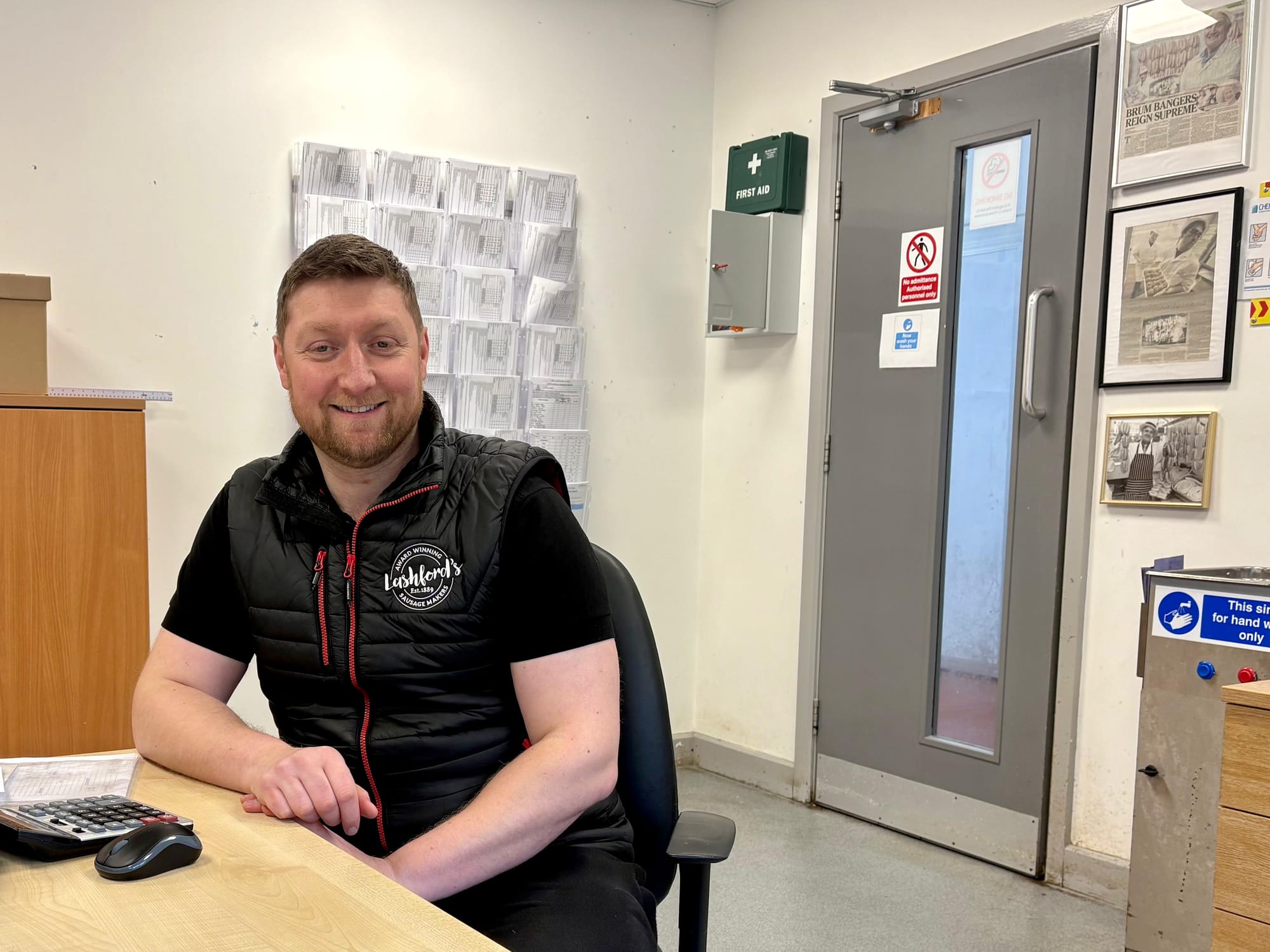
“Try and grow up in a sausage family”, he says, “you can imagine the jokes on the playground”.
At 13 he was working weekends and holidays in the family business. I ask which side of the operation he was on. “Pork pies and sausage rolls”, he says wistfully, describing piping sausage into a ten foot roll of pastry, and miming hand-pressing pies. While he was away at university studying environmental science, the business refocused on its core offering — “good raw sausages”, and now produces at least 50,000 a day.
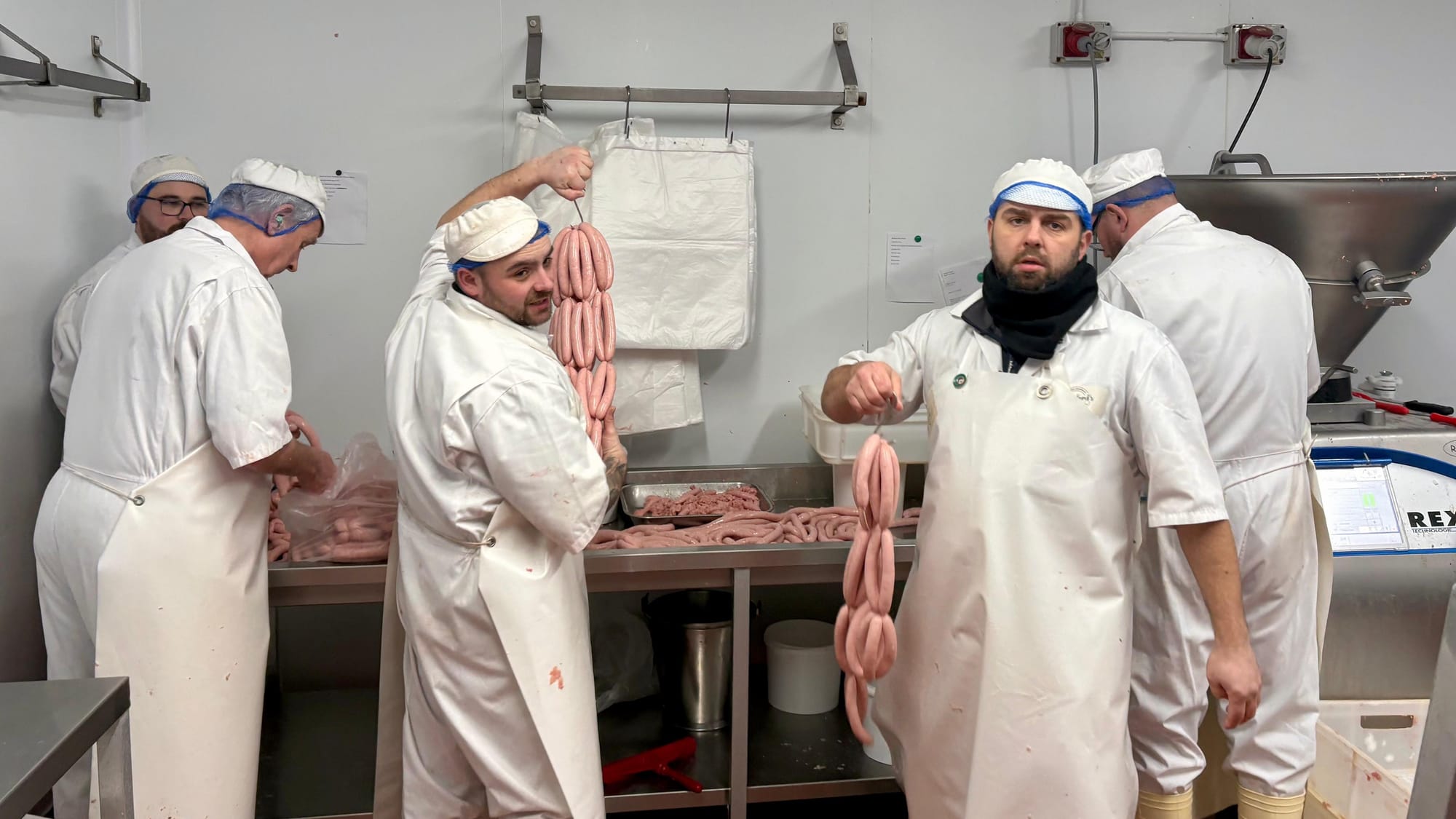
There are usually two production lines — “as many as four at Christmas,” Darren says — and he leads me toward the clanking heart of it all. “We go for the old traditional method,” he tells me, proudly. “Handmade is our USP”.
This turns out to involve a series of steel machines. Darren talks me through a process of meat grinding, after which herbs, spices, and secret ingredients known only to the family are added before the end result is hand-pushed into a pocket of skin. Five meat-thumbing workers turn and give me a firm nod. At least one of the employees is inherited — along with the recipes — from Darren’s father and grandfather before him. It’s now 9.30am and some of the staff have been making sausages for more than eight hours.
Enjoying this edition? You can get two totally free issues of The Dispatch — including our Monday news briefings and the weekend read you're perusing right now — every week by signing up to our regular mailing list. Just click the button below. No cost. Just old school local journalism.
I ask about the secret ingredients, but Darren will only tell me that the recipe was developed by his grandfather and great grandmother in 1939. It occurs to me the Lashford's should probably avoid all flying on the same plane.
I watch as a worker in a netted fedora carefully scoops up sausages, lays them flat onto trays and feeds them by hand into a packaging machine. “Things have changed a lot over the years”, Darren tells me. “[We] absolutely have to cater to Birmingham’s diversity." Based on 2021 census data, Birmingham is a ‘superdiverse city’, with 51% of the population being from Black, Asian or other minority ethnic groups, second only to London. In the same 2021 census, 29.9% of Birmingham residents described themselves as Muslim, which can pose a problem for a producer of pork.
“There are areas that are heavily Asian, and heavily Muslim based, that we simply don’t sell as much in”, says Darren.
While this seems like a recent shift, sausages in Britain have always been varied. In 1871, there were 200,000 foreign-born people in England, within 20 years that number had nearly doubled. From the German frankfurter to the Polish kiełbasa krakowska, immigrants introduced new types of sausages to British diets, with Germans, Prussians, and Eastern Europeans settling in Birmingham. These new sausages weren’t limited to pork, as Jewish families introduced beef and chicken alternatives.
A 2024 Vittles story on Polish shops, writers Kasia Tomasiewicz and Marta Zboralska touched on how products like Richmond sausages — founded in Liverpool in 1889 (the same year as AW Lashford) and now owned by the American company Pilgrim's Pride — often replaced traditional sausages in Polish people’s diets. “While they weren’t as good as the stuff their babcia [grandmother] would use, they were easier to get your hands on”, they write. With the high street formerly boasting a wide array of sausages, today the selection on offer is more limited and not all cultures are catered for. Gees, Birmingham’s last kosher butcher, closed its doors in 2013 after trading for more than 45 years.
While Brummies are importing bratwurst, Lashford's is sending Birmingham’s best bangers to the Middle East. One of their most loyal customers, an un-named “gentleman from Solihull”, is such an enthusiast he imports Lashfords to his hotels, cafes, resorts and restaurants in Dubai in response to rising demand from non-Muslim residents of the UAE. Since 2020, the number of British people living in Dubai has doubled to around 240,000 — roughly the same number of immigrants living in England in the late 19th century. In 2024, 104 tonnes of pork products were imported from the UK to the UAE.
In the Birmingham factory, I dispose of my plastic casing in the locker room’s pedal bin and Darren and I enter the head office to continue our conversation. The walls here are a tapestry of accolades, pictures, and newspaper clippings that together tell the story of the long-running local business. While Birmingham has seen so many of its culinary institutions absorbed into something bigger and blurrier — Cadbury is now a chunk of a global empire, HP sauce is made in Elst, in the Netherlands — the Lashfords have bucked that trend.
A photo on the wall shows a teenage Darren and his brother Craig carrying a big tray of faggots. Craig now works in a non sausage-related career — a path Darren almost chose for himself. However, “my nan always said I would get dragged back into it”, he grins.
Does he think the same of his own offspring? Will the family sausage dynasty endure? His five month-old son is “too young” for the sausage trough, but Darren is relaxed about the possibility of the line ending with him. When I ask if he hopes the business will be inherited by the sixth generation Lashford, he shrugs: “as long as he’s happy”.
In the meantime, the factory will keep making its sausages and sending them around the world — and continues to be synonymous with bangers. Among their regulars, the wealthy Dubai entrepreneurs and the occasional royal, they have at least one enthusiastic supporter much closer to home.
The committed customer, Darren tells me, lives down the road in Stratford-Upon-Avon and is the proud owner of a little sausage dog. Its name? Lashford.
If someone forwarded you this newsletter, click here to sign up to get quality local journalism in your inbox.

Comments