

New Orleans, 3 December 1999: Professor Charles Craddock, an expert in blood cancer, slinks into the main hall at the Ernest N. Morial Convention Center. Head pounding with the combined effects of jet lag and a hangover, he considers walking straight back out again. The flight from England lasted an age, and dinner is calling.
He chides himself. He’s come all this way, he thinks. He ought to at least stay and listen.
Slipping into one of the few remaining seats at the back of the room, he takes in the wide auditorium. This is the 41st annual meeting of the American Society of Haematology. Four thousand delegates — including the world’s greatest minds working in the field of blood diseases — are gathered for a plenary presentation. The lights dim and a tall, string-bean of a man steps out onto the stage.
Thirty minutes later, and the room is rapt. Hangover forgotten, Craddock is sitting forward, his hands gripping the edge of the chair. The man on stage is Dr Brian Druker — and what he is saying will change the course of medical history.
Twenty-seven years on, and Craddock is trying to do the very same. He claims to be at the vanguard of a revolution in UK medicine, one that will speed-up access to potentially life-saving blood cancer treatments, with Birmingham at its very heart. The question is, can he persuade drug companies he’s offering something that commercial giants and elite universities can’t?
A drug and a dream
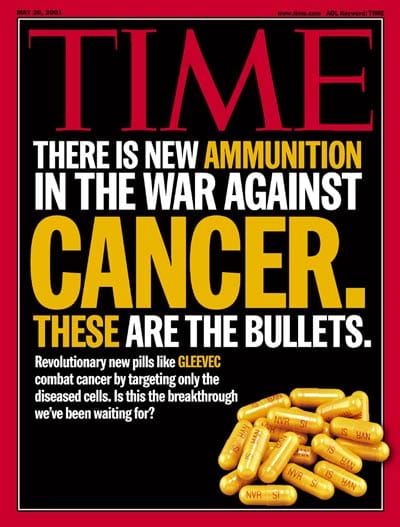
What Druker explained in that New Orleans conference hall was that he’d pioneered a new ‘targeted’ cancer therapy, which didn’t just kill off cancer cells, but halted the enzyme causing them to multiply in the first place. Trials on 31 seriously ill patients with Chronic Myeloid Leukaemia saw every single one go into remission.
It was the first time such a therapy had been used and the results were nothing short of miraculous. The resulting drug was transformative. Today, it is the standard of care for this type of blood cancer.
Moreover, it proved that a novel approach to medicine worked. Druker was part of a new generation of scientist-physicists practising bench-to-bedside medicine. They were bridging the gap between research (bench) and care (bedside) to develop treatments that patients desperately needed.
Before that, there was a separation between church and state, or rather, the lab and patient impact. In 1952, two scientists — James Watson and Francis Crick — made the crucial discovery of the double helix structure of DNA in a dusty laboratory at the University of Cambridge. Their research exploded the secrets about the building blocks of life and prompted governments to plough public money into research at elite universities. This amassed an immense body of knowledge about what causes diseases. But until the turn of the 21st century there was very little patient benefit coming in from that taxpayer investment.
It was the rise of bench-to-bedside that changed the game.
When Craddock heard about Druker’s success, he was convinced that if his blood cancer patients back in the UK were going to benefit, there would need to be a massive expansion of the nation’s clinical trials system. These trials do two essential things: they prove (or disprove) a treatment works, and that it’s safe for everyone to use. Only then can new treatments be given out — or bought, for mass market dissemination.
But the UK clinical trials system was — and is — slow. In order to save as many lives as possible, and maybe even one day cure leukaemia, the testing process needed to be sped up.
Craddock had already started manoeuvring himself into a position where he could start that work. Earlier in 1999, he’d upped sticks with his pregnant wife from leafy Muswell Hill in London. To achieve this, there was one place he had to be: Birmingham.
This story is free to read - you just need to join our mailing list. And why wouldn't you? By becoming a Dispatch subscriber, you'll get our scoops, features, and insights, in your inbox, the second we hit publish. No card details required.
Already have an account? Sign In