

“Understanding the Brum book scene from the past feels like chasing whispered names down corridors,” Clive Judd, co-owner of Voce Books, a leading indie bookshop in Digbeth, tells me. I’m in search of an elusive answer to a very particular question. Why are there, comparatively, so few independent bookshops in Birmingham?
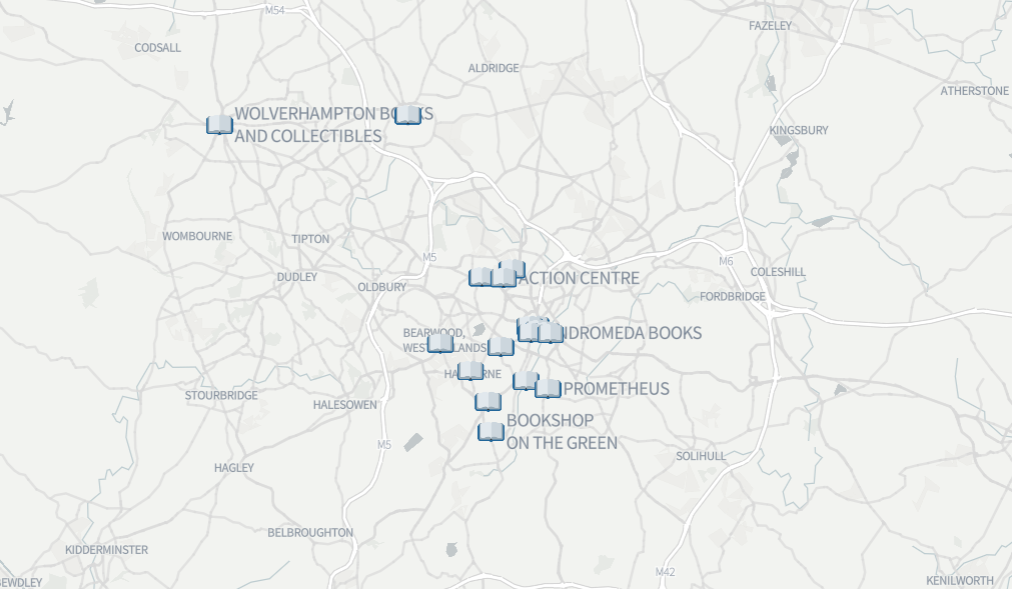
This is a fact that many people don’t seem to notice until it's pointed out to them. By my count, there are eight independent bookshops in the West Midlands conurbation of 2.59mn. That’s one indie bookshop per 323,700 people.
In comparison, Greater Manchester has around 25 independent bookshops and a population of 2.8mn — that’s one indie bookshop per 112,000 people. Adjusted for population size, there are 3.1 independent bookshops in Birmingham per million people, compared to 8.9 alternative booksellers per million in Manchester.
Welcome to The Dispatch. We’re Birmingham's new newspaper, delivered entirely by email. Sign up to our mailing list and get two totally free editions of The Dispatch every week: a Monday briefing, full of everything you need to know about that’s going on in the city; and an in-depth weekend piece like the one you're currently reading.
No ads, no gimmicks: just click the button below and get our unique brand of local journalism straight to your inbox.
It’s a huge difference: for every indie bookshop in Birmingham, Manchester sustains nearly three. The West Midlands’ scarcity of bookshops has been healthy for the wallet of this compulsive book-purchasing Dispatch author. But it is a curiously unexplained dynamic in England’s second city. Especially when you consider that we’re the region that contributed Shakespeare, George Eliot, A.E. Houseman, JRR Tolkien, WH Auden, Philip Larkin, Bruce Chatwin and Jonathan Coe to the canon of English literature — not a bad innings all things considered.
A vanished network
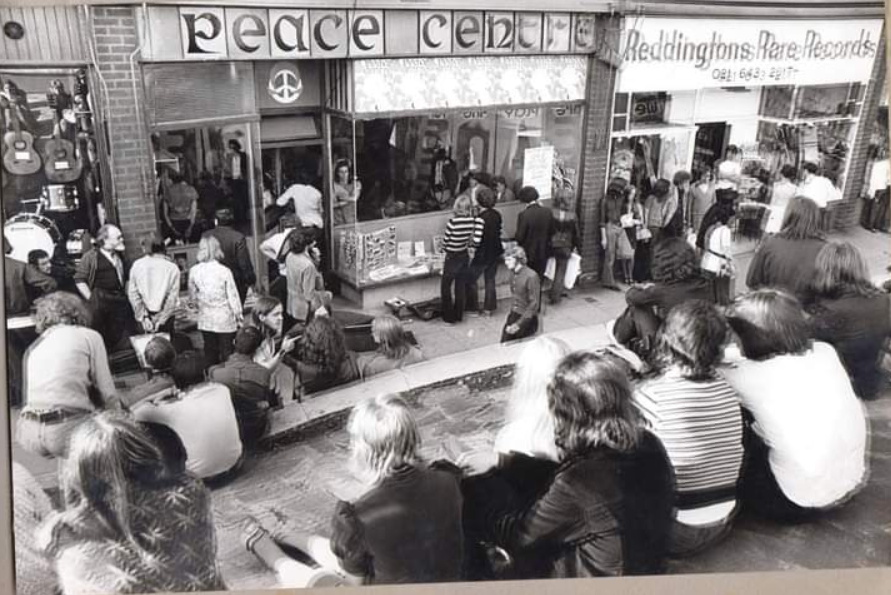
Birmingham hasn’t always been a desert for independent bookshops. In the second half of the 20th century, there was a thriving network of indies across the city — often selling radical, alternative, black, Indian and sci-fi selections that would draw in readers from across the UK.
For a few brief decades, Birmingham had a bookshop scene that reflected the city back to itself: diverse, political, practical, trade unionist, academic and scientifically forward-looking. The northwest of the city once supported three radical black booksellers (Handsworth now has none), while central Birmingham had six alternative bookshops (it now has one).
Before the downturns of the late 1980s, one could hop between radical sit-ins at The Peace Centre (maybe picking up something by Howard Zinn) and sci-fi freak outs at Andromeda (where legendary owner Rog Peyton might push Dune by Frank Herbert on you) within minutes.
By the early 2010s, however, almost all of these bookshops had disappeared — crushed by Amazon, declining interest in reading and the city’s overreliance on the car (restricting footfall and impulse purchases).
Between the late 1980s and the early 2010s, by my count, the region lost 12 independent bookshops. Since 2010, seven independent bookshops have opened in the West Midlands area, resulting in a net loss of five bookshops since the 1980s. This decline has resulted in huge swathes of the urban West Midlands now lacking independent retailers. Birmingham’s bookshop offering is closer to a depressed market town’s high street than that of a major urban metropolis.
A stalled revival?
By the 2020s, it seemed like things had improved in Brum. In 2023, the Guardian sang the praises of Birmingham for engineering a renaissance in independent bookselling. The newspaper profiled five independent retailers who demonstrated a rebuttal “to the once widely held idea that the digital era meant certain death for the neighbourhood bookstore.”
Sadly, two of the five indie bookshops interviewed in Birmingham have since closed. This attrition puts something of a dampener on the article’s confident proposition that “bookselling is thriving”. Instead, Birmingham seems to be going through a stalled revival — after a definite slump in indie retailers during the 2000s and 2010s.
Still, amongst the all too-Darwinian forces of the book market, some are making it work. And those that do make it work tend to excel. Last year the Heath Bookshop, located in King’s Court lane in King’s Heath, won Independent Bookshop of the Year at the British Book Awards — with judges citing the outlet’s function as a “thriving community hub."
 Dan Cave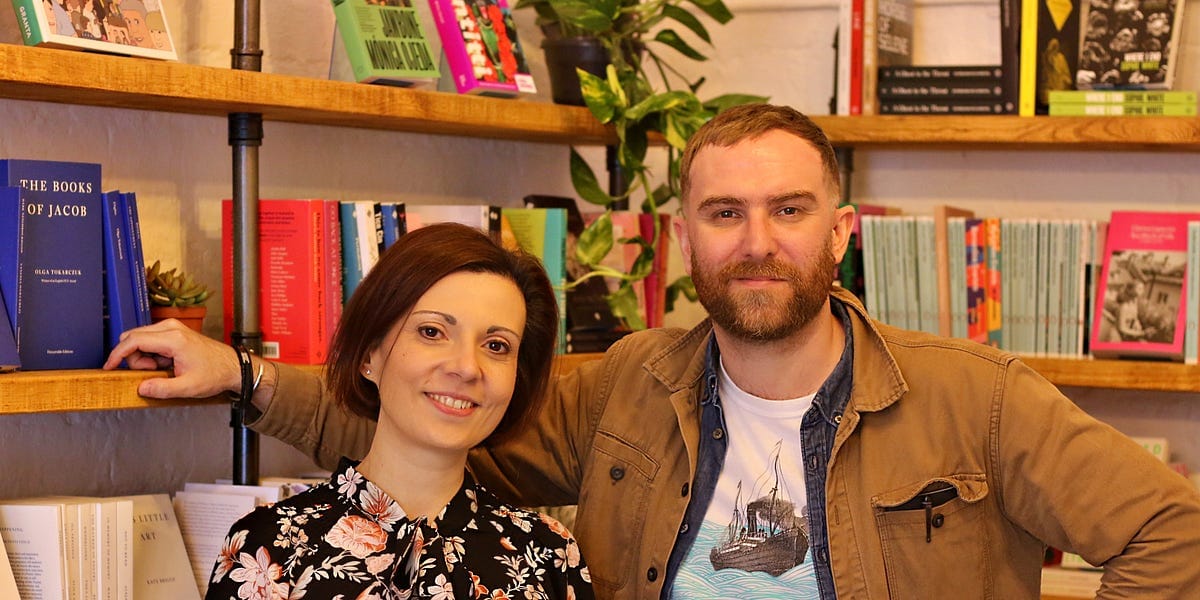
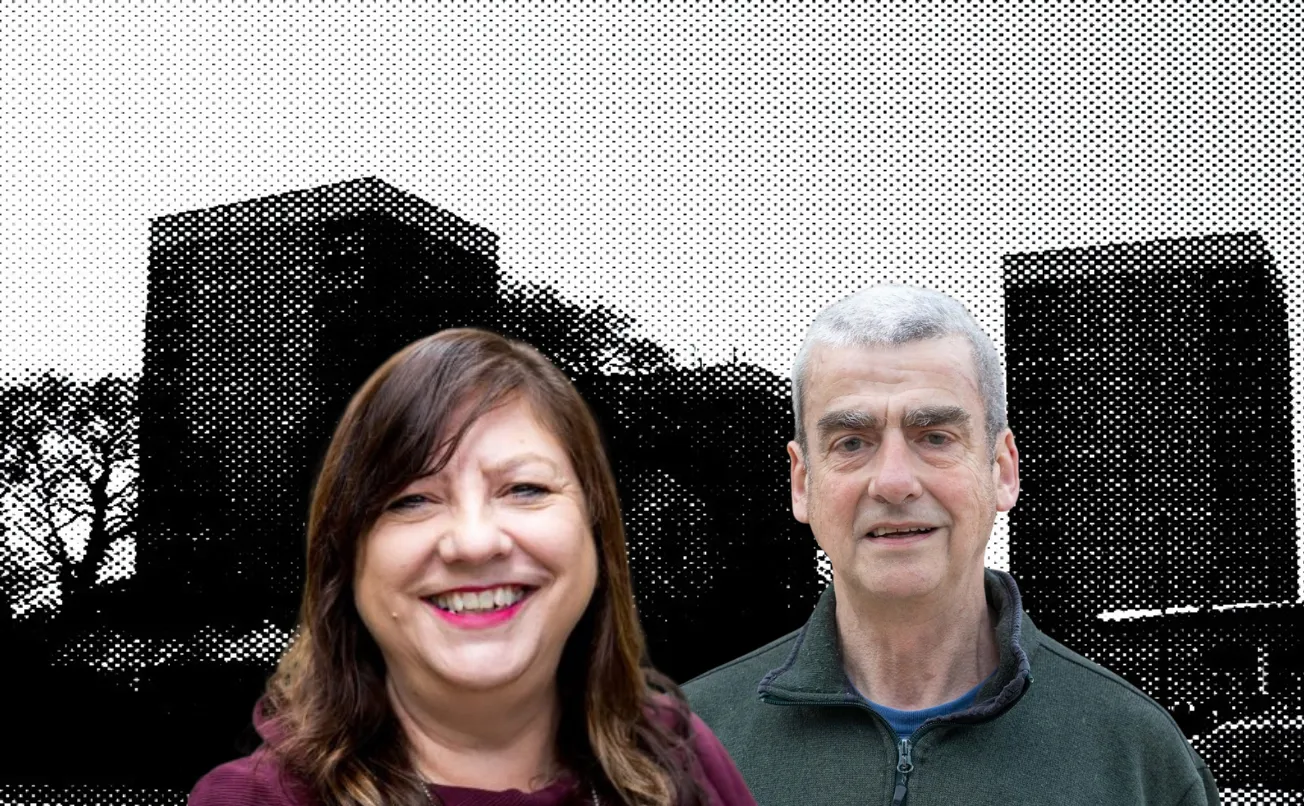
“We got 800 responses to a survey we put out asking if locals wanted a bookshop,” says Claire Dawes, one of the co-owners of Heath Bookshop. I’m sitting with Claire and her business partner Catherine Gale, sipping an oat cortado while narrowly perched on a small sliver of a hand-crafted wooden table.
Claire is a West Midlands native from Rubery in Worcestershire, while Catherine hails from Yorkshire, moving to Birmingham for university in the 1990s. “Traditionally, people have gone around Birmingham,” Claire continues. “We’ve had to convince publishers we can do it.”
“We were constantly told this is what we’ve needed, from locals,” Catherine tells me, as dozens of customers flock in and out of the shop during the lunch hour. It gets so busy that Claire constantly has to take breaks from our interview to attend to customers, who range from an old-age pensioner to a young couple in baggy jeans and Arc’teryx beanies.
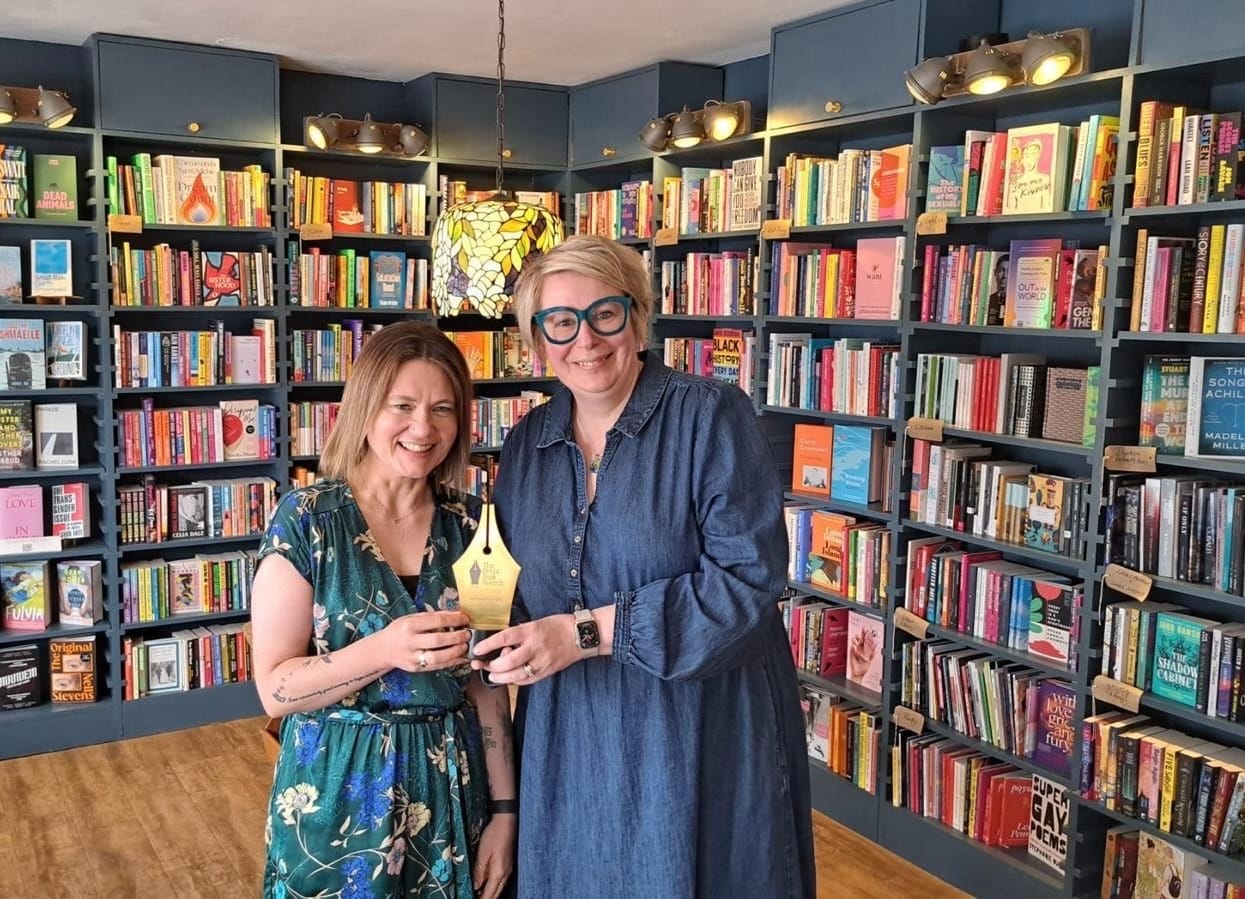
Both Claire and Catherine put the partial revival of independent bookselling in Birmingham down to Covid. “People wanted a return to real life,” Catherine says, noting the thriving bookshop scene they encountered on a research expedition to London. “There were so many lovely little shops everywhere, even a bookshop bar!”
I also chat with Judd of Voce Books over the phone. He’s busy helping with a theatre production at the Birmingham Rep. “I have a long-held feeling that Birmingham has suffered from the sheer amount of Waterstones branches in the region,” he tells me. “Particularly in suburban areas where a good indie would probably prevail, like Solihull and Sutton Coldfield.”
Judd says that “the confidence needed to open an indie and compete simply hasn’t been there for a long time in Birmingham. Brum lags behind other cities, particularly Edinburgh, Liverpool, Sheffield and Bristol for independent bookshops.” He puts this partly down to how much prime real estate is taken up by Waterstones. “The early 2000s saw Waterstones go on a major estate purchasing drive, sweeping up a lot of space once taken by other book retailers in Birmingham — Hudsons, Ottakers, Dillons, Books Etc,” he explains.
Still, the co-owner of Voce is quietly confident. “The resurgence of indie bookshops is a relatively recent cultural move, some of which could be attributed to people reorienting their perspectives during the COVID period,” he says. “It wasn’t a surprise that the Bookseller Association were announcing figures for new openings as being at their highest for a decade a couple of years ago.”
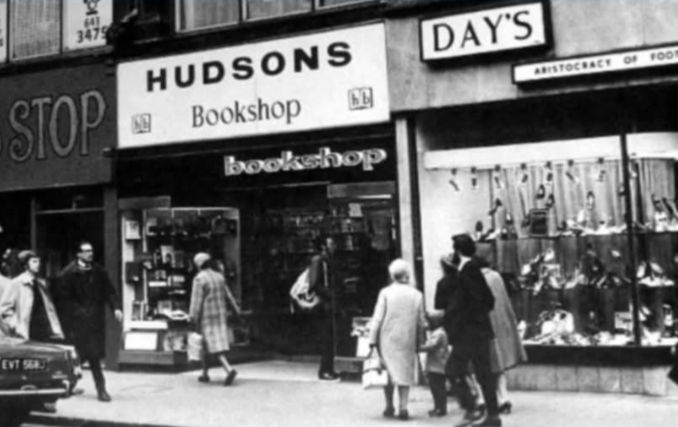
Birmingham’s Literary Past
If independent bookselling is on a slow revival, then the trend has a long way to go before it reaches the rich ecosystem of bookshops the city hosted in the 1970s and 1980s. A callout from The Dispatch on the r/Brum Reddit generated dozens of replies and private messages. A lot of users' attention focused on two, now vanished, bookshops: Andromeda on Smallbrook Queensway and Prometheus in Moseley.
Andromeda specialised in science fiction, and its owner, Rog Peyton was so prominent in the sector that he even has his own Wikipedia page. Peyton found himself as a bookshop owner after co-founding The Birmingham Science Fiction Group in 1961. Seeking to commercialise his interest, Peyton founded Andromeda in Old Hill in Sandwell, before moving it into the city centre.
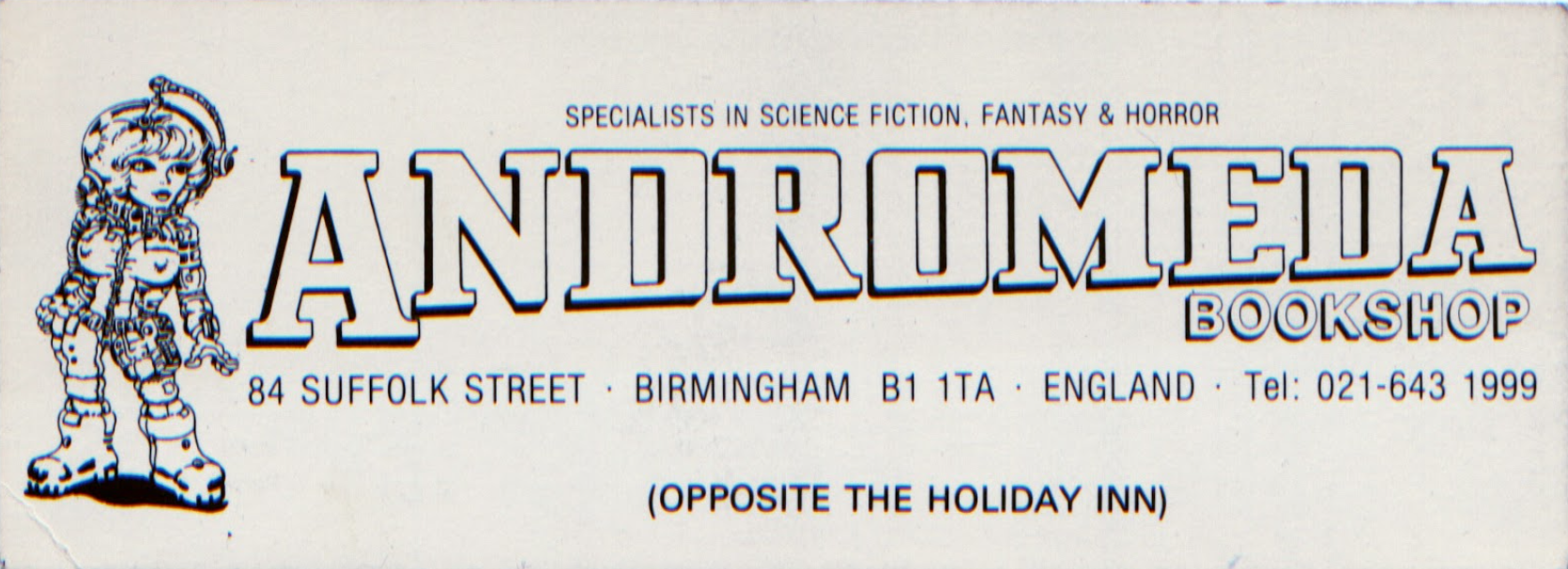
One user describes Peyton as having “an encyclopedic knowledge of his stock and never recommending a dud…Sadly, he had to shut down when Amazon ate his lunch.” Before the rise of digital bookselling, a blog claimed that Andromeda was “the biggest importer of US books, predominantly science fiction, into the UK”.
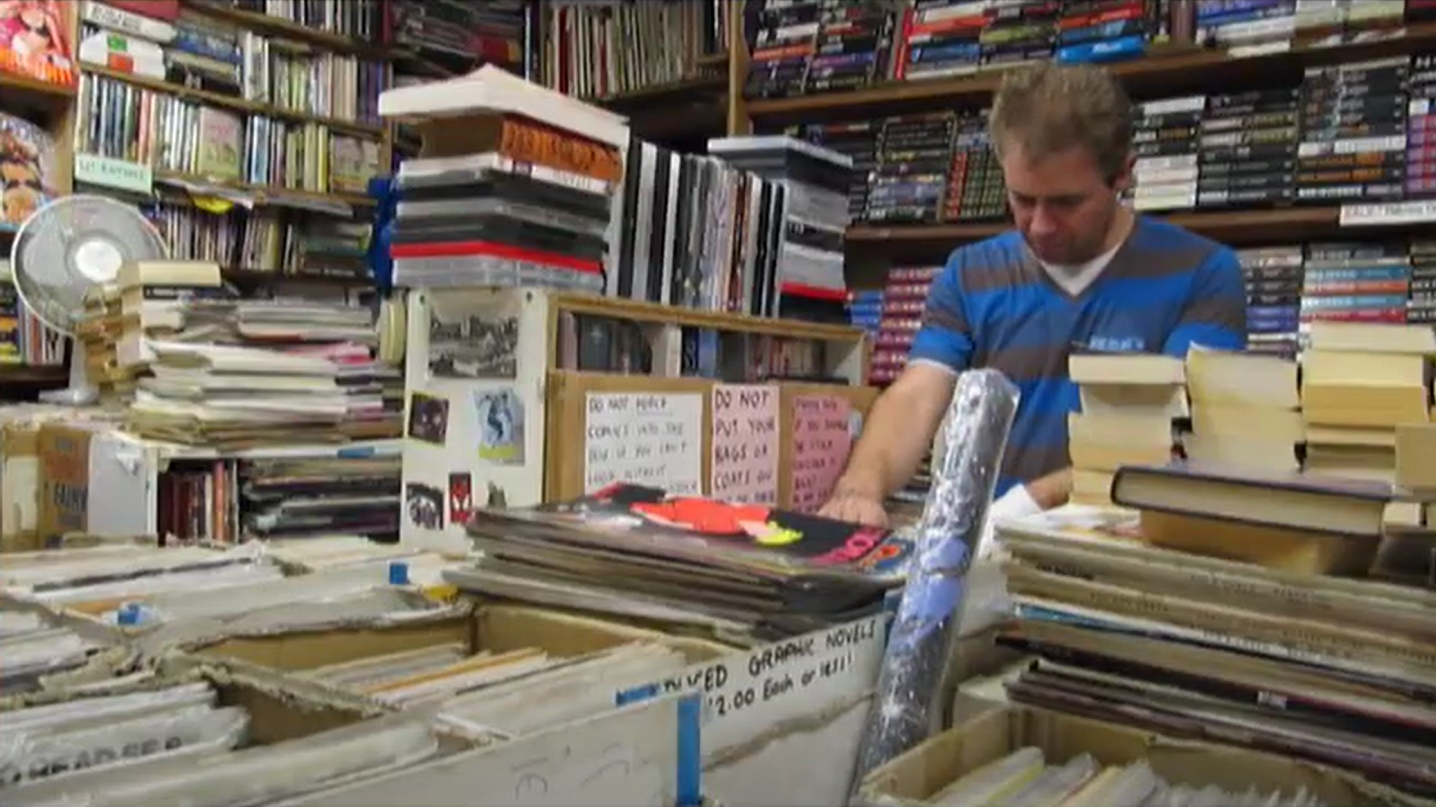
Another bookshop that Judd mentions is Readers World, which started out as a second-hand book dealer in the Bullring’s Rag Market sometime in the 1970s, before transforming into a bricks-and-mortar bookshop at the top of Digbeth Highstreet. The shop was run by Bob Teague and sold everything from literary classics to “Chinese pornography”, according to one blog post.
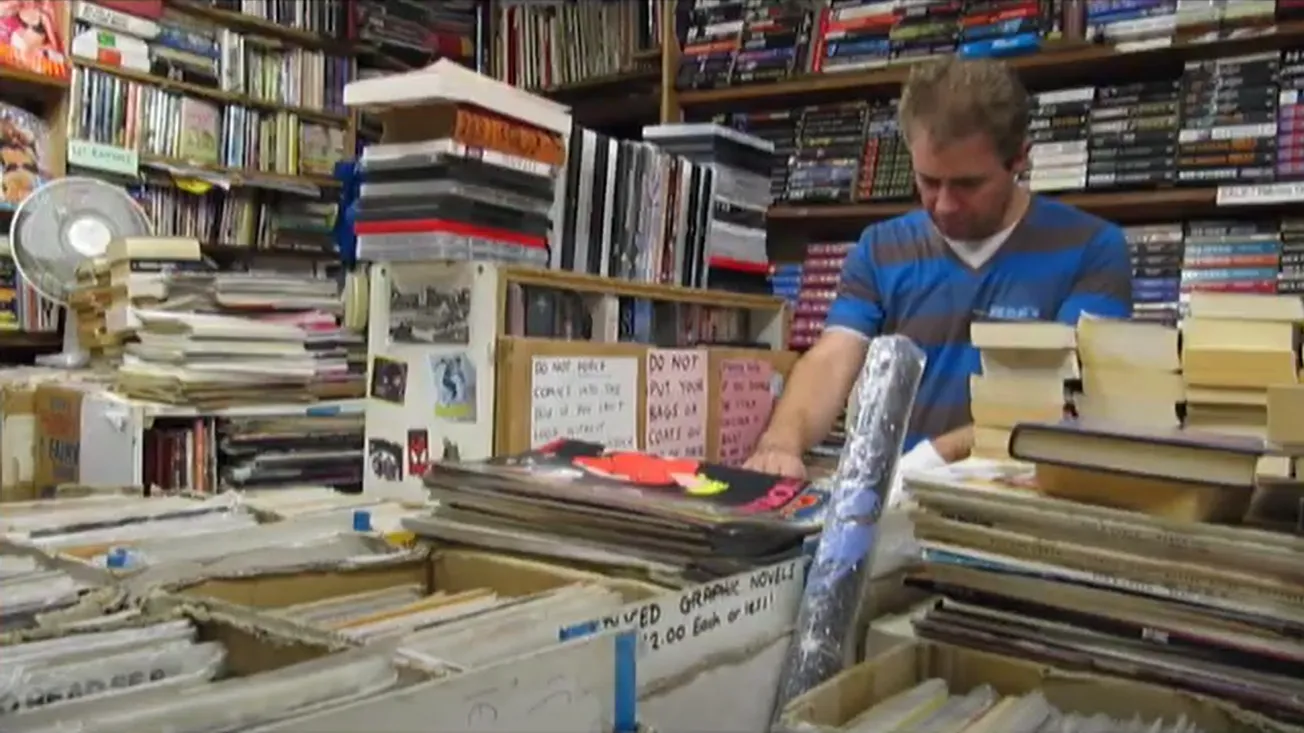
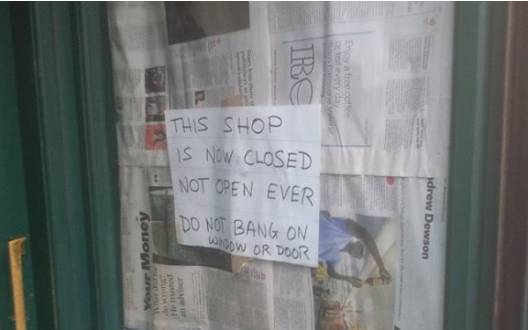
The place was famous for its eclectic stock of books, ramshackle displays and disinterested, if not rude, staff. In 2011, someone filmed inside the bookshop, capturing its slightly passive-aggressive handwritten notes such as “Please note if you damage the stock: consider it sold!” In 2014, the shop closed up for the last time, with a single note left on the outside door in all caps: “THIS SHOP. IS NOW CLOSED. NOT OPEN EVER. DO NOT BANG ON THE WINDOW OR DOORS.” Perhaps Teague had wanted to leave, in all its glorious passive aggression, a memento mori to Birmingham bookselling.
Down the road in Moseley, Prometheus was the bohemians’ alternative to the geekery of Andromeda and the cantankerousness of Readers World. The shop was located between where Cafephilia and the dance studio now stand on Alcester Road. Its owner, John Dennis, is described as “an old hippy” to me by a Moseleyite who remembers the shop. My source goes on to recall that the vibe was “very intellectual” with Dennis running an outlet called “Benetheus” below the bookshop — “very sixties with lots of Moroccan stuff.”
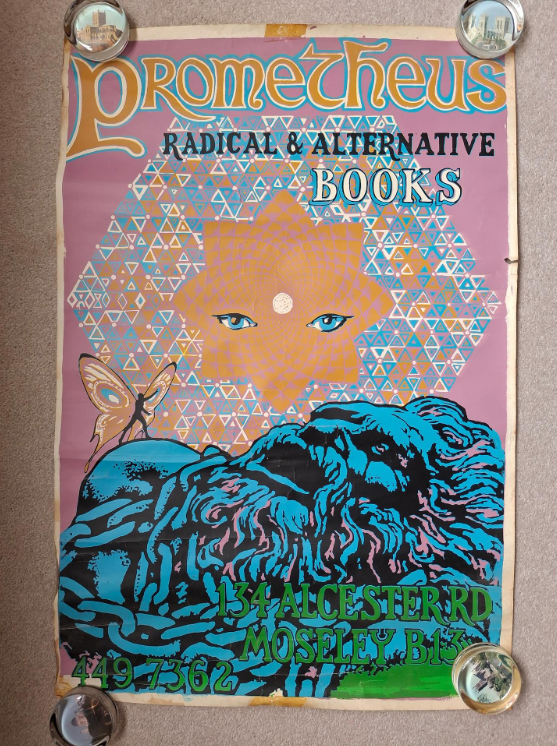
Indeed, in a 1980 article in the old Moseley Paper that Fiona Adams, secretary of The Moseley Society, digs out for me, I find Dennis at his most loquacious, mentioning continental Marxist theorists “such as Lukács, Gramsci and Althusser.” But even in the halcyon days of the 1970s, bookselling was hard graft. Dennis writes that he had “difficulty in providing [himself] with a low wage”. Still, Dennis seemed to be holding out against the commercialising world of Thatcherite Britain in 1980. “Profitability has never been the sole or even the main criteria for stocking books in Prometheus and I am not interested in running a branch of WH Smith!” he writes in the Moseley Paper.
The desire not to be WH Smith remains in Birmingham, in the bookselling projects of individuals like Clive, Catherine and Claire. Despite our city’s comparatively thin independent bookshop ecosystem, there is a slow revival happening. For instance, King’s Heath now has three indie shops: the Heath, BookTower and how brave is the wren within one square mile — something which would have been unthinkable in the late 2000s and early 2010s. With such a grand legacy of literary giants, Birmingham and the West Midlands needs to reclaim its position as a bookshop capital of the UK — and places like Voce and the Heath are leading the way.
If someone forwarded you this newsletter, click here to sign up to get quality local journalism in your inbox.
If you’d like to sponsor editions of The Dispatch and reach over 25,000 readers, you can contact us or visit our advertising page below for more information
Comments