


Dear readers — before we crack on with today's read, a public service announcement: there are still a few free Dispatch subscriptions for 16-25 year olds available. These have been generously paid for by the Postcode Lottery as part of their commitment to strengthen local communities by supporting journalism, and to help young people access trustworthy information. If you know a young person, or indeed are one, then either share this newsletter with them or sign up at the link below to receive a full membership. But hurry — there aren't many left!
Now, on with today's story about Birmingham's missing masterpiece.
A treat for the senses
Fierce Festival returns from 14 to 18 October, this time with a delicious new addition.
Since 1998 the festival has been a celebration of art and culture in the city, turning everyday spaces like car parks and warehouses into live art stages. Now they’re introducing Fierce Feasts, which pairs some of Birmingham’s favourite restaurants and chefs with artists, creating an unforgettable dining experience. Finding its home at House of Beorma in Digbeth, the line-up includes:
- Justine A. Chambers x Dane's Caribbean
- Emergency Chorus x KoolKata Street Food
- YIRRAMBOI x Bayt Al Yemeni
- Fierce x Alicia’s Microbakehouse
Artistic chaos and delicious food — what could be more enticing? Book your spot below.
It’s early evening and I’m negotiating the underpasses around Lancaster Circus. It feels edgy — a throwback to the city I remember from the early 90s. In those days, a walk from ‘town’ to the pubs I used to frequent on Aston campus meant negotiating two threatening subways, plus this one. Once, under the road at Old Square, I witnessed a man randomly set upon, beaten senseless, and kicked repeatedly in the head by a gang of about six men in football tops.
A year or so later, I narrowly avoided a similar fate in another subway. The Specials’ “Concrete Jungle” drifts into my head.
I’d forgotten that aspect of the city, now mostly replaced by a more humane version. But here it is still, as if preserved in aspic – and with it a nervous feeling I haven’t had for years.
I opt for a comforting pint in the Bull, one of the few survivals from the old Gun Quarter, before finding the spot I’m looking for. I’m standing outside a branch of Puregym and the Holiday Inn Express, staring at the dual carriageway and tunnel in front of me.
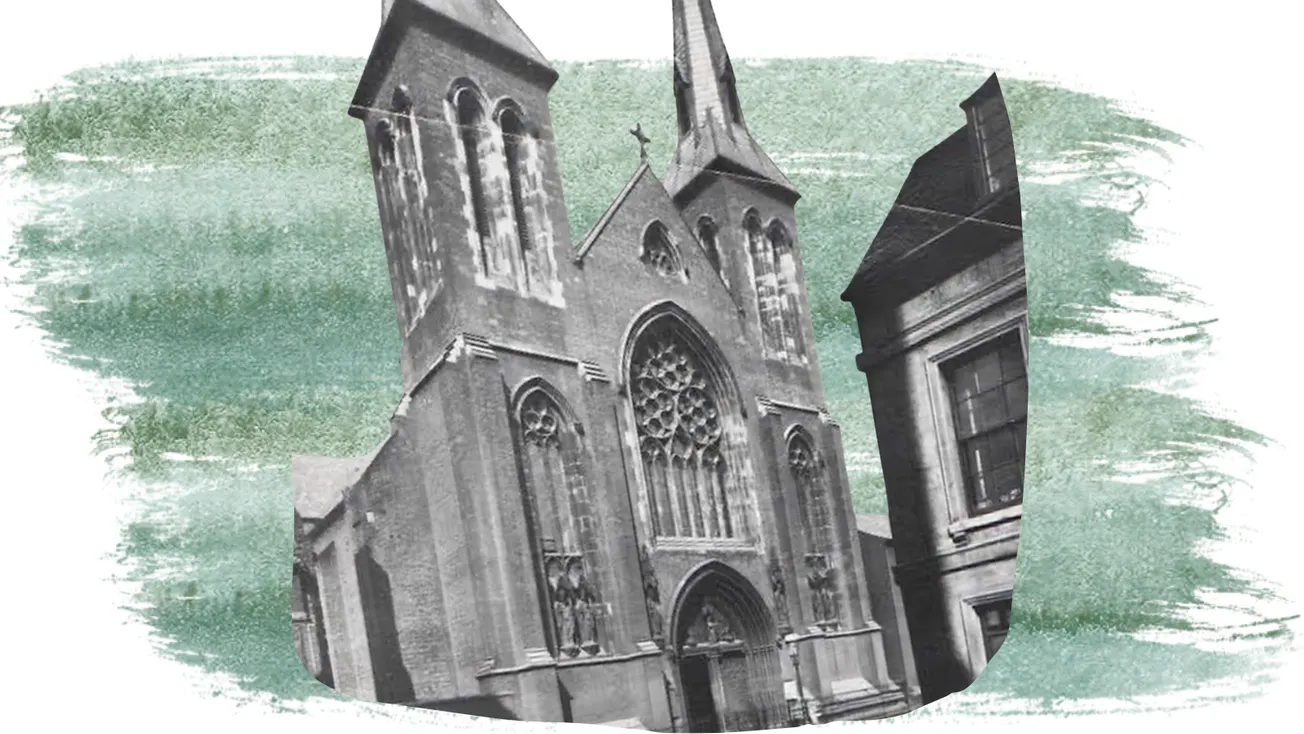
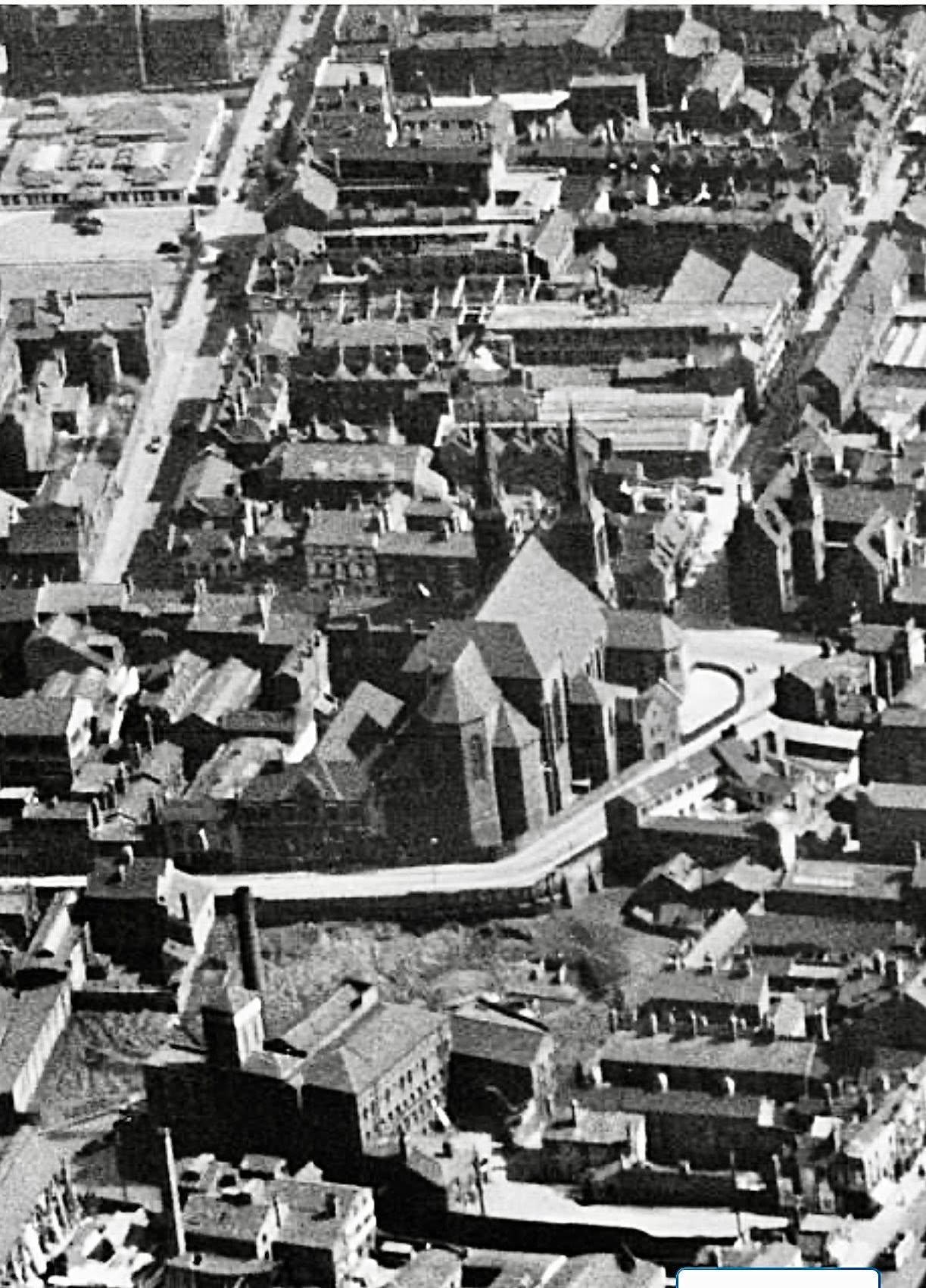
Behind it, marooned on a concrete island, with several multi-level lanes of traffic a few feet from its façade, stands St Chad’s: the first English Catholic cathedral built since the Reformation, and the first cathedral of any type since Wren’s St Paul’s Cathedral. It is one of the earliest and most important works of the originator of the Victorian Gothic Revival, Augustus Pugin. Few more important buildings in Britain have more unimpressive settings.
Again, it’s like a flashback to decades past, when the Town Hall and Council House were surrounded by a roaring traffic gyratory.
But I’m not here to relive my youth, I have a different mission: To try to work out where Pugin’s companion to the cathedral, the Bishop’s House, once stood.
In his essay on Birmingham in Britain’s Lost Cities, Gavin Stamp calls it “perhaps the most remarkable urban domestic design of the 19th Century”. But if you tried to stand where its centrepiece — the Great Hall — stood now, a few metres in front of the Holiday Inn, you’d likely be run over.
When the Inner Ring Road was being planned in the 1950s, the Catholic Diocese of Birmingham was given an ultimatum: they could pay a huge amount of money to reroute the road, or they could allow the council to buy it and demolish it. The costs meant the latter was inevitable.
With that, one of the most influential buildings ever to be seen in Birmingham was replaced with a traffic roundabout, a dual carriageway and the entrance to a tunnel.
Pugin’s vision
Augustus Welby Northmore Pugin first visited the Midlands in 1834, aged 22. The business he set up as furniture designer, draftsman and illustrator had collapsed, and he was in a personal crisis.
His visit did little to lighten his mood. Pugin was horrified by what he found. The great gothic cathedrals at Hereford and Lichfield had been clumsily “improved” by the previous generation. Meanwhile the Anglican church seemed half-hearted, disengaged – the clergy busier socialising with the gentry than with religious passion.
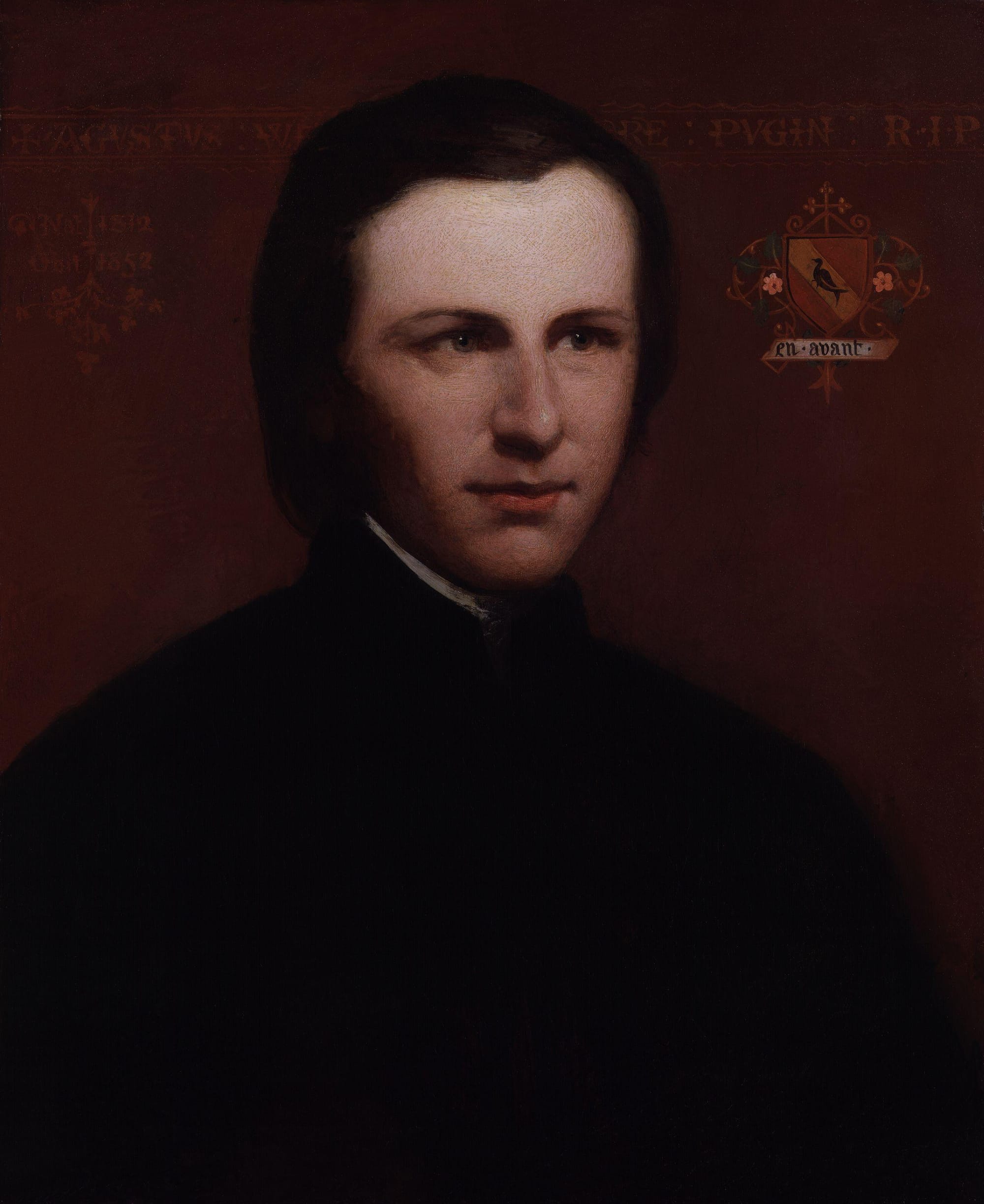
Then things got even worse: he went to Birmingham. He hated the city’s nonconformist leadership, who he saw as descendants of the Tudor protestants who had smashed up his beloved Gothic past.
Most of all, though, it had just gained a Town Hall based on a classical temple, which was then surrounded by the planned, symmetrical Georgian townhouses, streets and squares that he despised. And even those were now being rapidly dispoiled by workshop industries.
It was the “most detestable of detestable places… where Greek buildings and smoking chimneys, Radicals and Dissenters are blended together," he wrote.
Pugin’s obsession with the medieval was extreme. He had toured France, Germany and the Low Countries several times in search of his Gothic ideal, obtaining fragments of buildings and obsessively drawing the originals in their setting.
Not that this was unusual. The industrial revolution and the social rupture it produced had created a longing for a simpler bygone time. That meant, for Pugin and others, that medieval Gothic architecture was also morally superior l. Buildings should be honest, should reflect their purpose, not some ‘pagan’ idea of harmony and symmetry.
But Pugin’s links with the West Midlands had begun before his visit. One of his earliest furniture commissions was for Perry Hall, a country house that once sat in Perry Hall Park, and he had designed gothic sets for the Italian opera Il Castelo di Kenilworth..
And he would be pulled back to the city he hated over and over again.
While his family had always struggled financially, they had moved in connected circles. He became close to Charles Barry, already a distinguished architect.
Barry had been commissioned to design a new building for the King Edward’s Grammar School on New Street, and called on Putin to add the gothic flourishes and interiors that the job required. The school remained until the 1930s. It was in many ways the precursor to the Houses of Parliament the two men would go on to design.
Around the same time, Pugin’s disenchantment with the Church of England reached a peak. Everything he loved about the country had been built before the reformation. That, surely, meant Catholicism was the only true religion.
In June 1835, aged 22, Augustus was accepted into the Roman Catholic Church – a process that had become much easier after Catholic emancipation in 1829. . Associations with influential followers like the Earl of Shrewsbury provided him a patronage network that would sustain him for the rest of his career – beginning with alterations to Shrewsbury’s Alton Hall estate in Staffordshire to transform his home into an appropriate gothic pile, Alton Towers.
These influential Catholics were determined to spread their now-visible faith in England, to turn it back into its pre-reformation version. For Pugin, that mission was inseparable from Gothic architecture.
After helping design the interiors at the recently established Catholic Seminary (priest’s training college) at Oscott when it was relocated from Great Barr to its current site near Sutton Coldfield, he was employed there as “Professor of Ecclesiastical Art and Architecture”. But grander plans were afoot.
God’s house and the Bishop’s house
In Birmingham itself, Catholics had been making do with a small Georgian chapel on Shadwell Street in the Gun Quarter — hardly suitable for such a rapidly growing town. The congregation thought it “highly desirable that a commodious and splendid Catholic Church … be erected in the town of Birmingham, a town which the numbers, the wealth and spirit of its inhabitations is justly termed the metropolis of the Midland region.”
Bishop Walsh – the first ‘vicar apostolic’– commissioned Pugin to design a cathedral. Thanks to donations from across the region, including generous gifts from the Earl of Shrewsbury, the city’s Catholic cathedral rose on the site formerly occupied by the chapel.
The name of St Chad, a bishop of Anglo-Saxon Mercia, was chosen shortly after construction when his relics were found under a chair at a different Aston Hall in Stone, Staffordshire. They had been secretly passed around various Catholic families since Henry VIII ordered the destruction of the saint’s shrine at Lichfield.
The building, based on Rhineland churches Pugin had visited, had a plain exterior which belied a stunning interior – thanks not least to the arts bought and scavenged from around Europe by both Pugin and his benefactors.
But it was also the work of his lifelong friend, the Handsworth-born John Hardman, a fellow catholic and antiquarian who he had met at Oscott. A button manufacturer by trade, he increasingly produced ornate metalwork and stained glass for Pugin’s projects. The products of his workshops on Paradise Street, Great Hampton Street and Newhall Street were widely in the Houses of Parliament as well as St Chad’s – and the Bishop’s House, arguably the more important building.
The equivalents in Anglicanism were grand classical houses; but this, based on the courtyard houses of Northern France, was radically different. It was the first attempt to build an urban house in Pugin’s trademark Gothic style.
Timothy Brittain-Catlin, Professor of Architecture at the University of Cambridge, describes how the house moved away from the style of the Georgians: “The design revolves around the function – effectively you had lots of wings sticking out from the central hall… he had learnt a lot from being a set designer, how to use light and space in interiors.”
The influence of the house was profound. Architects usually focused on exteriors, but here Pugin was designing everything.
If St Chad’s was the vision of how religion should be experienced, the Bishop’s house was the vision for how life should be lived. It was a prescription for how to heal Birmingham and other industrial cities like it.
The contrast the two buildings presented to their surroundings was no accident. It had originally been laid out as a middle-class residential district centred on the garden of St Mary’s Church.
The arrival of the canals, the Napoleonic Wars and the nearby opening of Kettle’s Steelhouses – industrial-scale furnaces – turned the area onto the centre of the British gun industry, a maze of court housing and workshops and one of the most densely populated parts of the city.
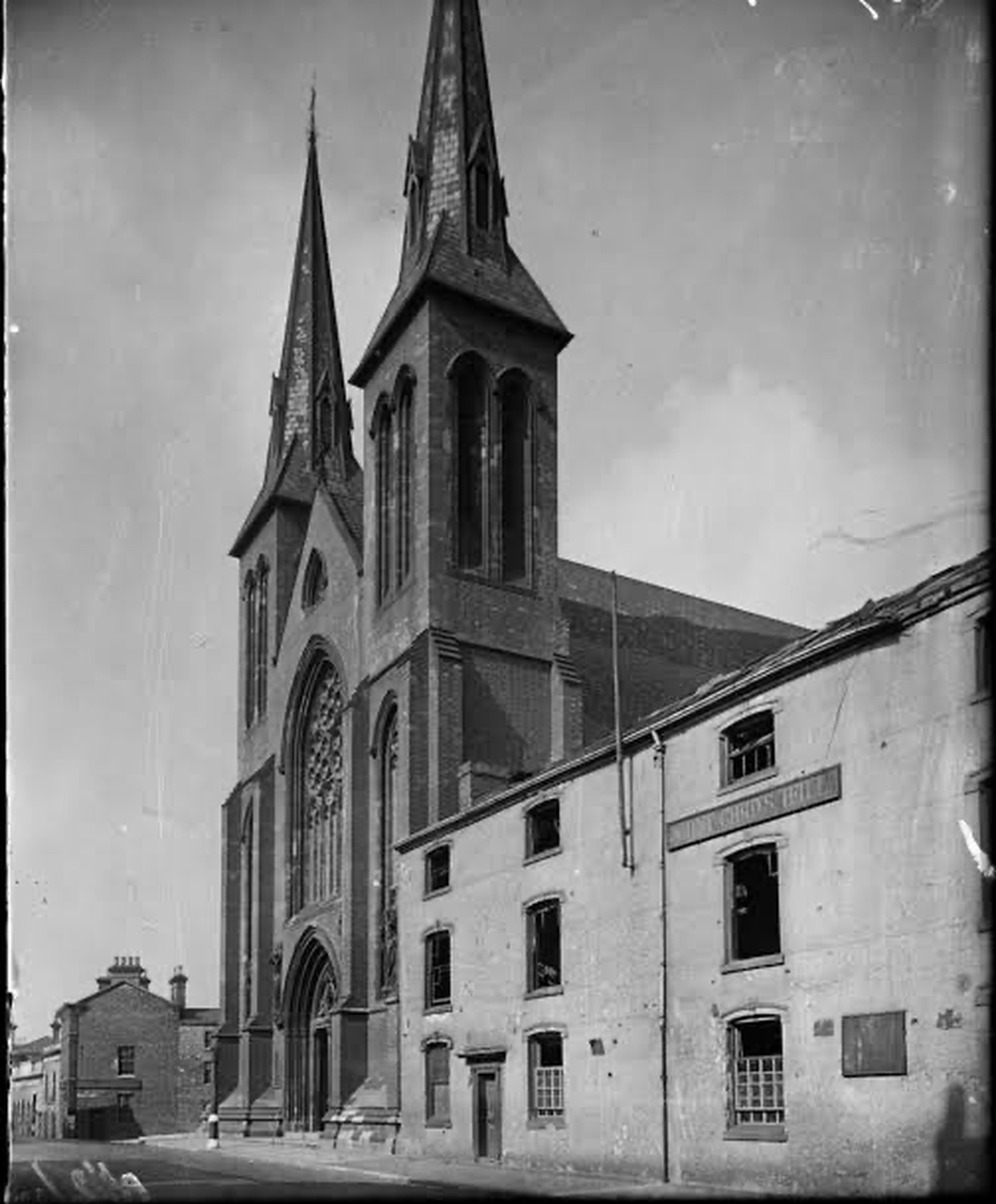
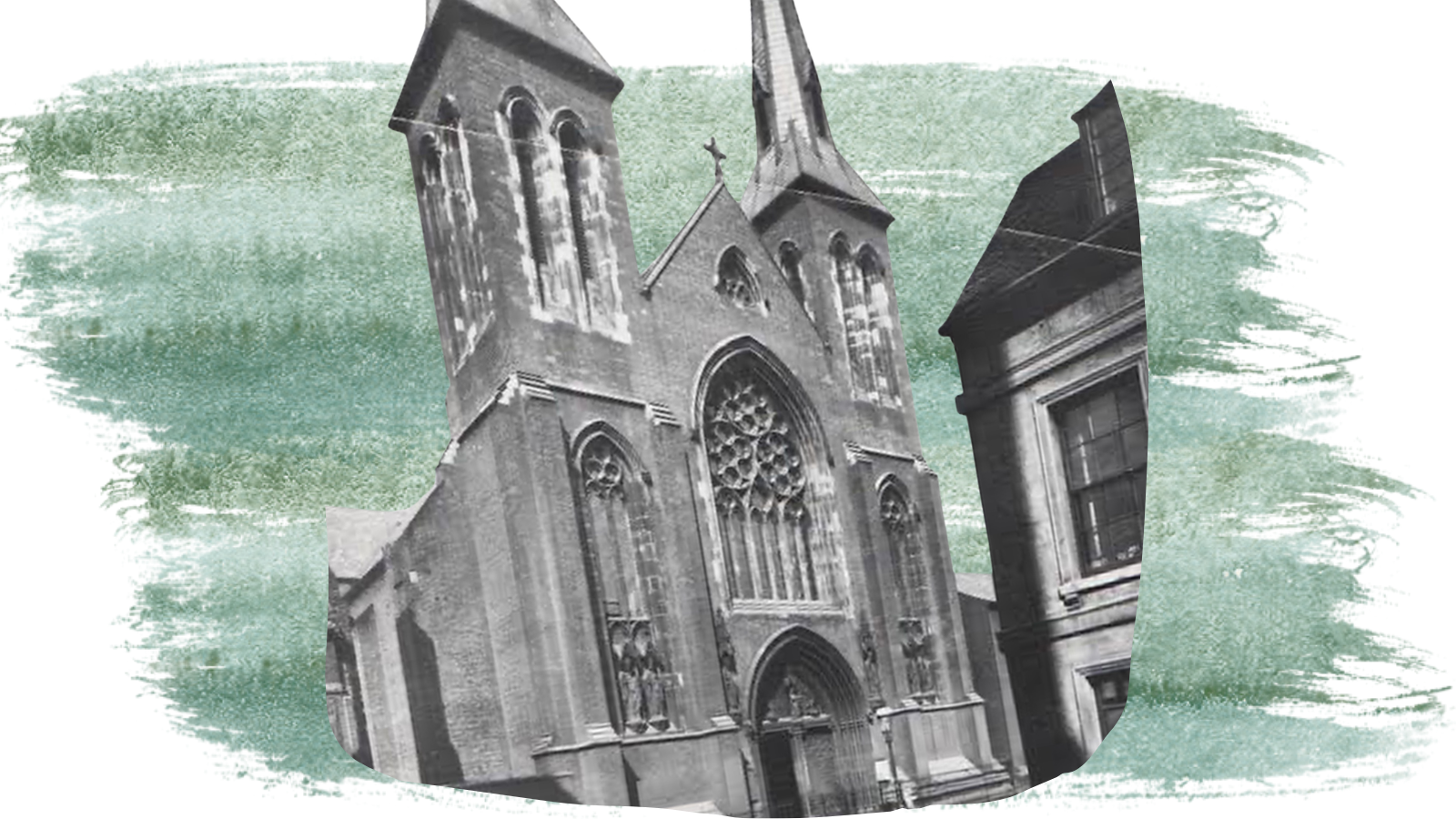
The main façade of the Cathedral was obscured by the narrow streets, but its spires would have towered over the surroundings.
According to Rosemary Hill, author of a recent biography on the architect, Pugin wanted the cross raised high above the quarter, and the “sound of the bells to drown out the proofing of the gun barrels”.
But the attempt to convert the English industrial masses to Catholicism was ultimately a failure. Birmingham’s working population remained steadfastly Church of England. The city was a reverse of almost every other industrial city and indeed the Black Country, where the elite were Anglican and the masses methodist or unitarian. St Chad’s congregation would move away from the English middle classes and towards Irish Catholics, who were beginning to arrive in the St Mary’s ward in large numbers.
Nonetheless, Pugin’s gothic style did become the trademark of the Victorian British industrial city. And as for the Bishop’s House, the emphasis on utility and honesty was passed on to William Morris and the Arts and Crafts Movement, which also left a major mark on Birmingham. From there it moved into the mainstream.
The demolition
By the 20th century, the Bishop’s House was not a conventionally ‘pretty’ building. One catholic luminary described it as “the most gloomy place I ever saw”. And by the middle of the century, Victorian buildings had begun to have the sort of image that Modernist buildings have today, ghastly remnants of a tasteless age.
Birmingham’s inner ring road, now the A38, was being planned. With its dual carriageways, tunnels and service roads it would erase a huge belt of the city, often involving the demolition of three or even four parallel Victorian streets. City Engineer Herbert Manzoni had no qualms about far more beloved buildings being destroyed to make way for it – Mason College, the Market Hall, the old Victorian library and the Midland Institute, for example – so why would he care about this? His mission was turning Birmingham into a city fit for the motor age, a place others would look on with envy.
And while the Bishop at the time did try to save it, the Catholic church in England, lacking the land and income of the Anglicans, really needed the money. The church’s surveyors had designs on building a new office block.
And so, in 1958, the Bishop’s House came down, and with it the Georgian terraces and Victorian workshops around St Mary’s Row and Bath Street that had once provided the majority of the world’s guns.
What remains today of the Gun Quarter are small fragments either side of the route of the A38. It’s almost undetectable, a nowhere place between other places – the Jewellery Quarter, Colmore Row, and Aston University.
St Chad's, before the traffic. Photo: Old pics of Brum Facebook.
And while St Chad’s still stands, its full intellectual and architectural importance is hard to appreciate stripped of the Bishop’s House and the terraces that once surrounded it.
Pugin would go on to design other buildings in and around the city. These include St Mary’s Convent in a remarkably preserved piece of old Lozells and St Joseph’s Church, now in an industrial estate in Nechells, as well as St Augustine’s in Solihull,although most are heavily altered.
Yet St Chad’s remains by far his most significant building, the legacy of a remarkable period in the city’s history. Minutes after staring at it across the ring road, I’m on Colmore Row, and the tone has utterly changed. The buildings are as impressive as ever, and people are everywhere, sitting outside taking advantage of the last breaths of summer. This proximity surely means it can’t be that hard to give the first Catholic Cathedral since the reformation a proper setting, and with it turn the Gun Quarter into a proper place once again.
If someone forwarded you this newsletter, click here to sign up to get quality local journalism in your inbox.



Comments