
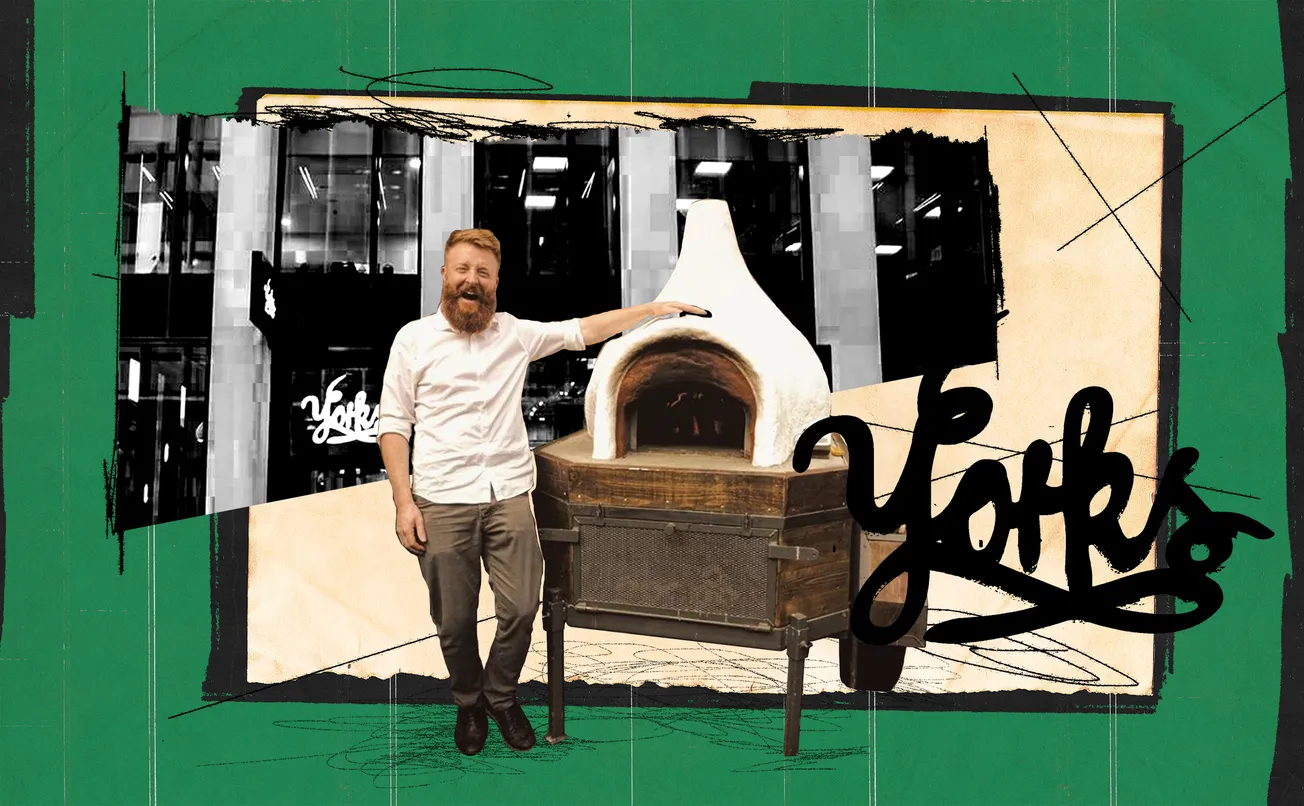
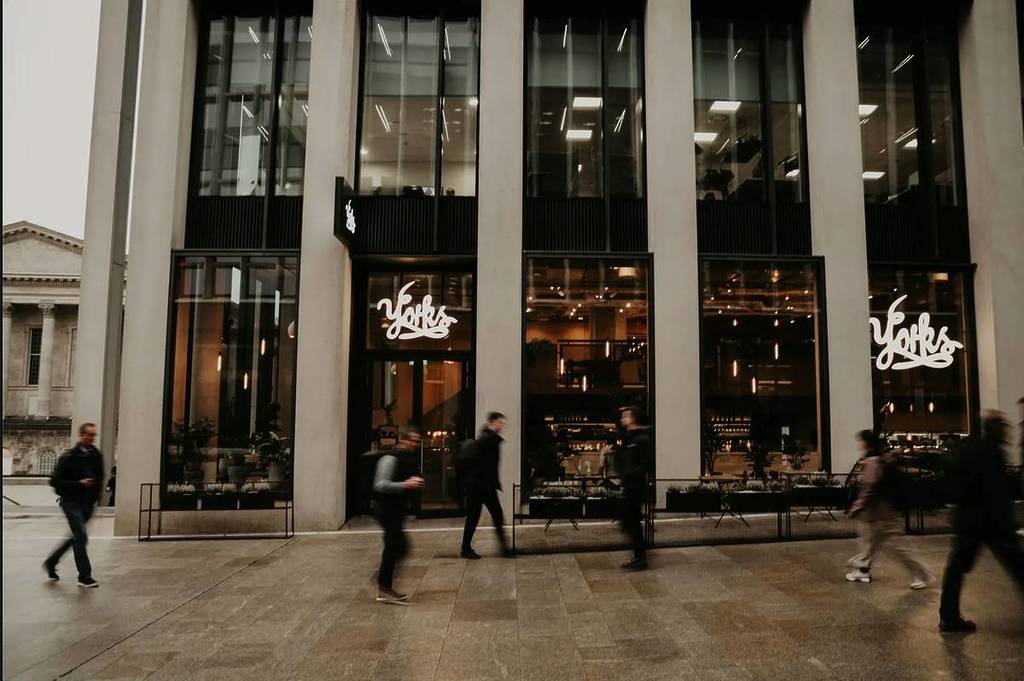
At Yorks Cafe on Stratford-upon-Avon’s High Street, I slide into one of the last remaining stools by the bar. The narrow room is an homage to 2010s industrial-chic decor. Lightbulbs hang bare from suspended metal fittings, grey limewash paint daubs the walls. Tendrils from a couple of limp looking spider plants dangle over bags of coffee beans.
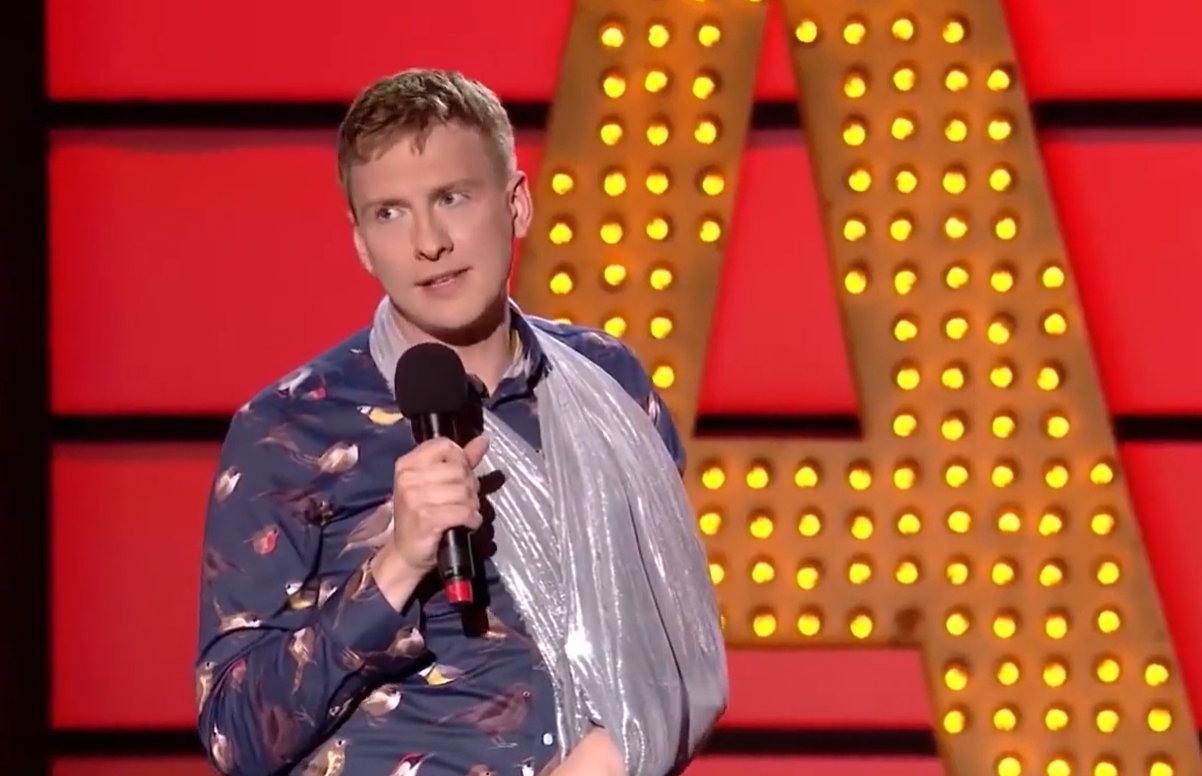
This cafe is all that remains of a once-promising West Midlands coffee kingdom. Now three sister branches in Birmingham sit abandoned, bailiff notices posted in formerly well-dressed windows. Yorks was dubbed one of the ‘world’s best’ coffee shops; its premium brews and bougie brunches won plaudits from the Guardian and good-natured ridicule from comedian Joe Lycett.
The jewel in the Yorks crown was its 100-seater flagship branch at the swish new Paradise development on Chamberlain Square. When it opened in 2024, it seemed a major coup and a local success story: an independent coffee shop, nestled among big-name, national hospitality brands like Dishoom and Albert’s Schloss.
But less than 12 months later, a sign appeared in the window of Yorks Paradise. “Dear customers. We are having to close while we resolve a few issues. More announcements to follow”.
No announcements followed and the issues are yet to be resolved. Out of seven Yorks locations opened in 13 years, the Paradise flagship was the sixth to close (not including a short-term pop up in Leamington Spa). Yorks' Stratford branch is the lone survivor. Now investors want answers from the chain’s charismatic and elusive owner, Simon York Ford. In his wake is an international trail of bankrupt businesses — publicly available records show that Yorks cafes alone are saddled with debts of at least £750,000 owed in unpaid tax, bills and staff wages.
How did such a promising venture, with so much goodwill and hype, go bust? The Dispatch has spoken to multiple people with intimate knowledge of Yorks' rise and fall, including two current shareholders, with a combined 33% stake, four ex-employees, and Simon Ford himself. We uncovered the story of an entrepreneur with a history of dreaming big and ending up in even bigger debt.
Due the ongoing liquidation of his companies, Ford declined to comment on the allegations in this story. He did, however, tell The Dispatch: "I recognise that the insolvency of the Birmingham businesses has had a significant impact on former employees and others connected to the company. A thirteen-year business employing many people will inevitably affect lives when it ends, and I very much regret the impact caused."
Alex, an investor with a 5% stake who doesn’t want us to use their real name, says: “I think Simon is, at his heart, a good person. [But he] has dug himself into a situation and rather than confront it, he kept digging, and then he got a bigger spoon and a bigger spade, and then a JCB, and he just kept going.”
Seeing potential
In 2012, Birmingham’s coffee culture was not what it is now. Baristas were in short supply. But one man who could confidently rustle up a cortado was a tall red-head, named Mark*. Then aged 29, he was that relatively rare thing: a young server for whom hospitality isn’t a stop gap, but a career. Mark had worked his way up from agency staffer to front-of-house. He was passionate and wanted to progress.
So, when Ford approached him with the opportunity to be the manager of a new cafe, he grabbed it with tattoo-covered hands. The way Mark recalls it, Ford came into the cafe where he was working and offered him the job there and then. “I was a bit naive, and he was excitable,” Mark tells me today, over a flat white. But he was ambitious and wanted a new challenge. He accepted.
Yorks Bakery Cafe opened at the top of Newhall Street on 10 August 2012. The large unit — now occupied by Pret A Manger — was busy from the get go, says Mark, being slap bang in the business district.
At first, Simon Ford was very present. A former barista, Clare*, who started at Newhall Street and worked across Yorks' branches until the final closure in 2025, remembers him “being there pretty much every day”. He seemed decent enough. “Very pleasant at first,” she says. “He seems passionate. That's the impression I think most people get from him.”
By 2015, as Birmingham's coffee scene gained confidence, Yorks was picking up traction — and press. The Guardian deemed its second opening, in Great Western Arcade, an “ultra-cool espresso bar” in September of that year.
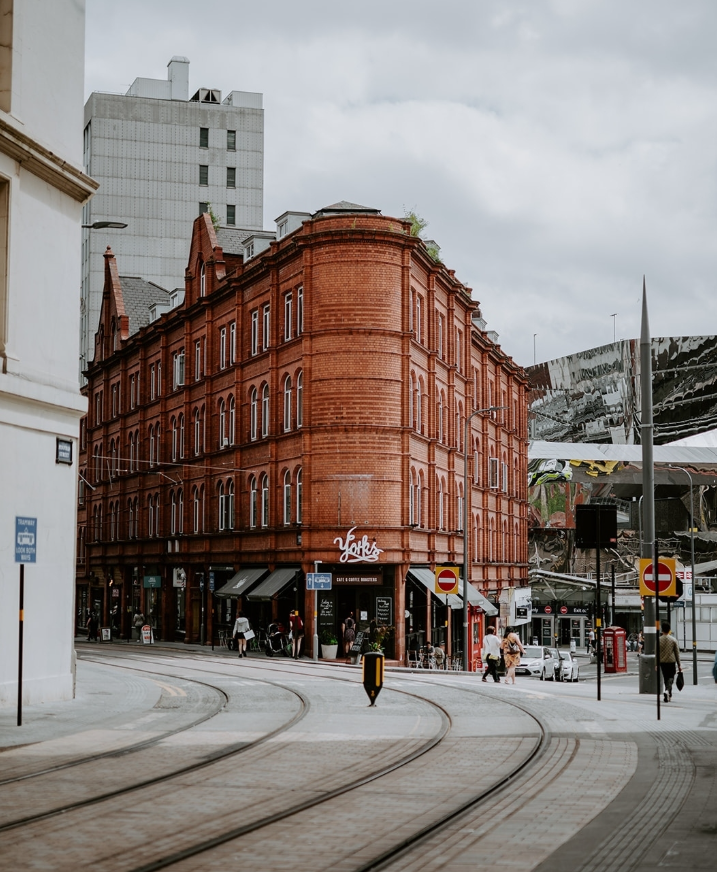
Three months later, hoping to continue the momentum, Yorks moved from Newhall Street to an impressive wedge-shaped building on Stephenson Street. This is when Geoff Hall entered the picture. A designer of casino games, in 2015 he’d just sold his first small company for a healthy sum. With two other firms on the go, he was keen to invest in other local businesses. A teacher friend of his put Hall in touch with a former pupil who now ran a bustling cafe: Simon York Ford.
“I did tell Simon — which was probably music to his ears — that I wanted to be hands off,” Hall recounts at a cafe in Shirley. Hall travels a lot for work, mainly to Las Vegas, so he doesn’t have much spare time. But when he met Ford, Hall thought he was on to a winner. “He comes across as, ‘wow, this guy's gonna go places’,” he says. Plus, Ford provided detailed documents outlining the company’s financial projections. Encouraged, Hall agreed to put up £60,000 before Christmas 2015, and another £60,000 in the new year.
With the first chunk of the money, Ford refurbished the Stephenson Street unit, which opened in December. When the second tranche of Hall’s investment came in, Ford expanded into the unit next door. The place was run by a team of 14 people, including front-of-house and kitchen staff. Directly opposite New Street station, a healthy mix of one-time customers and loyal regulars began to stream in.
Financial hot water
But the honeymoon period was short. Red flags began to appear for Hall. It took five months after his first investment for Ford to register Hall’s shares at Companies House. Ford also wasn’t easy to arrange a meeting with, excusing himself as too busy. In June, they finally got some face-to-face time: Ford wanted to show Hall an available unit at Grand Central Station — he thought it would make a great location for the next branch of Yorks. “It looked really impressive,” says Hall.
A month later, Hall says he got a call from Ford, who said: “we are right on the verge of massive things but I’m £60,000 short,". He claims Ford said he couldn’t afford to “pay people”. With the Grand Central Station plan fresh in his mind, Hall agreed to loan Ford the money, bringing his total spend at this stage to £180,000. Ford wrote up an agreement, seen by The Dispatch, guaranteeing that he would pay it back within 36 months, plus interest at 5%. Deal done, the pair arranged to meet in September, to look over the accounts.
But when the time rolled round, Hall says, Ford cancelled — he was too busy. Hall had to fly to America for work so it wasn’t until December that they got the opportunity to catch up. Looking at the figures in front of him, Hall’s heart sank. The outlook was not good — Yorks was haemorrhaging money. He recalls Ford blaming the losses on the Great Western Arcade espresso bar, but said he was reluctant to close it because he was “emotionally attached” to it. “You can't afford to do that in business,” says Hall. “I said, ‘just close it’.” According to him, Ford wouldn’t listen — he was convinced he could revive it.
Fast forward to 2017, and the situation was going from bad to worse. The Grand Central Station branch never materialised; instead Ford opened a smaller cafe at the Ikon gallery in March. In July, Hall emailed Ford saying he hadn’t received any of the monthly repayments on his £60,000 loan. He “came back with apologies and excuses,” says Hall, sending a one-off payment of £1,500 and setting up a monthly transaction of £250 to pay off the interest. The following month, Ford agreed to close the espresso bar, and said he was going to declare bankruptcy on the company. “He owed HMRC a lot of money,” claims Hall.
By September, Hall says Ford was “in a real panic,” and was desperate to get the business back on track. With the original limited company now bankrupt, Ford set up a new one, SFG Cafe Brands Ltd, to buy it out. According to Companies House documents, he brought in a new investor, who put in £40,000. Hall says this person also had his bookkeeper keep tabs on the accounts. Hall was buoyed — he felt like the business was now in safe hands. He put in another £10k, wanting to ensure its success.
Now, the company’s confirmation statement shows, Ford had 544 shares, the new investor had 400 shares, and Hall had 288 shares (based on his latest £10,000 investment, rather than the previous £120,000 he had invested in the original company behind Yorks). Between them, Hall and the new investor now wielded a power that made Ford “nervous”, Hall claims.
This story is free to read. You just need to sign up to join The Dispatch's mailing list. And why wouldn't you? You'll get our journalism in your inbox the second we publish, keeping up to date on this and all our stories. No card details required.
Things were looking up — or so it seemed. Six months later, in 2018, the eight shareholders in SFG Cafe Brands Ltd held their first annual general meeting at an office in the business district. Ford brought in coffees and pastries from the shop.
While the others munched on croissants, the new investor took Hall aside for a quiet word. His bookkeeper had informed him that Ford had withdrawn £11,000 from the business to his personal account. Hall was concerned, but wary of reacting too hastily. That risked a situation that would permanently lose him the now £190,000 he had sunk into Yorks. The pair decided to give Ford the benefit of the doubt.
As the months went by, however, Hall says the new investor grew more and more worried. In 2019, when Ford suggested he wanted to bring in a new bookkeeper, he’d had enough. He wanted out. By Hall’s telling, Ford used company money to buy the new investor’s shares back, bringing Ford’s total to 943 — far more than anyone else.
“He owns over 50% of the shares now,” says Hall. “He can basically do what he wants.”
Dreaming big
Meanwhile, at Stephenson Street, staff were blissfully unaware of the financial chaos being wrought behind the scenes. In the intervening years, the team had formed a tight-knit bond and created a communal atmosphere. “[Customers] enjoyed the coffee or the breakfast or whatever, but it was a bit more about the sense of community we were building,” Clare tells The Dispatch. “That was another reason why it was, for a time, a nice place to work. Even when things were getting worse, we still had nice customers.”
According to Clare and Mark, things “got worse”, when Ford decided to expand. He launched Yorks Cafe and Coffee Roasters on Stratford’s High Street in early 2020 — just four weeks before the first Covid lockdown. The regulations didn’t slow him down; while many hospitality businesses closed in the following years, Yorks was on a roll. By 2022, Ford was outlining an ambitious plan to staff: three new locations, consisting of a cafe in Leamington Spa, and two 100-seater small plates restaurants in Stratford’s Bell Court and Birmingham’s Paradise development.
Existing Yorks employees were trepidatious. “Me and some of the staff said ‘this is insane’”, Mark tells me. He asked Ford for the timescale: four weeks to launch all three. “I was flabbergasted,” he says.
Work began first on Bell Court. Ford was fastidious about design and burnt through shopfitters at a rate of knots. “He loves doing the fit-outs,” says shareholder Alex, exasperatedly. “He's a starter, not a finisher. He's got big ideas, never reads the fine print.”
On 10 August 2022, the Bell Court branch opened. According to staff in Birmingham who occasionally went there, there were issues from the start. “Nothing was set up properly, the service was poor, the food was mid,” says Mark. “There were issues with the chefs. It was carnage.”
Bell Court closed 15 months after opening. The fiasco forced Ford to put the brakes on the plan for a branch in Leamington Spa. But there was still Birmingham Paradise. In 2022, Ford had persuaded the team at the £1.2bn development to take a chance on a local, independent business. Paradise (they did not want to comment for this story) had even given him £470,000 towards the refurbishment of the glass-fronted unit, public papers show. They also, Mark and the investors say, put up two years of free rent.
But Mark claims Ford spent almost that entire period agonising, again, over decor. By the time the restaurant finally welcomed customers on 8 October 2024, Ford had also burned through the recruitment budget by hiring between 50 and 60 new staff — the wage bill for the first month, says Mark, was a staggering £80,000. That month, Yorks Stephenson Street location abruptly closed. A sign appeared in the window to say it was being refurbished. A month later, it was replaced by a bailiff’s notice. "I know it doesn't look very good,” Ford told Birmingham Live at the time.
Back at Paradise, floor supervisor Manon Li-Le Dantec was grappling with the impact of continual overspend, which had “snowballed”, from the first month.
“We kept being told you need to use less hours,” she continues. “‘We're losing money. We're not making enough money’.” At Ford’s request, Li-Le Dantec cut staff hours and put QR codes on the tables to automate service. “At this point, I'm saying [to myself], ‘well, we've now lost the personal touch that comes with coming to Yorks for brunch',” she recalls. Morale was low, especially because after the first month, Ford never paid staff on time. Wages were “late [...] in bits, in dribs and drabs,” says Li-Le Dantec. At times, employees were asked if they would accept pay two weeks late so Ford could "gather up funds".
Yet as Paradise struggled, Ford seemed to almost disappear, only occasionally popping in to borrow kit. Staff soon found out where it had gone via social media photos posted of Soma, a new street-food cafe that had popped up in Stratford High Street, almost directly opposite Yorks. Ford had quietly opened a direct competitor to his own business — and fitted it out with equipment from his floundering Yorks flagship, according to Mark and his colleague, Yorks' coffee roaster Craig Martin.
At Paradise, Li-Le Dantec and Martin, were killing themselves to get the venue on an even footing. By the autumn of 2025, they were feeling positive. Pay was still an issue, but at least outgoings were in control. They believed Yorks Paradise could be salvaged.
On Tuesday 23 September 2025, Martin was managing the lunchtime shift when a woman with a clipboard entered the restaurant. Behind her, two men in npower jackets followed. They were there to turn off the electricity. The trio waited patiently while customers finished their lattes.
“They allowed us to keep trading for a few hours just to wind people down,” says Martin. “I had to make sure the team wasn’t panicking and also tried not to panic myself.” After the last customers drifted out of the door, Yorks Paradise shut — for good.
Meanwhile, Li-Le Dantec was at home, trying to relax on her day off. “I sat down on my couch to have a midday nap. That's what days off ended up being, just rotting and trying to recalibrate,” she tells me. On impulse, she glanced at the work group chat, and saw the bad news. She recalls, "sitting on my lovely yellow couch, looking up into the sunlight and watching my world implode."
Fleeing Dubai
At the time of writing, Ford’s only remaining Yorks cafe is in Stratford. That’s where The Dispatch tracked him down, sitting in the corner on his laptop, looking cheerful.
Ford spoke to us for 20 minutes, off the record. He later sent us a wordy statement saying he “very much regret[ted] the impact caused” by the closure of Yorks. As for the various claims in this article, although Ford said they relate to “matters that are factually disputed, to issues taken out of context, to personal opinions about strategic decisions made at particular moments in the life of a complex and evolving business”, he did not comment on any specific allegations, saying it would “not be appropriate”, given Yorks “ongoing liquidation”.
This is not Ford’s first deferral of responsibility for a bust business. In 2009, he fled Dubai after his ‘gift experience’ company, Blue Banana, went bankrupt. In the wake of his dawn flit, Ford penned an open apology letter, published on gulfnews.com.
“I am not trying to justify that what has happened is morally correct, it most certainly is not,” he wrote, “but there is a very stark reality in doing business in UAE which unfortunately results in the most horrible decisions having to be made”. He went on to make a “formal and personal commitment” to “repay every last Dirham to everyone who is owed money”.
A Blue Banana staffer interviewed by Arabian Business newspaper a year after the company’s collapse, said her onetime boss was “always thinking very positively about everything [...] but I don’t think he was realistic about the money problems”.
“He mismanaged the company,” she continued, “[and] brought a lot of debts on”. She estimated that between suppliers, investors and bank loans, Ford owed around £1.21mn in the UAE.
The Dispatch reached out to a former Blue Banana investor who preferred to stay anonymous. They confirmed that they had not been repaid any money to date and were not aware of “any effort made [by Ford] to settle what was owed to anyone”.
Now, investors in the West Midlands are trying to pin Ford down for a crisis meeting about Yorks. In an ideal world, Hall says, they would work with him to help make the Stratford cafe a success. For that to happen though, Ford needs to stop avoiding their attempts to set a date. “There’s always a reason [he can’t meet],” Hall says grimly. “Unless he wants money — then he’s available 24/7”.
Additional reporting by Moya Lothian-McLean
*names have been changed
If someone forwarded you this newsletter, click here to sign up to get quality local journalism in your inbox.

Comments