

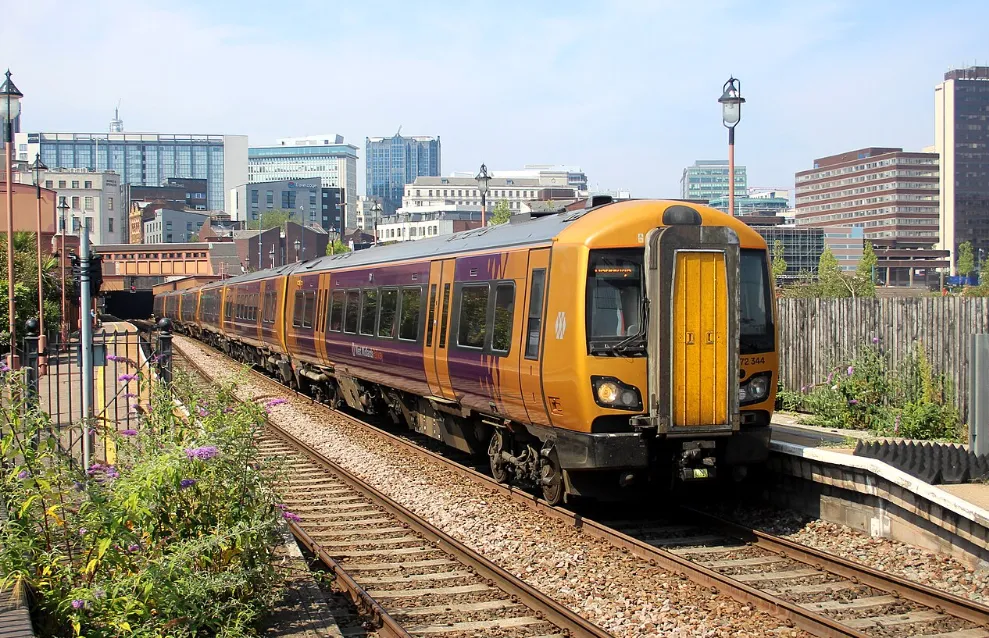
Dear readers — it’s been a weekend of big but rather quiet changes in Birmingham. You might not have noticed it, but yesterday, the region’s rail network was brought into public ownership for the first time since the 1990s. It’s a major landmark — but with trains, staff, and timetables largely the same, we won’t see the impact for some time. Elsewhere, another era has ended: the modernist Bethel Presbyterian Church has held its final service after 58 years of serving the Welsh-speaking public. And in other sad news, the death of local Lozells councillor Waseem Zaffar was announced late on Friday night, with tributes coming in thick and fast over the last few days. All of that is below.
As for the now three-strong Dispatch team, our weekends were spent in a variety of ways, some more enjoyable than others. Sam battled with his landlord to try and get the hot water turned on in his new flat. Kate ate her way through the menus of two brilliant Birmingham restaurants with Jamaican food at Devon House and Lebanese-Morroccan at Al Bader. Madeleine abandoned the city entirely to pub her way through Sheffield.
Catch up and coming up:
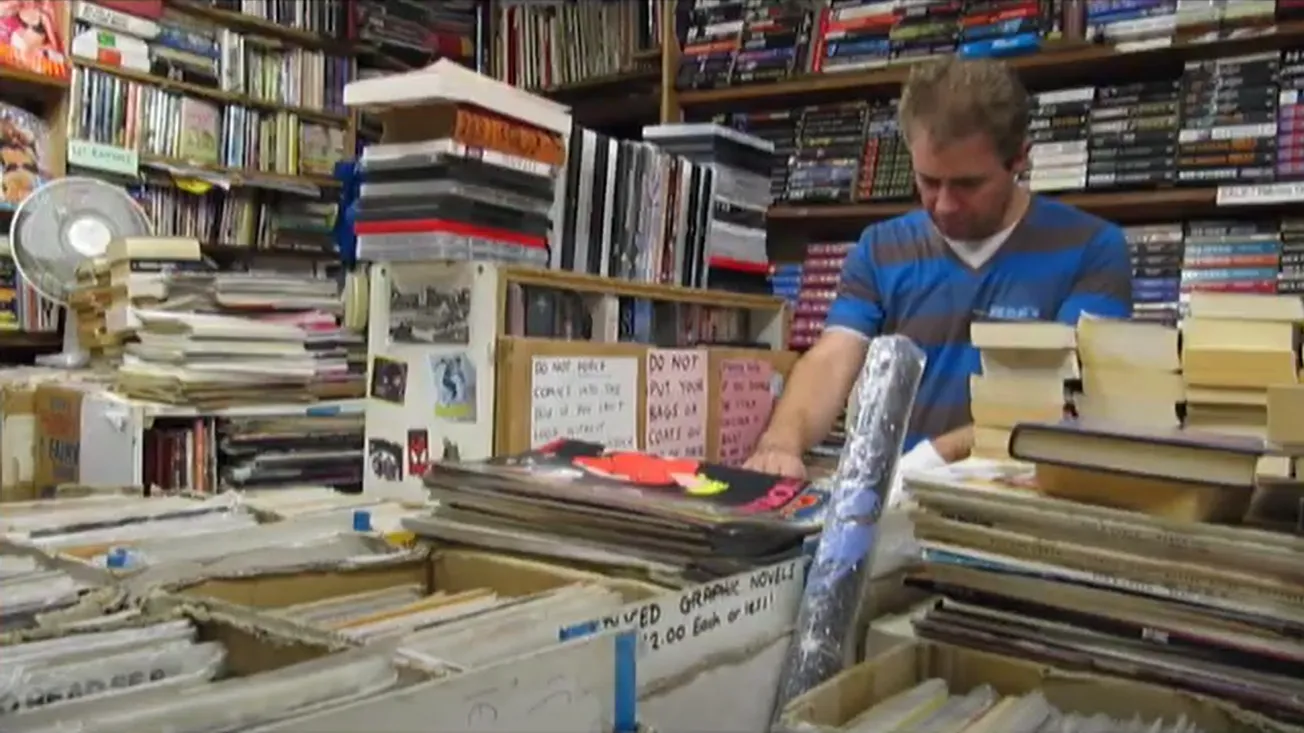
- At the weekend, Samuel published a deep-dive into the decline, and slow revival, of Birmingham’s independent bookshops. One reader wonders if Brum’s comparative lack of indie bookshops is because the city “just isn't rich enough to support many.” Don’t buy that? Have your say in the comments.
- Last Wednesday, our new staffer Madeleine shared her first byline with Kate, reporting on the Birmingham tenants whose homes went up for auction without their knowledge. We had some great responses to this story in the comments. Tom Cattell wrote “It's these types of 'reports' [that explain] why I subscribe to the Dispatch.” Newcomer Matthew Wild responded: “I only subscribed last week, this is my 1st read. Is this typical of their journalism? If so, I'm hooked.”
Information, insight and empathetic entertainment — that's what The Dispatch's journalism is all about. If you want to understand more about how Birmingham functions, and get rich stories about the people who make it tick, consider signing up as a fully-fledged Dispatch member.
It's just £2 a week for all four weekly editions. Get investigations, news briefings, culture rundowns and deep dives into Birmingham's history straight to your inbox, plus access to exclusive events.
We are a reader-funded publication, doing old-school journalism in old-school way, without clickbait headlines or clunky ads. If that sounds appealing, click below to support us and sign up now.
Photo of the week

Easy Parker — Combined authority mayor Richard Parker tries out a Maeving electric motorcycle, while announcing a £500k contribution from the West Midlands Co-Investment Fund to the Coventry-based company. Other electric motorcycles are, of course, available.
Big Story: Your commute has been nationalised: the region’s railways are now in public hands
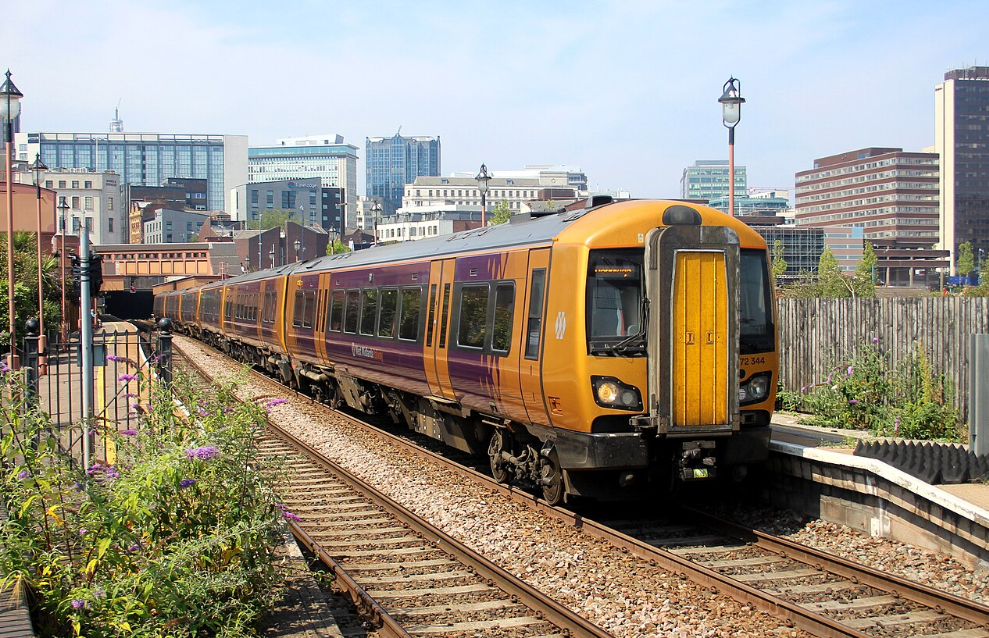
Top line: Trains in the West Midlands are now publicly owned for the first time in about 30 years. It’s a major step in the country’s journey back to full rail nationalisation, due to be completed next year.
Context: Until yesterday, train travel both within the region and between here and London, was operated by a private company called West Midlands Trains. That entity is no more — the state has stepped in and taken back control under its new public body, Great British Railway.
Over halfway: West Midlands Trains is the eighth rail company to go public, with six left to make the transition. Ex-Network Rail chief Lord Peter Hendy said the full crop “will form the backbone of passenger services” under the new system. (UK gov).
Background: The change has been a long time coming. About two years ago, the Labour government passed the Passenger Railway Services (Public Ownership) Act, and last May gave itself the deadline of 2027 to wrangle the nationwide network out of private hands. This was after several poorly performing companies had already been nationalised by the Conservatives before them. The point, ministers said, is to make journeys more reliable and to reduce the delays that can make travelling by train so frustrating.
Opinion check: It appears that Westminster has voters in the region on side too. The graph below tracks the level of support from Midlands residents for the move — around 60% are in favour.
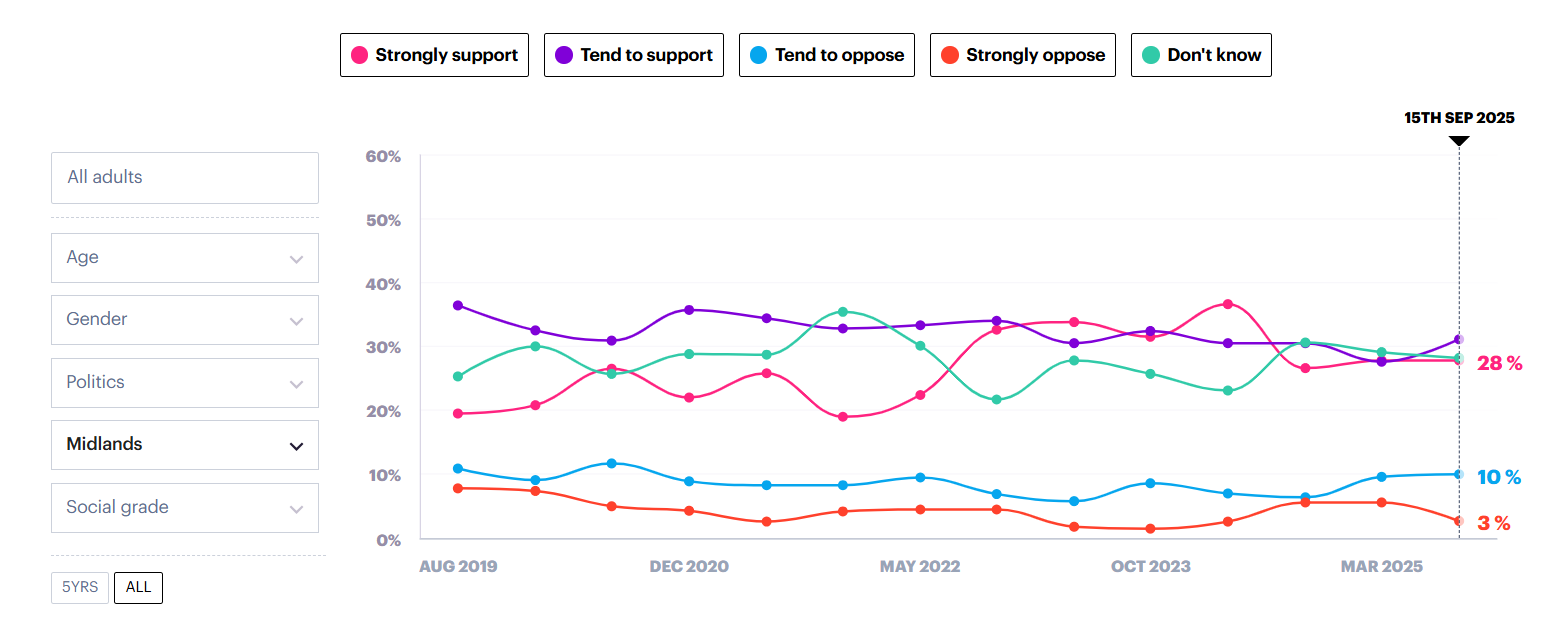
A YouGov poll of Midlands residents who responded to the question: To what extent would you support or oppose bringing the train operating companies back into public ownership?
Money, money, money: A big argument for rail nationalisation is that it will save the country money. Between 2024 and 2025, the government spent £11.9 billion on the sector, almost £3bn more than the year before the Covid pandemic.
What to expect: If you were hoping for an overnight transformation from overcrowded carriages, regular cancellations, and possible industrial action you might be disappointed. For the time being, services will be pretty much the same, including the timetables you’re used to and largely familiar staff. Improvements will take time — possibly years. (ITV).
The whole hog? While yesterday represents a seismic shift in the way trains are run in the region, ownership of the trains themselves is still firmly in private hands. In short, train operators are being nationalised, while the physical trains themselves (known as ‘rolling stock’) will continue to be leased from private companies. The government argues that this will keep prices down by avoiding the high cost of actually purchasing trains. However, between 2013 and 2024 rolling stock leases grew, as a proportion of railway spending, by 11% — so leasing trains isn’t cheap either.
Bottom line: A new era for train travel in the West Midlands has dawned but the impact of nationalisation will take some time to materialise. Even then, the region’s most popular form of public transport by far isn’t the train but the bus. Those are being brought under public control in 2027.
Brum in Brief
Councillor Waseem Zaffar has died
Tributes have rolled in for the late Lozells councillor Waseem Zaffar, who has died at the age of 44 while visiting Pakistan for his uncle’s funeral. Zaffar had represented his ward for Labour since 2011, and held several senior roles in that time including as cabinet member for transport and the environment. He was heavily involved in bringing about the Clean Air Zone to tackle high rates of pollution in 2021, and the inaugural Birmingham Heritage Week in 2015. Driven to rise the ranks of local politics, in 2022, he attempted to take the leadership from his former ally Ian Ward, losing by just two votes in a dramatic moment for Birmingham City Council. His tenure was affected by periods of controversy, including accusations of bigamy and meeting with a fugitive alleged drug dealer. An avid Aston Villa supporter, he leaves behind his wife and three sons.
“He cared deeply about his community, working hard to serve others,” said Edgbaston MP, Preet Gill. While MP for Hodge Hill, Liam Byrne called him a "change-maker" who was "a smart, creative and energetic force in Birmingham politics.” Leader of Birmingham City Council, John Cotton described him as a "passionate advocate of his community.”
Goodbye to Bethel church
If you’ve been reading The Dispatch since November 2024, you might remember our story about the Bethel Presbyterian Church in Birmingham city centre. This little place of worship sits on Holloway Head and holds a special place both in the Brummie Welsh community and the city’s architectural history. It was designed by mid-century architect James Roberts (also responsible for the Rotunda) and opened in 1968 to cater to Welsh-speaking churchgoers. Ellen Whitehouse, who we interviewed for the article, has been attending ever since the early days when services were packed with 250 people singing the hymns at full volume: “it was just amazing to be in such an atmosphere,” she told us. She joined the church to ensure her family were connected to their culture but, over the years as the congregation moved back to Wales and elsewhere, the numbers dwindled. In 2024, just 12 people made up the regular group of attendees, with ministers visiting from Wales on a rota and Ellen taking on the bulk of caretaking responsibilities. “I’ll do anything to keep it going,” she said at the time. “It means everything to me.” Sadly, the Bethel’s era has come to an end and yesterday the church held its final service in Welsh, which The Dispatch attended. The hall was full for the final goodbye and the harmonies were glorious. “It’s not the end of the book,” announced the minister, who said he had full faith in a new Welsh Presbyterian revival. “It’s just the end of a chapter.”
 The Dispatch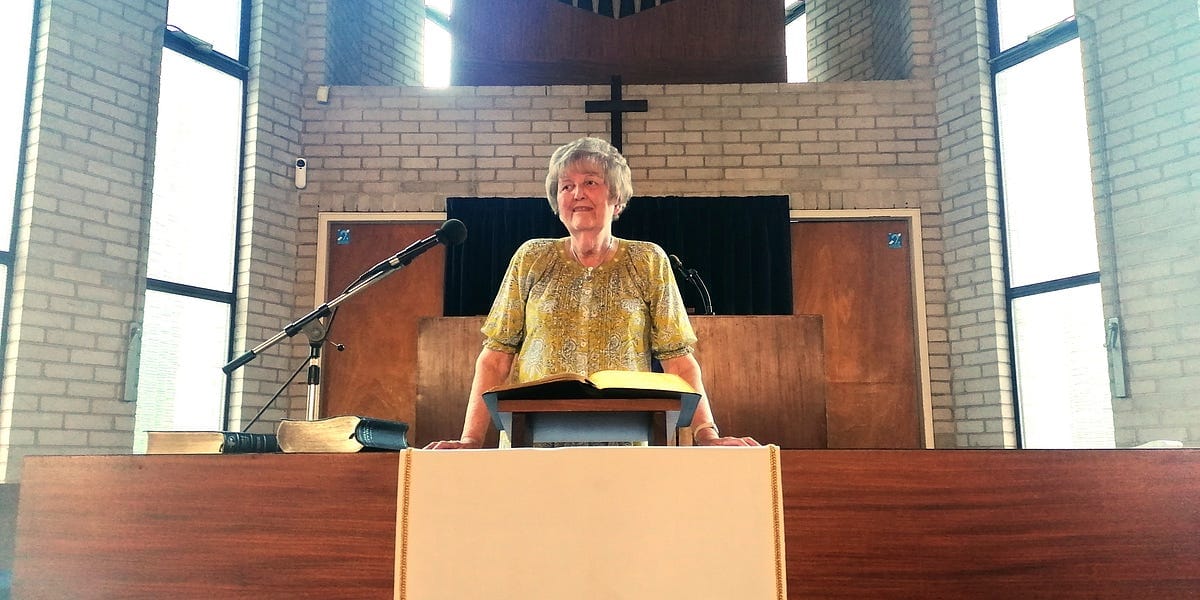
Quick Hits
✍️ Birmingham City Council has released a survey for opinions on one of the most iconic parts of the city — the ramp. (Here).
🗞️Small Heath’s Labour councilor Shabina Bano said she was the victim of “a deliberate and targeted campaign” to The Times.
🚮Nearly four years after plans were approved for Walsall’s £32 million ‘super tip’ today it finally opens to the public. (Express and Star).
🗑️ All bin collections in Birmingham suspended due to “mega picket.” (BBC).
Letters
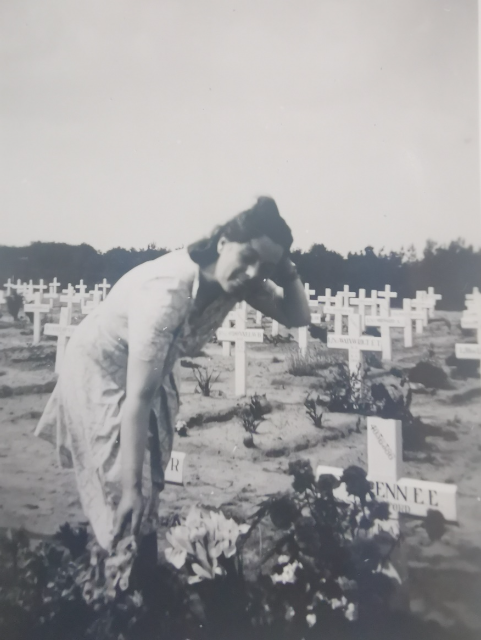
📧 The Dispatch recently received a curious email from a man in Belgium who is searching for the descendants of a soldier from the West Midlands. Ernie Baker wrote to tell us his parents met in Belgium during WWII and they both moved to Birmingham in 1946. His mother Julienne taught French lessons to a widow called Lilian Penn, who relayed to her the tragic story of her son, Ernest E. Penn’s death during the liberation of Venray — Julienne’s home village. Julienne was so moved by the story that she promised to name her first child after her student’s son, which is where Ernie gets his name.
🎖️ Now, Ernie and volunteers at the Venray War Cemetery Adoption Grave Foundation are looking for anyone related to the late soldier. Penn was 27 when he died on 18 October 1944. He was a member of the 1st battalion Herefordshire Regiment, Kings Shropshire Light Infantry, of the 11th British Armoured Division. His parents were Robert Edward and Lilian May Penn and they lived at 146 Hallam Street West Bromwich. Can you help? Reach out to Ernie at ernie.baker@telenet.be
Media picks
📰 The Financial Times has published an op-ed on the legacy of the ‘two Andies’ — Burnham and Street. Andy Haldane, the chancellor of the University of Sheffield and ex-Bank of England chief economist, makes the case that localism has been a success story — citing the Greater Manchester and former-West Midlands mayors to back up his argument. He says “both these regional success stories contain important lessons for how this government, or its successor, could stimulate growth.” Most growth, he continues, comes from bottom-up place-based initiatives, not central government — and that Starmer is failing to understand this. It's clear Haldane is a big fan of the regional mayors, writing: “This is where the Andys come in. Between them, they have more experience in running something successfully than the entire Cabinet and Shadow Cabinet.”
🎙️Birmingham anti-knife crime campaigner Malachi Nunes appeared on the Sinners Podcast over the weekend, along with Urban Music UK host Faz. Described as “the world’s most dangerous podcast”, Sinners centres on Birmingham’s street culture. In this episode, Malachi discussed how Imms Nation’s now-removed YouTube video ‘Birmingham’s Most Dangerous Gang’, should have never been posted. What was meant to be an interview with incarcerated rapper Coolie18, turned into a video about Birmingham’s gang culture — and many participants were filmed without their consent. The original concept was supposed to be purely about “exposure and content” for Coolie18, but Malachi says he suspects the rapper got “excited” and it went further. Saying that we’re in “an era where everyone thinks they’re a professional on YouTube,” the episode calls out the lack of consideration for how the video could influence young people in Birmingham. (YouTube)
Our to do list

🏛️ Heritage
Today, Highbury Hall is throwing open its doors and inviting visitors to explore the historic building and grounds. You can also take the opportunity to snoop around rooms usually hidden to the public on one of their Hidden Highbury tours.
🎭 Theatre & dance
It’s hard to imagine burlesque performer Dita Von Teese strolling down Suffolk Street Queensway — but on three nights this week, that’s exactly where she’ll be. Her show Nocturnelle is inspired by 19th century magicians and it’s on at the Alexandra Wed-Fri. On Thursday, as part of the Hippodrome’s international dance season THIS IS DANCE, catch a performance by Motreal’s celebrated Ebnflōh Dance Company. Includes a 20 minute talk after the show.
🎶 Music
Iiiiinside the place!: on Saturday, this live show at Wulfrun Hall in Wolverhampton celebrates the golden era of 90s and 00s soul, rnb, and UK garage. On Sunday, Centrala is hosting a poetry open mic night with a twist — as you perform your poem, live musicians will play along.
If someone forwarded you this newsletter, click here to sign up to get quality local journalism in your inbox.
If you’d like to sponsor editions of The Dispatch and reach over 25,000 readers, you can contact us or visit our advertising page below for more information

Comments