


This week, we’re trying to get The Dispatch to 2,000 members. This is a huge and exciting milestone for us, and something we’ve been working towards for a long time. To get us over the line, we’re offering a few discounted Dispatch memberships. Here are your offers:
- It’s £60 for an annual subscription, down from £80
- And it’s £4 for a monthly subscription, down from £8 (for your first two months!)
These offers will run until Sunday, but it would be great to make it to the big 2,000 today. As you can see from the little tracker on our website we’re already only 23 members from our target. And a little bonus: the 2,000th member gets a shout out in our newsletter on Monday. Many thanks!

Brum in brief
🚆 New Street Station will be dead over Christmas due to major engineering works. No services will run to or from the station between 24 and 28 December while the overhead powerlines get a £13m upgrade for the first time since the 1960s. (BBC).
🏦 The old Rackham’s building in town could finally be getting a revamp as part of a £350m regeneration project. Developer Sphere Group has launched a consultation on designs that could turn the former department store into 500 homes with space for offices and shops. (Property Week).
🚲 Mass-bike-ride organiser and Drum n Bass DJ Dom Whiting has joined forces with road safety campaigners Better Streets for Birmingham to demand more cycle lanes in the city. In a joint open letter to the local cabinet member for Transport, the Green Party councillor Rob Grant, they called on the council to build lanes that have already been funded. “With only 20km of separated cycle lanes, many of Birmingham’s streets are not yet safe for cycling,” it reads.
Joe Lycett is Birmingham’s greatest champion. He’s not its greatest artist
Sir Whitworth Wallis looks like a serious sort. I can’t truly know, of course. Wallis became the founding director of Birmingham Museum & Art Gallery (BMAG) in 1885, more than a century before I was born. But as I stare at an old photo of the Handsworth-born curator, I can’t shake the idea that this is a serious man thinking serious things. Hair neatly slicked, reading his papers in a suit, surrounded by a stacked patchwork of framed paintings.
Wallis, at least, can lay claim to some serious achievements. He kick-started Birmingham’s best-in-class Pre-Raphaelite collection, including Madox Browns and Rossettis — ably helped by money from notable Brummies, such as Joseph Chamberlain. BMAG can now boast of its 800,000-item collection. By the end of the 19th Century, Wallis’ work resulted in the Magazine of Art crowning BMAG’s paintings “the handsomest” around.
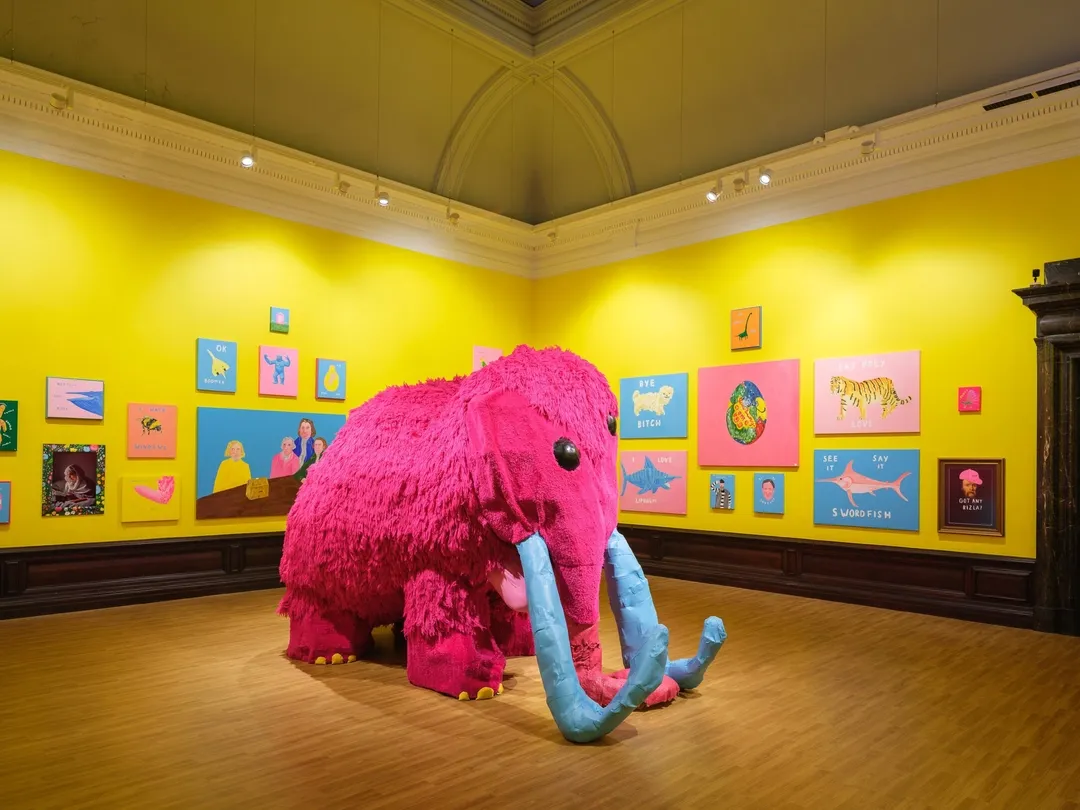
But over 100 years later, any lingering seriousness on BMAG's walls has been steamed off, ripped down and re-papered over with a palette of bold, lurid colours and jaunty millennial sass. At least in the room where professional sillyman, television presenting tyro and pre-eminent Brummie celeb Joe Lycett has taken over with his first major solo art show, EVERYTHING MUST GO, which is on until February.
From the off, it’s advertised that gallery-goers should expect less traditional BMAG and more bizarro universe of fun. Birmingham will be centred, so will tongue-in-cheek Lycett-ness. Hardly surprising. This is a man who once had TV hardman Danny Dyer gasping for air in a Digbeth studio.
That Lycett can now chalk off a BMAG show makes sense. He is endlessly passionate about Birmingham and its arts. He gives his time to BMAG for free, has donated his costumes to the permanent collection, and even has an art book out. Having gargantuan celebrity reach — a Guardian profile to promote his new TV chat show calls Lycett a “national treasure” — BMAG reckons he’ll engage the type of people who are put off by the po-faced Pre-Raphaelites.
But as I’m given a show preview on a swelteringly hot heatwave day in July, I can’t help but question if BMAG’s big ticket show of 2026 is actually any good. BMAG has twice been accused of overseeing declining curatorial standards in recent years. We’ve done so at The Dispatch, and local freelance art critic Ruth Millington used the pages of the Telegraph to accuse the gallery of sidelining serious art for one-dimensional caricatures of what it means to be Brummie — pictures of cobs on walls, rather than Edward Burne-Joneses.
The backlash to that piece was immediate. The museum’s directors said they weren’t just trying to appeal to “highly educated historians”. But the main criticism in the piece was about the number of important works the museum has hidden away in the store cupboard. Do we really want to argue that non-historians (especially those of us cloistered away in this little-known backwater) couldn’t possibly appreciate the Pre-Raphaelites? That a cob smushed on a wall is more our speed?
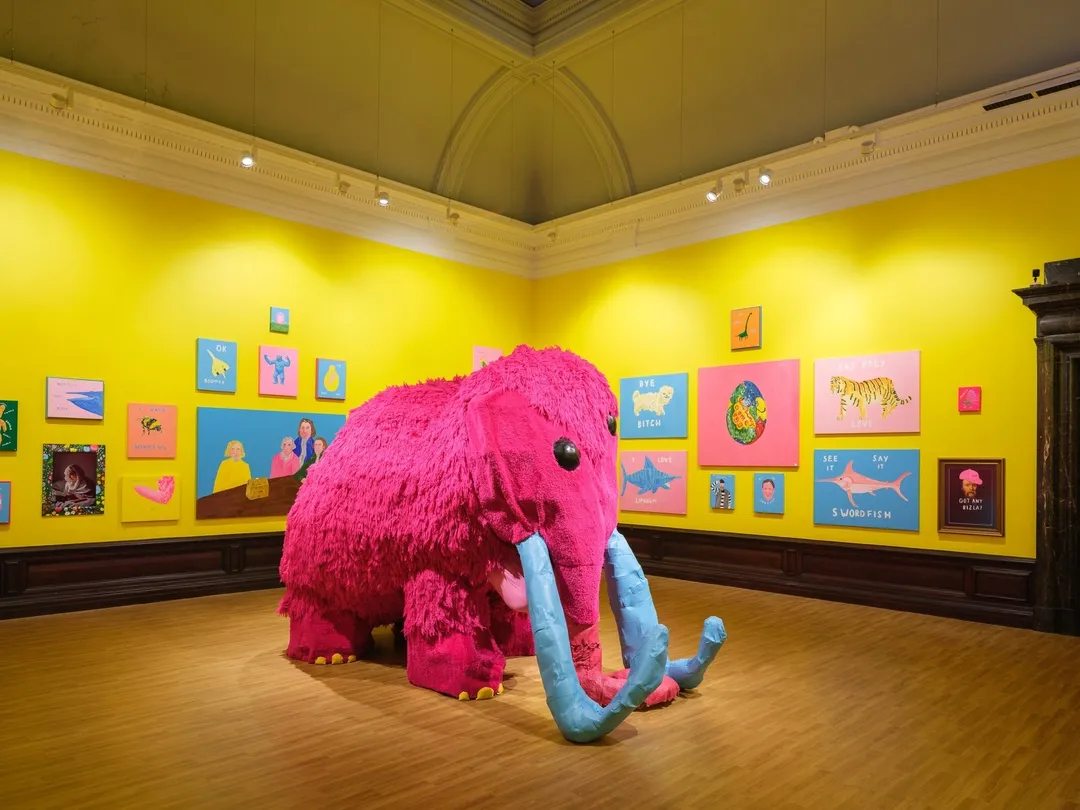
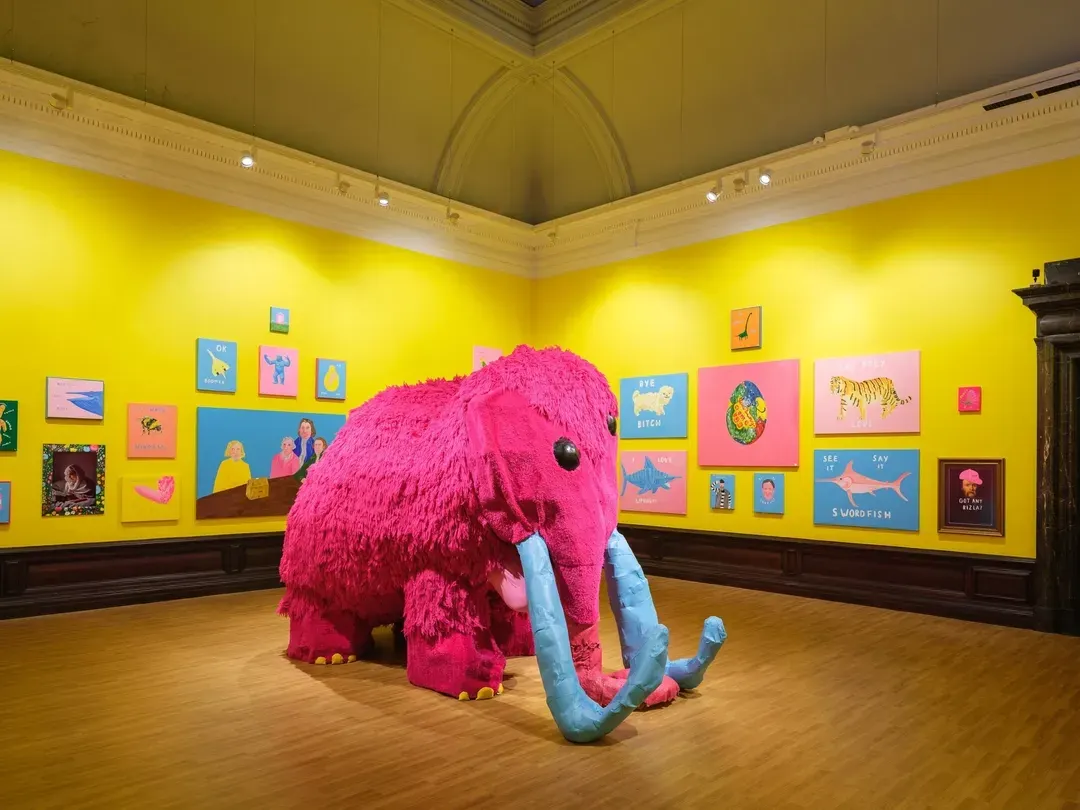
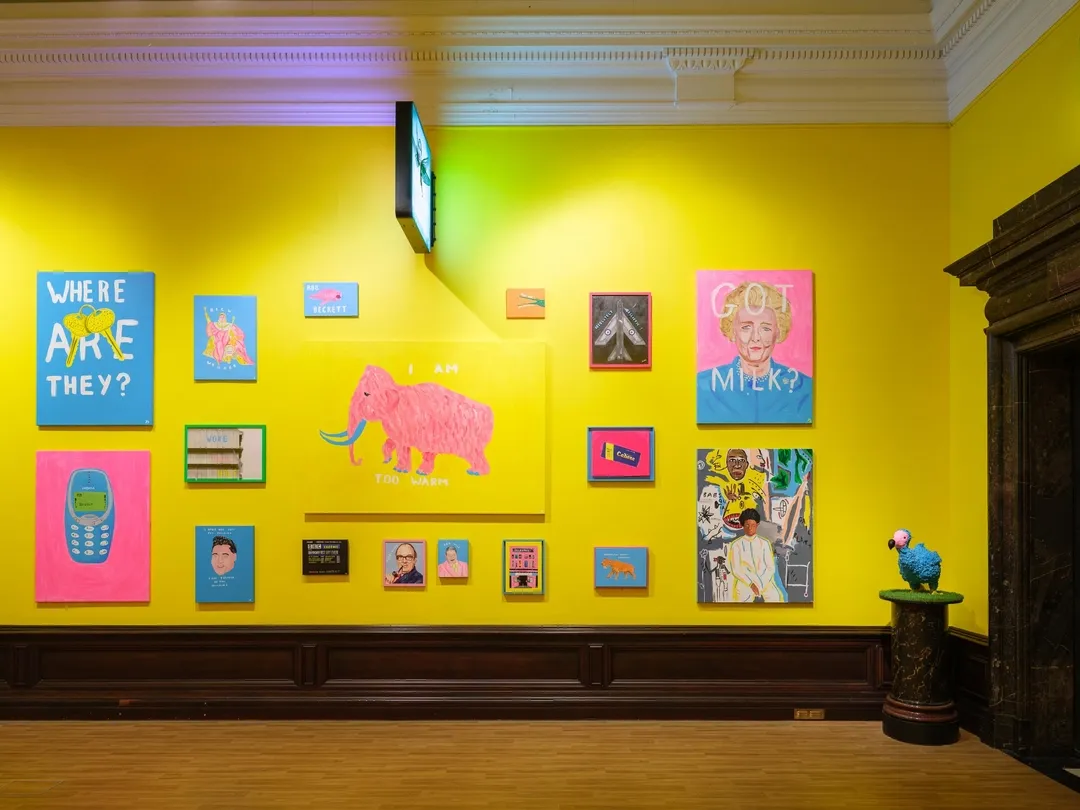
So as I lock eyes with Lycett’s boggle-eyed exhibition centrepiece — a pink mammoth named Martin — I wonder if it’s the heatstroke that has me woozily trying to comprehend whether Wallis might have commissioned this. Is this show about art or about the pulling power of Lycett’s celeb? And what does that say about where Birmingham’s culture is?
The show’s blurb promises gravitas. Lycett’s work will engage with the collection, and deal with serious themes; grief, for one. But it will also be fun and new. I wonder if it can do all of these things at once; if this isn’t casting the net a bit too wide. The crazy-paving creep of paintings up the walls hardly helps. There’s a painted sketch of former mayor Joseph Chamberlain (‘MANCHESTER IS SHIT’ above him), tongue-in-cheek references to ongoing civic struggles (‘WELCOME TO BIRMINGHAM’ with a bright blue bin bag in the middle), softly-softly climate references (a mammoth with ‘I’M TOO WARM’ alongside it), and a portrait of Edward Burne-Jones wearing a The Streets hat, asking: “Got any Rizla?”
I wonder if it might’ve been a run of Instagram posts instead. Or intended to be snapped and shared online, rather than seriously pondered. Soft-touch political slogans and obvious, tongue-in-cheek Brummie-ness lend themselves to the memeable format. BMAG, at least, admits social media engagement will be a metric of the show's success.
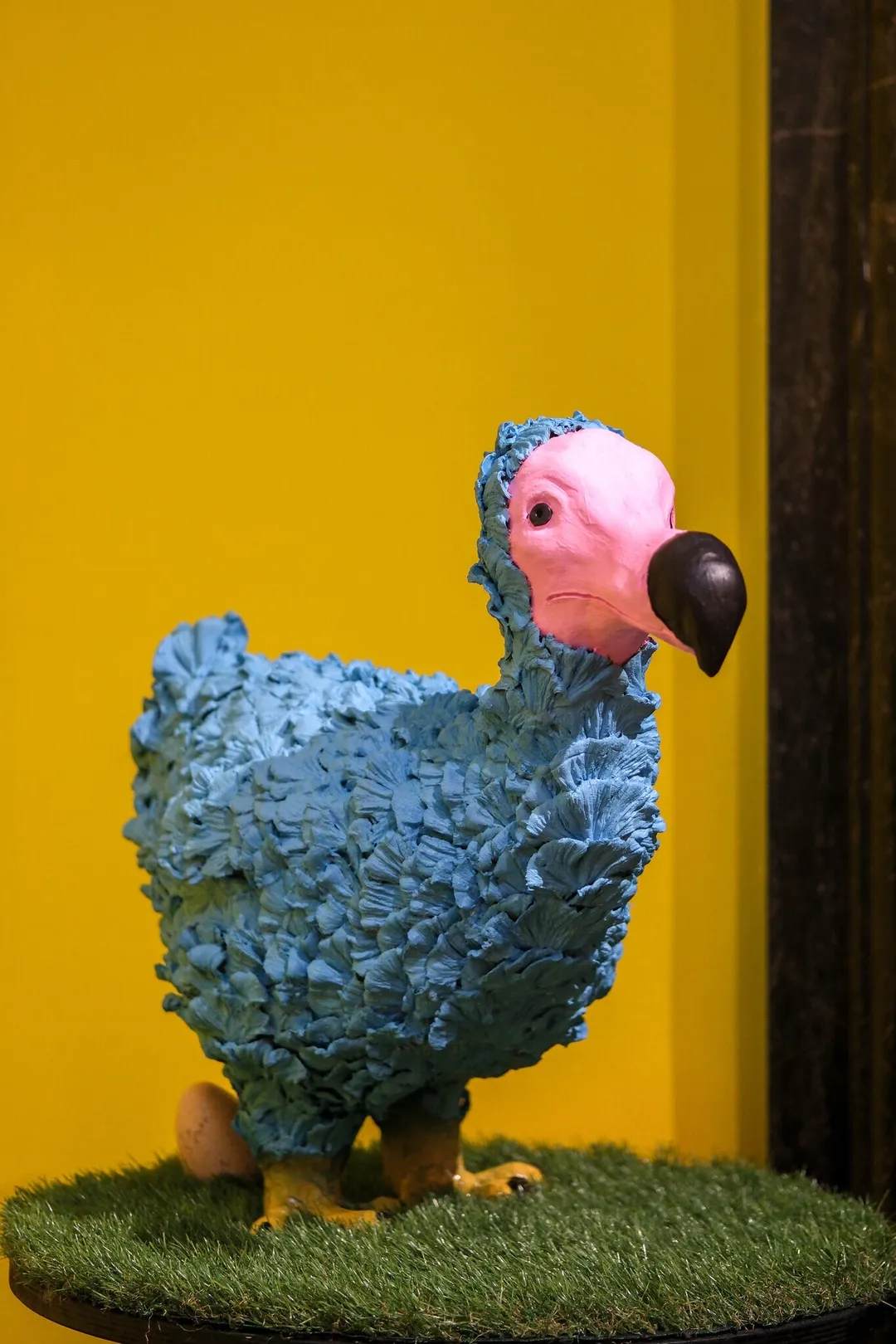
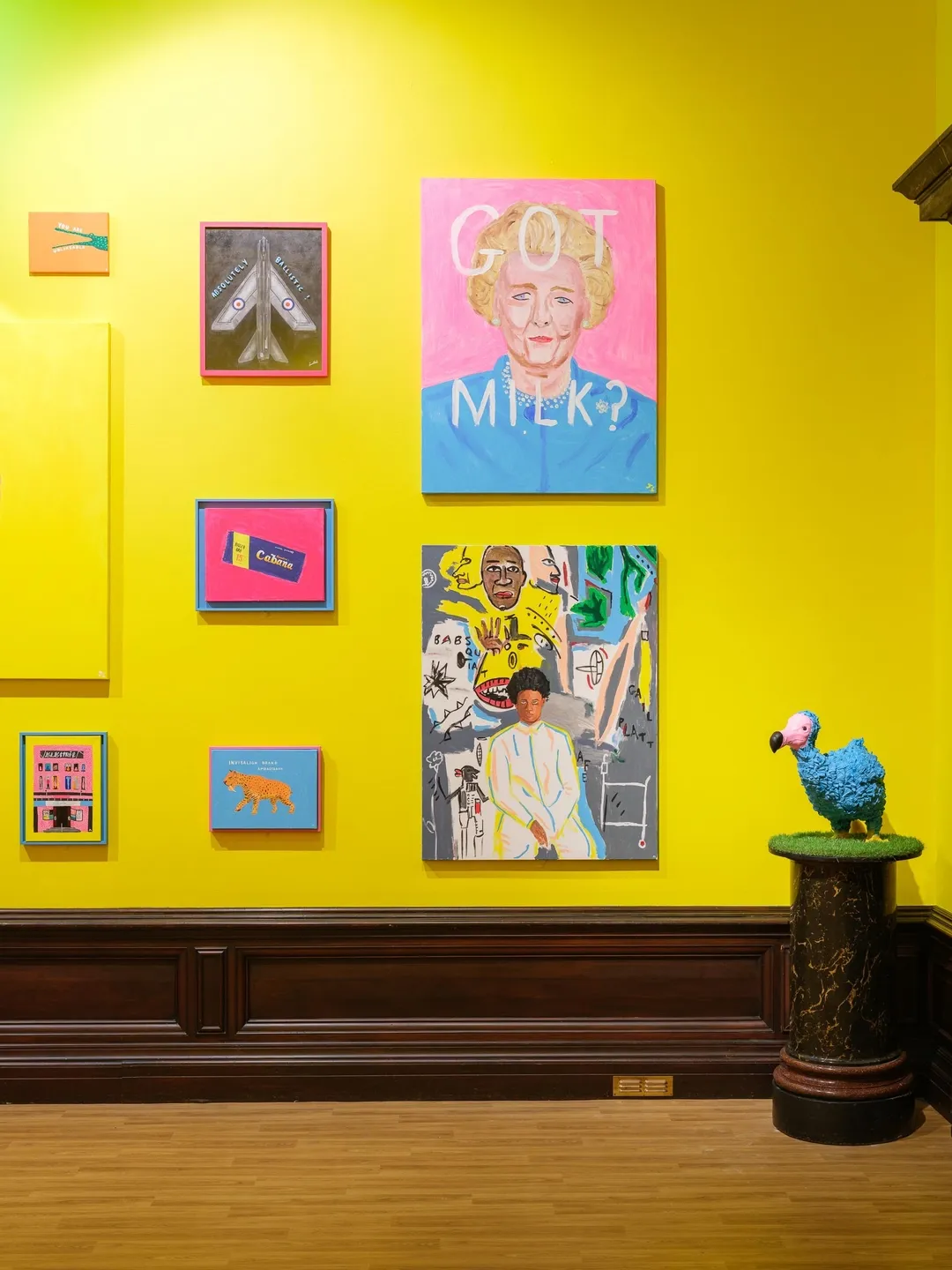
The dodo and the milk snatcher. Photo: Tom Bird.
The PR leading me around is keen to highlight a photo of the (now demolished) brutalist central library with the words ‘WOKE HELL HOLE’ daubed over it. “It’s a hit back at critics,” they say. I assume this is a reference to Millington’s discourse-provoking Telegraph piece, which did use typical culture wars language (woke, lefties, etc). But I also think of the serious criticism in that piece: that what’s on show at BMAG isn’t very good these days, and the institution doesn’t seem too interested in Brum’s artistic history. Are they aware of how it could be perceived that one of Ford Madox Brown’s most famous paintings, The Last of England (depicting an English couple leaving for Australia) is shunted into a corner by the entrance of the Lycett show? Or was clapping back more important?
That a sculpture of a Dodo in the corner has very quietly (known only to those that read the show handbook) been given the same name as the Telegraph critic suggests BMAG is blowing a raspberry: you’re prehistoric in your views, and we’re not. As for quality? Lycett did tell Professor Carl Chinn on a recent episode of his Our Lives, Our Stories podcast that he’s not a very good painter: “My art is like a child that’s been drinking vodka.” Does BMAG know that?
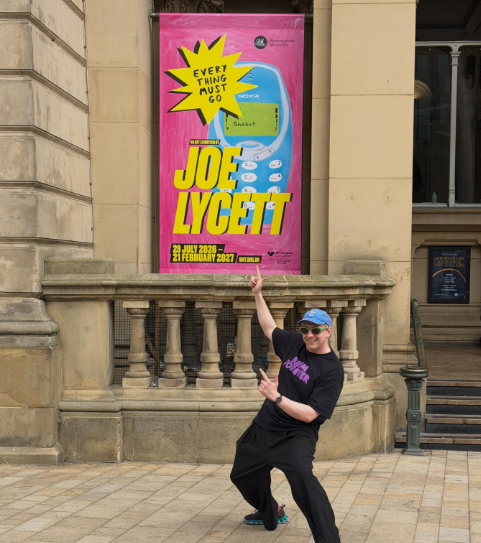
I actually agree with Lycett. The painting isn’t good — at least in my amateur view. A charitable critique of Lycett’s work would be that it is David Shrigley-esque — a prominent British artist lauded for his satirical takes and childlike form. A less charitable read would be its Shrigley-derivative, rehashing his work with a cheap, changeable overlay of news-cycle, pop culture and Birmingham references.
Like Shrigley, sloganeering is central to Lycett’s work. But I find the mentions of Birmingham too obviously enunciated, pre-digested in case you didn’t get that this was BIR-MING-HAM. Conversely, the text in political pieces feels too indirect, or targets too far into the past for the blows to resonate today. There’s a painting of the long-since disgraced, and now shuttered, newspaper News of the World. Hardly relevant to the immediate issues of the 2020s. Indeed, that mammoth might be too warm, but Stourbridge has wildfires now.
I’m reminded of a recent essay I read by Brummie writer Tom Maguire. He argued that Birmingham’s culture, with its growing reliance on BAB T-shirts and Ozzy the Bull, might end up like Manchester’s, where the same few references are endlessly regurgitated into cliches (even the genuinely worthy ones).
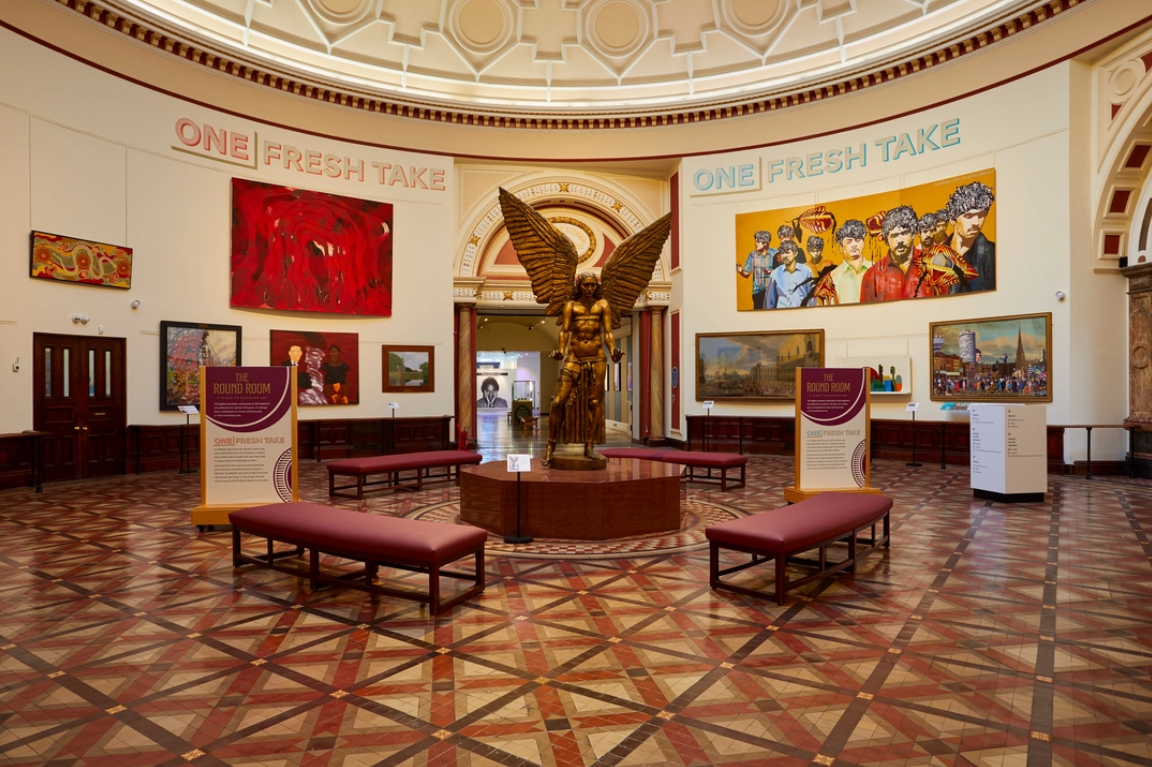
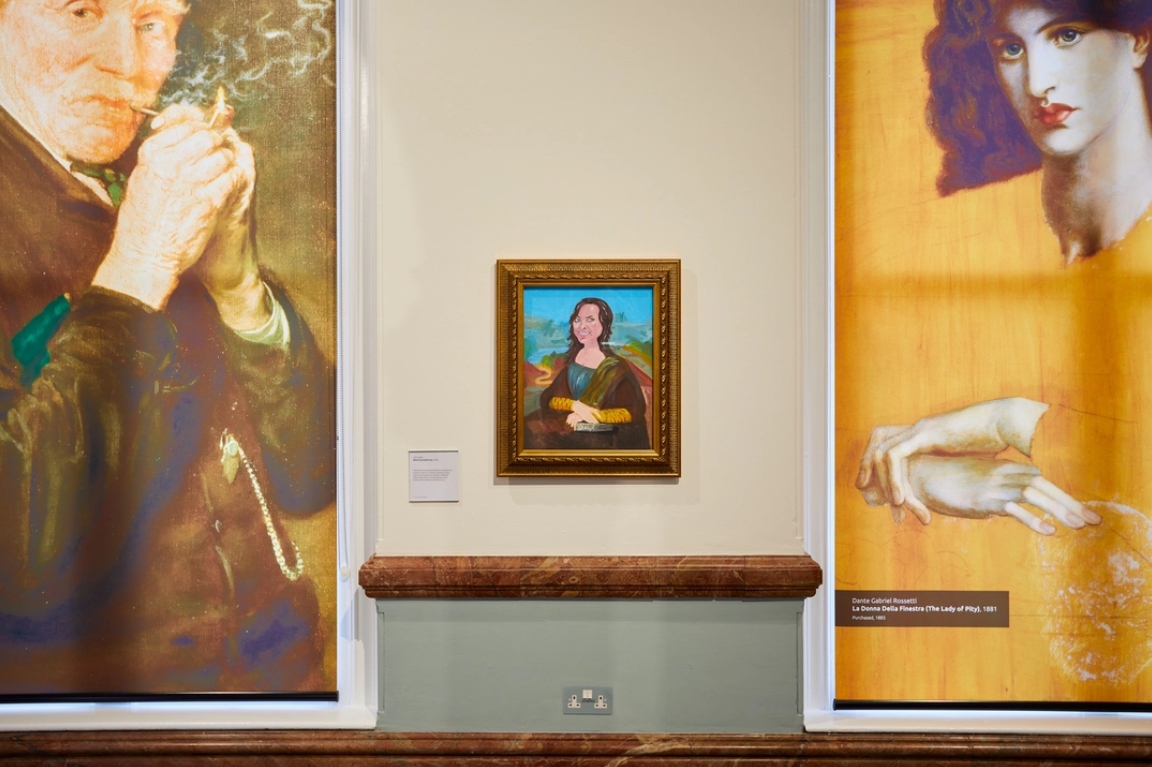
The gallery has been accused in the past of overseeing declining curatorial standards. Photos: David Rowan/Birmingham Museums Trust.
You’re left with the outsized presence and uncritical reception of those with celebrity-level stature, like Oasis, simply suffocating everything else: art, music, everything in between. It’s the same here. Few would doubt the importance and brilliance of Sabbath, but if suddenly every street sign or bar bore their name it would all become pretty tiresome, and, well, unspecial.
Lycett, like myself (as well as Millington and Maguire) clearly worries a lot about Birmingham’s cultural landscape. And he’s deploying his own celebrity cultural heft to do something about this. Like a kindly artistic patron from Wallis’s Victorian era, Lycett is using the fact that he’s allowed an exhibition at BMAG to wrap the work of lesser-known artists into proceedings. Furthermore, he has no curatorial control at BMAG. If he’s been tasked with increasing reach, it’s hardly his fault if the institution's programme is threadbare beyond that.
Indeed, ensuring Birmingham’s cultural scene gets a look-in is an inarguable part of the Lycett Industries ™ modus operandi. Late Night Lycett was filmed here, in Digbeth, on Lycett’s insistence that it was a Birmingham show, centring the city’s people and culture. When the show duly won a BAFTA, Lycett used that to shout about the city again. “It was by far my favourite TV studio I’ve ever done…I loved it was Birmingham,” he said on Carl Chinn’s podcast.
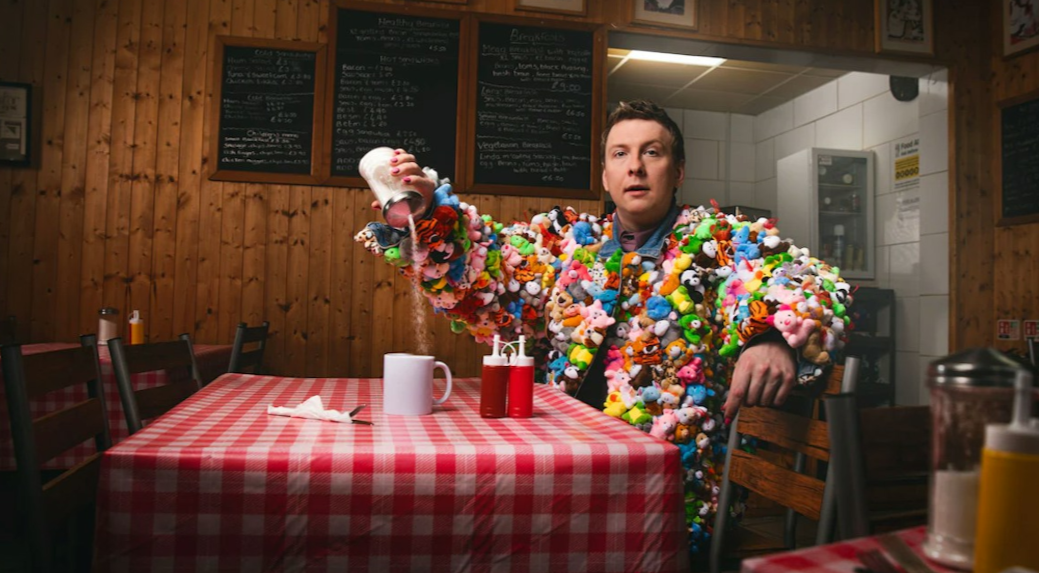
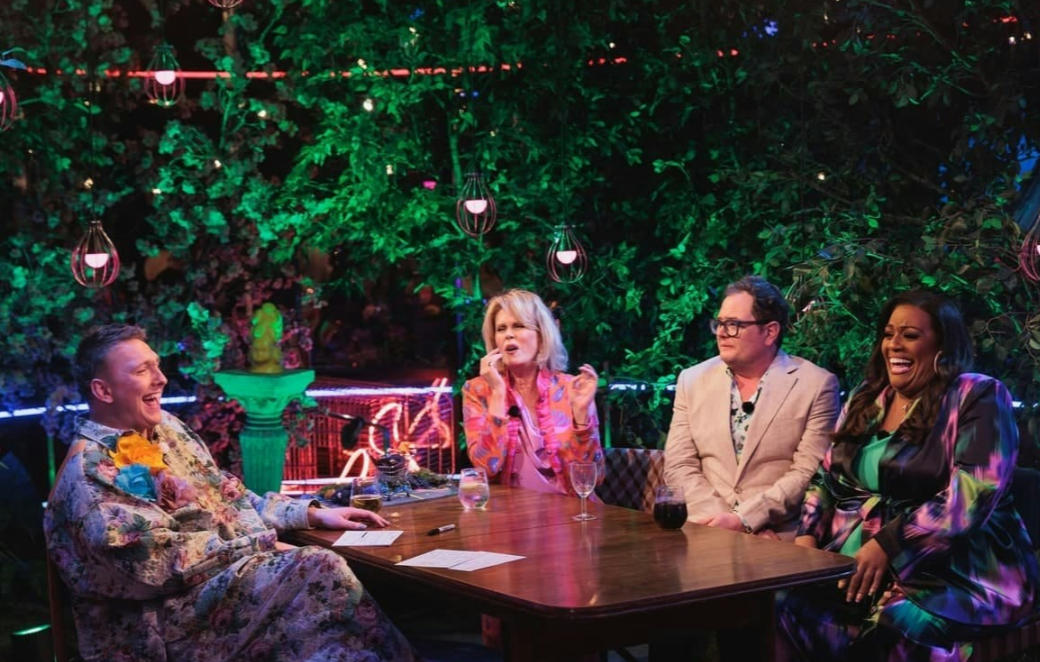
Images from Late Night Lycett, filmed in Birmingham. Photos: Joe Lycett.
Lycett was also vocally front and centre when the council’s 100% art cuts were announced, and when he guest-edited the Observer New Review, he championed Brummie arts, Brummie businesses, and under-heralded but brilliant local journalists. “He’s so passionate about doing business in our city,” Chinn tells The Dispatch. “He sticks up for Birmingham; there aren’t many celebrities we can say are one of our own.”
The worry is that without Lycett, nothing big will get made here, says Nicola Silk, the BAFTA-nominated Birmingham-based director who worked with Lycett on shows including Travel Man and United States of Birmingham. “Joe ticks all the boxes for being an ambassador for Birmingham….he’s nurturing, supportive, he backs new artists and under-represented groups……who else is there [with his reach],” Silk tells The Dispatch. “And he doesn’t get paid for this.”
The upcoming International Day of Birmingham (which kickstarts tomorrow) has to contend with such a worry. Silk has been furiously putting together the show, which puts Birmingham’s culture and creatives at the fore. Lycett can’t attend this year, but the press pack still features his comments front and centre. Silk argues there’s a brutal logic to celebrity reliance. At a time when creative industries, including TV, are facing cuts — which impact the regions more — it might just take a Lycett-like figure to even kickstart interest in a project anywhere but London.
“There’s no vested interest in doing something in Birmingham,” she tells The Dispatch. “He’s a massive champion for that.” Indeed, International Day of Birmingham wouldn’t even exist if it weren't for United States of Birmingham being made — the inaugural event was the latter’s series finale. But now Silk tells me the Chamber of Commerce is considering using the annual event as good PR for the city.
In Wallis’s BMAG era, such celebrity-reliant calculations hardly had to be made. The heady mix of an arts reformist movement, Brummie municipal braggadocio, and local political and industrial benefactors who financially supported the arts gave the founding director the headroom to build something that would become world-class.
Should I consider Lycett’s first solo art show as something like a 2026 version of a Victorian benefactor (instead of Chamberlain’s cash, BMAG now gets Lycett’s celebrity), or just a celebrity taking up space that would otherwise be occupied by, say, actual artists? I know many people who much prefer the show to me: they are less critical of its social media-minded curation, and its obvious Brumisms. They are less, well, snobbish. But I wish that we could have a critical back-and-forth, centred on the art itself – and less of a brittle response to criticism, or a focus on Lycett’s celebrity. For one, he clearly loves the arts himself — and he is a huge champion of Birmingham. It's biggest one, perhaps. That is no small undertaking.
Next month, an expert-tutored £20 yoga class “with a difference” will take place in the exhibition space. Not cheap, honestly, but it does sound like a lot of fun: I, for one, have never seen a huge downwards-facing pink mammoth. I just wish Martin had a fuller, more serious programme of art to look at while he does it.

Comments