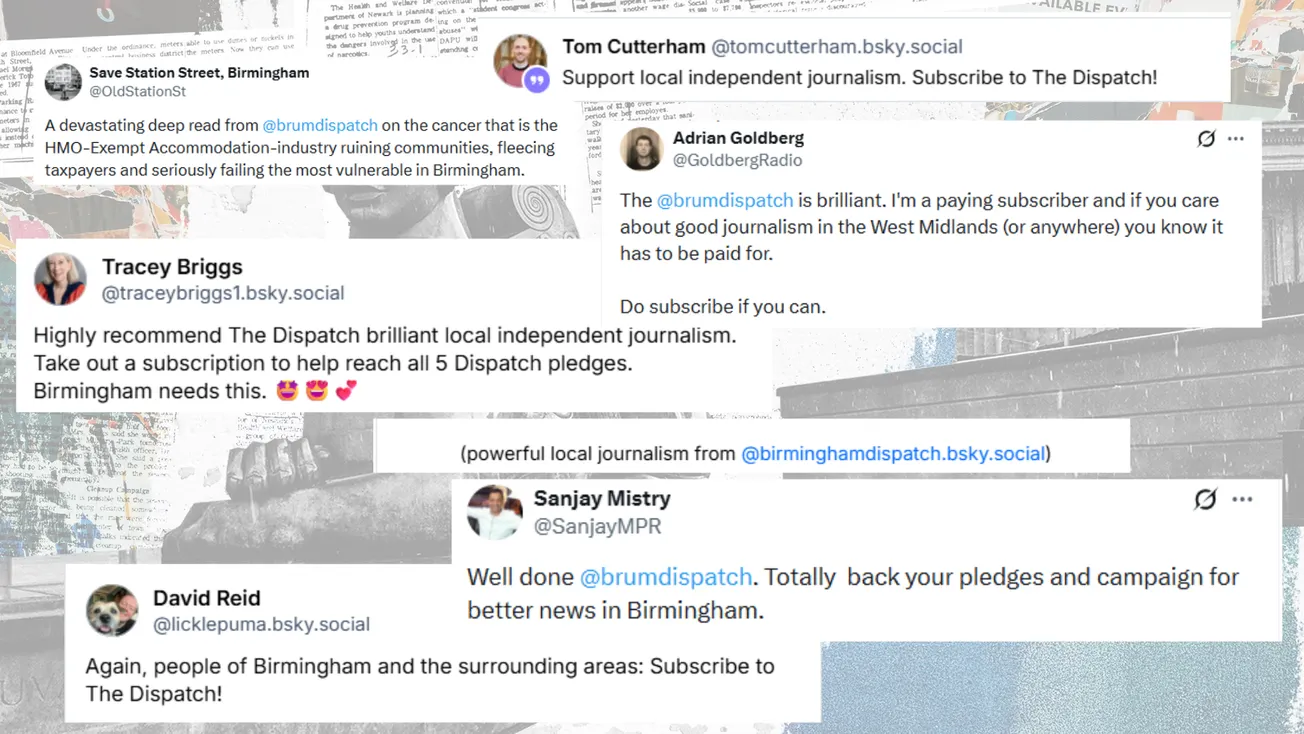


We’re a week into our campaign, and there’s over 180 new members in our clan. But this isn’t enough. Our ranks need fortifying with 1000 new members by Tuesday 15 December to fulfil our pledges to make Birmingham even more brilliant.
And you have been neglecting us for far too long dear reader. Now is the time to step up to the plate, and become a full paid member of The Dispatch.
If you want to see the biggest scoops, support the future of local journalism and find out if Birmingham really can be trusted with Shakespeare – cash in on our lowest ever membership prices. Join us from £2.99 a month for the first two months, or commit to the cause for the bargain of a £55 annual subscription. Do it now. Immediately.
Dear readers — Yesterday, we received the most exciting delivery ever to shore up at Dispatch HQ: 3,000 copies of our first ever, exclusive print edition. It’s taken blood, sweat, tears, and a lot of proofreading to get this baby off the ground (not to mention a minor panic attack when Kate thought she spotted an apostrophe in the wrong place — thankfully just a rogue biscuit crumb). Here we are, reading our pride and joy. Look how happy she’s made us:

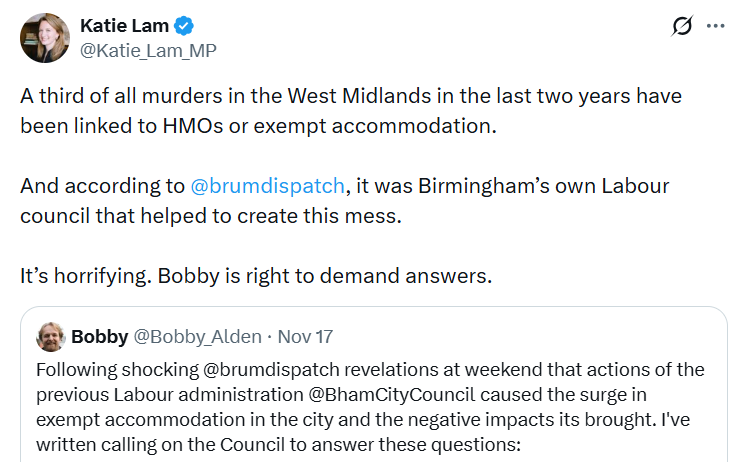
And yet, as fun and novel as the campaign has been thus far, the daily grind of running a local paper never stops. We’ve still been beavering away in the background, breaking stories and treading the shoe leather that makes this job worthwhile. Olivia’s Saturday big read on the council’s ‘concierge trick’ that may have inadvertently fuelled a supported housing crisis is still doing numbers — and getting noticed by politicians like the shadow secretary of state for housing, Katie Lam:
The story doesn’t stop there, however. This week is turning out to be a big one in Birmingham’s scandal-riven world of supported housing. On Tuesday, Birmingham city council published its long-delayed internal audit of the sector, revealing that it supports 34,100 Housing Benefit claimants across approximately 12,200 properties. Plus, the following eyebrow-raising details:
- Between April and July of this year, the council paid out £211.8m in SEA housing benefit. That's more than half of the amount (£404.4) paid out for *the entire year* 2024-2025. 💰
- There is a backlog of cases requiring review due to increasing benefit claim volumes, staff vacancies and recruitment challenges. That means there are 12,700 people living in SEA of whom the council does not know if they are receiving support or not. ❓
No surprises then that two Labour councillors have also this week written to Pat McFadden to demand an urgent investigation:
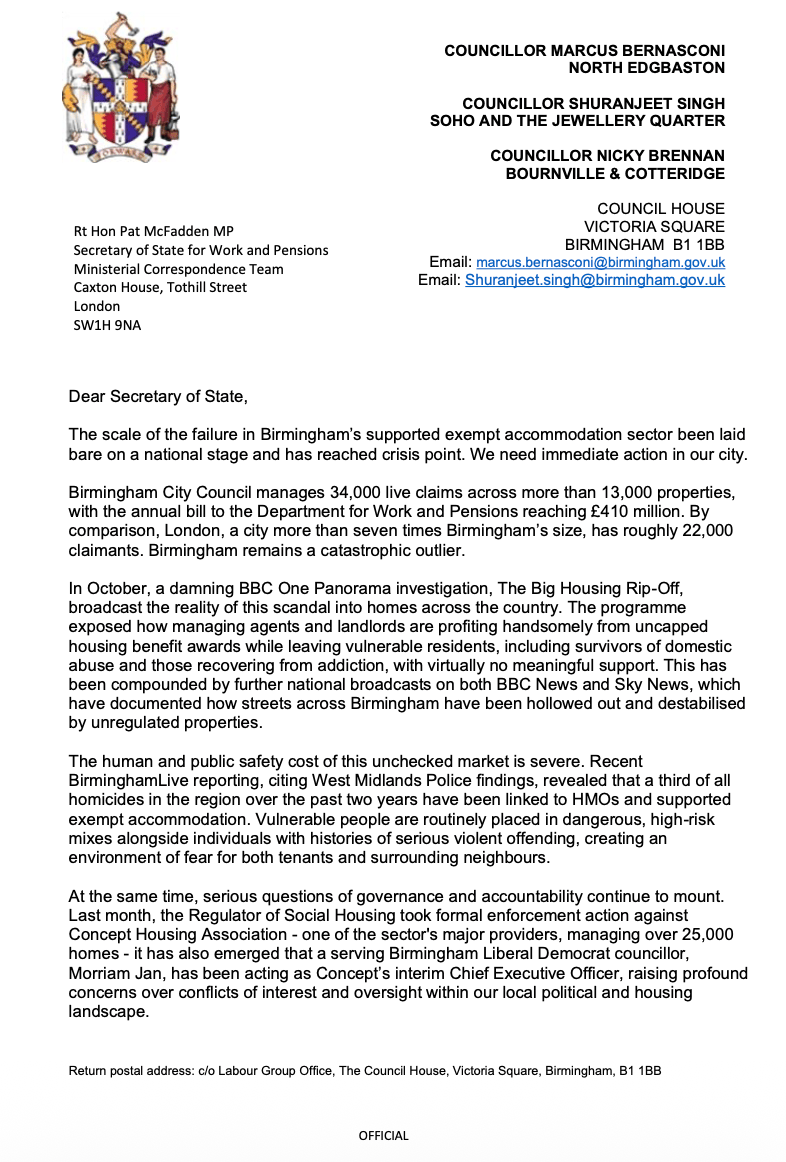
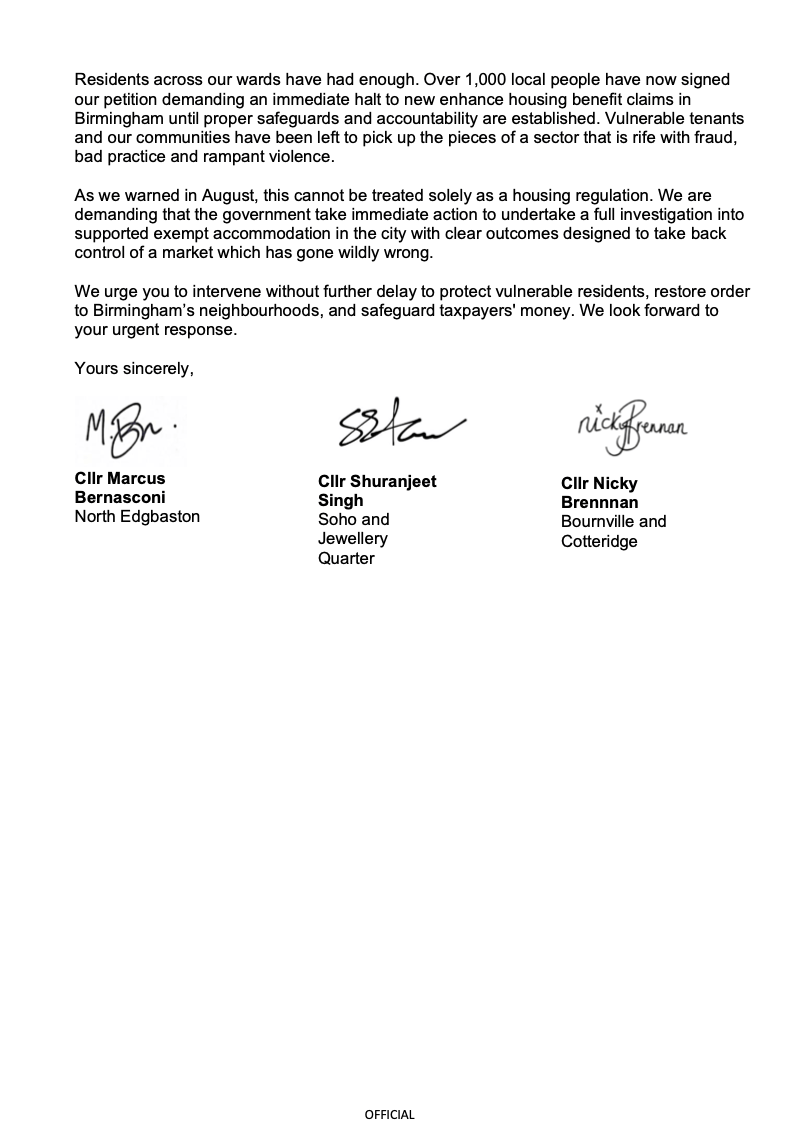
Labour cllrs letter.
With all that going on, don't miss our upcoming shocking weekend read about the neglect of vulnerable residents and a company profiting handsomely from housing them. When The Dispatch did some digging, we received an angry phone call threatening to report us to the police merely for doing our jobs. Look out for that, tomorrow.
Now, on with today’s story, about the sound and the fury over the Shakespeare Institute.
‘Managed decline’: Can Birmingham be trusted with Shakespeare?
It’s 12 November and the team at the Shakespeare Institute are braced for visitors. Having been informed by email of the imminent arrival of senior staff from their parent institution, the University of Birmingham, six professors have gathered at the grand Georgian townhouse in Stratford-upon-Avon where the Institute is based: the very heart of the study of history’s most celebrated writer. The conversation turns to an important matter: biscuits.
There are various considerations at play. If they have posh biscuits laid out on the table, will that mean administrators presume the department has money to burn, justifying feared cuts? What if they have cheap biscuits, say custard creams – is that not just rude? After much deliberation, it is decided that Tiffany Stern, the Institute's deputy director, a woman with a sharp bob and broad smile, will nip to M&S, but make it clear that she is personally gifting the biscuits, lest they be misinterpreted as a gaudy show of the hub’s excess wealth.
We now know that Stern’s best efforts were futile — and that her biscuits were not enough to prevent what Shakespeareans were dreading. At the meeting, Stern and her colleagues were given the news they most feared: that the Institute would be relocated to the university’s Edgbaston campus, taking it out of Shakespeare’s hometown, the very place it had presided over for much of its 75-year history.
The university was adamant that this wasn’t a financial decision — but no one seems to believe them.
This story is free to read - you just need to join our mailing list. And why wouldn't you? By becoming a Dispatch subscriber, you'll get our scoops, features, and insights, in your inbox, the second we hit publish. No card details required.
Already have an account? Sign In