
On Wednesday, I inadvertently caused a ruckus at Dispatch HQ when I gracelessly aired our dirty linen online, inviting our loyal readership to wade in on a debate between me and my colleague Moya.
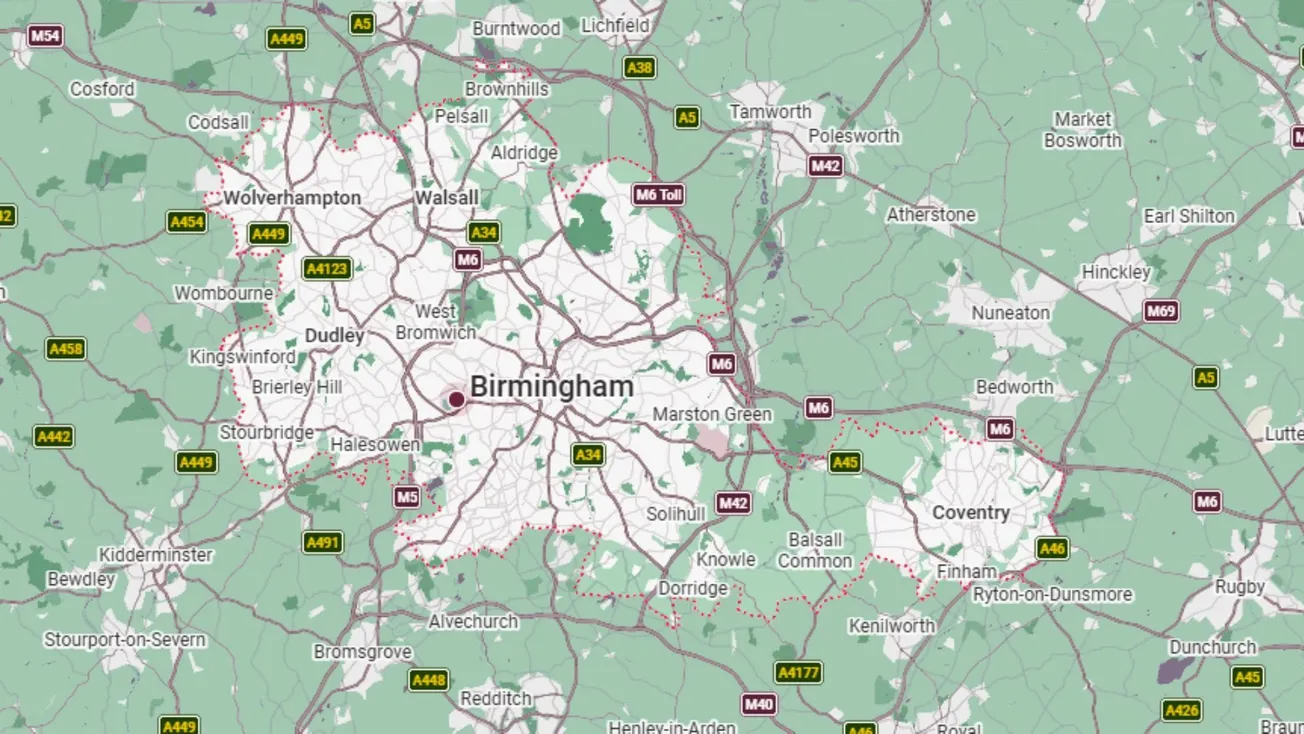
As a Londoner who regularly visits Birmingham — and the cities of our sister titles — she is convinced that town is dead. The streets, especially by our office in the Jewellery Quarter are often empty. So she’s come up with a thesis: Birmingham is a city of 1.2 million people, at its smallest. The buzz must be somewhere right? She’s heard about the Mostly Jazz Festival, Bearwood’s independent food scene and the Hare and Hounds and concluded: it’s in the suburbs.
Ever argumentative, I disagreed. Plenty of people live in town after all, and they must be part of communities that exist there. Also, try visiting New Street or Digbeth or Broad Street on a Friday or Saturday night. It’s hardly quiet, is it?
A lively evening on Broad Street last September. Open in browser to view.
Unfortunately for me, by Thursday morning I was eating humble pie. It turns out that the vast majority of you agree with Moya. Bunch of traitors. You might have given me the heads up. So, I thought I’d use this Saturday’s read to delve into the topic — and your many, many comments — a little further.
Village life
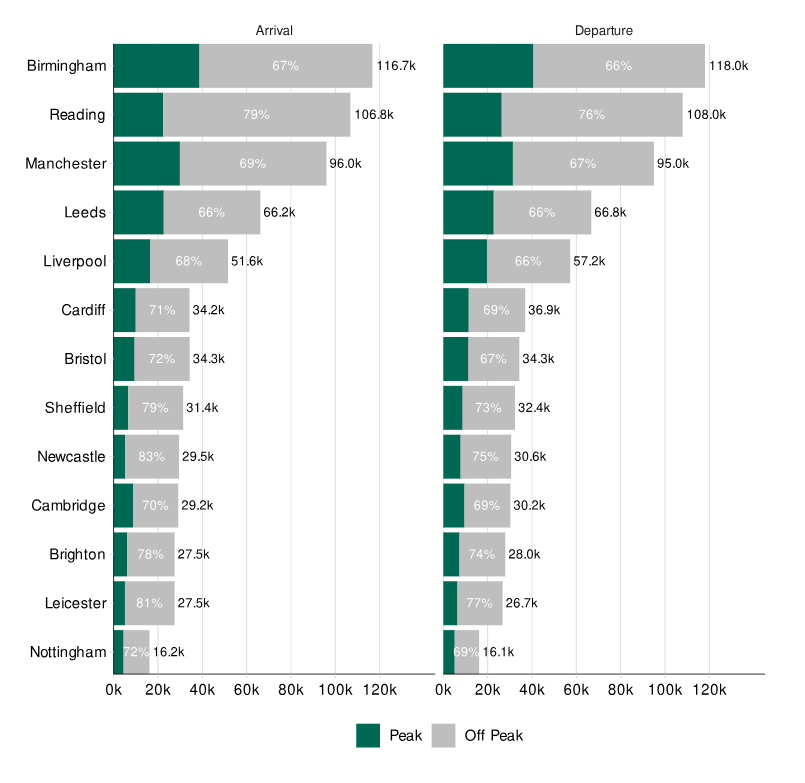
First off, I’ll have you know I was right about one thing. As regular Dispatch contributor Jon Neale pointed out, people do travel into Birmingham regularly — a lot of them. Indeed, there are more weekday journeys into Brum by rail alone compared to any other English city outside of London. Given these people leave on the same day, as the graph below shows, it’s fair to assume they are travelling in for work. (This also explains why I’m often elbowing suits out of the way for the last Itsu vegetable dragon roll in Tesco at lunchtime.)
All day passenger arrivals and departures into and out of major cities in England and Wales on a typical autumn weekday in 2025, excluding London:
Still, the anecdotal evidence suggests that Brummies living in suburbia don’t see town as their ideal spot for leisuring. “Give me the suburbs anytime over town for going for a drink or a meal,” commented one reader on Instagram. Another lamented: “I still enjoy the city centre, but Friday nights don’t have that buzz anymore,” fingering work-from-home policies as the main culprit. Several of you also pointed out that Birmingham hasn’t been a metropolis for all that long — it is more like a rag-bag collection of villages huddled together under a poorly-fitting canopy.
Which is true. Many neighbourhoods that are within the city’s boundaries today were separate, rural districts up until the 19th century. Edgbaston, Bordesley, Deritend, Duddeston and Nechells joined Birmingham in 1832. Saltley, Harborne and Balsall Heath came 59 years later. But it was 1911 when the party really got started, and the Greater Birmingham Scheme kicked off a dramatic expansion of the city, drawing in all of the following areas: Yardley, Acocks Green, Hall Green, Sparkhill, Moseley, Kings Heath, Bournville, King’s Norton, Selly Oak, Northfield, Handsworth, and Aston Manor.
As one reader put it: “The independent, village-y feel of these districts is because they haven't been Birmingham for all that long, and have managed to retain their relatively unique cultural experiences without being subsumed into a giant urban mess.”
It’s a set-up that many of you prefer. We heard from lots of people that they actually liked that their social lives are located in the suburbs and don't require a trek into town. “There is much more of a community vibe,” a commenter enthused.
Can we make town great again?
That makes sense. But it still doesn’t explain why town might be unappealing. Indeed, a minority of people were sceptical of Moya’s theory: “I think town is buzzing! Have you been around the bars on a Saturday — it’s crazy,” someone else said, adding: “For the sheer number of different options plus things to do after 10pm town is the only option.”
This story is free to read - you just need to join our mailing list. And why wouldn't you? By becoming a Dispatch subscriber, you'll get our scoops, features, and insights, in your inbox, the second we hit publish. No card details required.
Already have an account? Sign In