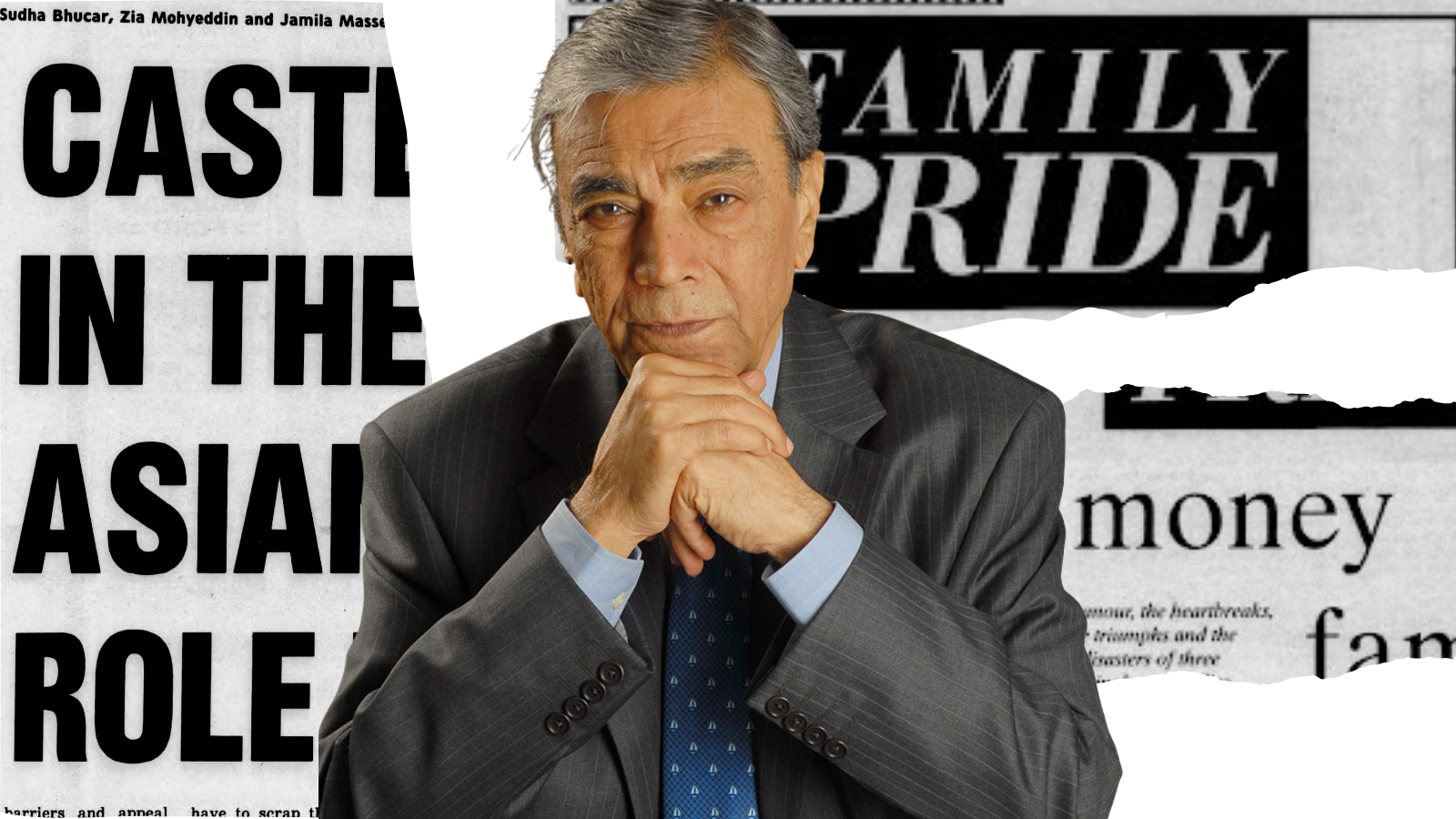

Dear readers — fresh off a chain of hits featuring guerilla litter pickers, Sutton Coldfield Town FC superfans and the Cliff Richard-led 1973 film Take Me High (in which Richard plays a merchant banker sent to Birmingham), Shaun Patrick Hand today returns with a piece sure to appeal to an even nicher subsection of the Dispatch readership: Those who remember the UK’s first Asian soap opera, set on these very streets.
As it happens, even those who starred in Family Pride, which ran for two seasons in the early 1990s, are quite confused that there now exists a publication commissioning 2,000 or so words about Family Pride, more than 30 years after the show sank without trace. But whatever its shortcomings, its tale of three Asian families living in Birmingham was in many ways pioneering, and might just deserve a more prominent place in the Brum TV canon. After their initial confusion, its cast and crew were more than willing to reminisce.
If this little green box is appearing on your screen, consider it a call to arms. It means you aren’t currently a paying member of The Dispatch. You’ll be allowed to read all of today’s piece for free, and much more of our writing too, but please remember the dark truth: The Dispatch is not sustained by warm words or the fuzzy feeling we get at knowing our pieces are being widely read, but cold, hard cash.
Plainly, we want your money. The good news is we don’t want loads of it — the rough equivalent of a couple of coffees a month. The even better news is that we intend to spend it on continuing to build the publication we think Birmingham needs: One that celebrates the city and also keeps it in check. One that answers not to big institutions, powerful individuals and advertisers, but only to its readers. So enjoy the story, and — if you’d be so kind — give us some money:
Brum in Brief

☕ Getting coffee with Conservatives: The cost of living crisis appears not to have bitten Tory Party conference-goers too hard, as on Tuesday morning a long line of delegates wait to order £5 coffees at Starbucks at the ICC, while the Subway counter next door is entirely empty. The one attendee joining your humble scribe for the budget option is Spectator political editor Tim Shipman, who volunteers a bracingly frank verdict on the Conservative Party leader. Shipman, widely mocked for his 2021 Tweet describing Boris Johnson as “[squatting] like a giant toad across British politics,” also opens up about his political preferences, keen to suggest he is an Everyman voter. “Labour win when I vote for them, the Tories tend to win when I vote for them, Reform need me to vote for them to win. So I’m my own focus group really”.
🖖 Live long and Prosper? Promoting across a series of conference events their Prosper UK movement – designed to reunite seven million 'politically homeless' voters with the Conservatives through a sober focus on the economy – former West Midlands Mayor Andy Street and David Gauke, Chief Secretary to the Treasury under Theresa May, don’t shy from labelling Andy Burnham and his policies as “socialist”, but stop short of wanting a return to the EU. Since its launch in January, Prosper UK has attracted almost 30,000 supporters with particularly strong representation from Birmingham and Solihull, Street tells us. Gauke hails the movement for bringing together such “talented, very knowledgeable, well-informed people”. Is he saying that, in contrast to ex-cabinet colleague Michael Gove with whom he savagely clashed over Brexit, he can’t get enough of experts? “You’re trying to put words in my mouth!” he says. “But any political movement should tap into that resource.”
📰 The prestigious readers of Conde Nast Traveller have recognised what we’ve known for years: Birmingham is one of the friendliest cities in the UK. For the first time, we’ve appeared in their annual top ten ranking — and have soared straight to third place. Apparently we are “unpretentious and welcoming folk”, which checks out. (Conde Nast Traveller).
We produced Britain’s first Asian soap. Was it washed up too soon?
A synth’n’sax theme tune kicks in over aerial shots of a modern cityscape, then a montage plays: an immaculately power-dressed woman striding towards a glistening black car; a well-tailored gentleman opening the Financial Times; a yuppie go-getter answering a mobile phone the size of a wheelie bin. Then another aerial shot. This time? Spaghetti Junction’s tangled web.
We soon learn the show is about three families, two living in big houses in the Brum suburbs, driving flash cars, enjoying lavish garden parties. More specifically, it’s about the generation gap between those families’ traditional parents and their grownup children, who wear shoulder-padded Armani suits, have secretive affairs and listen to rock’n’roll cassettes full-blast.
It all screams, This is modern. This is aspirational. And this is Birmingham, 1990s-style. But there’s something else, too. Something that stands out for a British show of the time and would still provoke comment today (see ITV’s new drama, The Split Up). All the lead actors are Asian. The three families are Sikh, Muslim and Hindu.
Welcome to Family Pride, the Brummie show that ran for two series between 1991 and 1992 — making it the first ever British Asian soap opera. I was roughly six when it launched, but I recall watching the filming take place on Manilla Road in Selly Park on my way to school. As for its legacy? Essentially non-existent. Of the 52 episodes made, only 10 are on YouTube (thanks, Anthony D), their viewing figures firmly in the low thousands. So when I reach out to the cast and crew members outlining my intention to write a ‘Remembering Family Pride’ piece, they respond with bafflement. In the words of one, Sudha Buchar: “I’m surprised anyone’s remembering it”.
A fair point. Why would I, or indeed anyone, want to write about Family Pride?
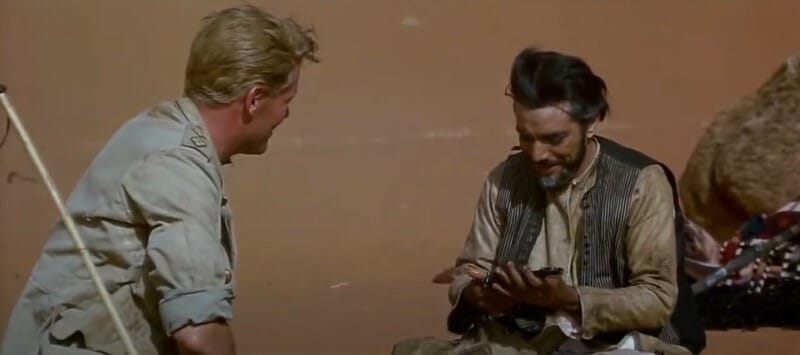
The story of the show starts with one man: Zia Mohyeddin. Born in what is now Faisalabad, Mohyeddin (who died in 2023, aged 91) was, as newspaper articles regularly pointed out, the first Asian to “have his name in lights” in both the West End and on Broadway, thanks to a 1960s production of A Passage to India. It was up and away from there. He acted alongside Laurence Olivier in epics such as Lawrence of Arabia, became a popular talk-show host on Pakistani TV and even served as Pakistan’s Minister of Culture.
That is, until a military coup in Pakistan in 1977, following which Mohyeddin entered self-imposed exile in England, where he’d been appearing on TV since the mid-1950s. He moved to Birmingham and began producing and presenting programmes for Central TV, most notably the arts-and-discussion show Here & Now, which covered everything from 18th century poet Waris Shah to the rise of UB40. But he had grander ambitions.
“[British programmes for ethnic minorities] preach a kind of ghettoism, producing separate programmes solely for Asians and blacks and deliberately excluding the whites,” he told a Pakistan Herald reporter who tracked him down to Moseley in 1984. “They attract an inbuilt audience by showing Indian films, curry recipes and immigration advice… but that shouldn't be the image of Asians… that they are backward, that they like staying aloof.”
This story is free to read - you just need to join our mailing list. And why wouldn't you? By becoming a Dispatch subscriber, you'll get our scoops, features, and insights, in your inbox, the second we hit publish. No card details required.
Already have an account? Sign In